 Installation guide
 Owner’s manual
 Error Codes


What is the most common problem with a GE dryer?
The most common issues we see on a GE electric dryer like model GTDX100EM0WW are no heat or poor drying, usually caused by restricted airflow (lint buildup or a long, crushed vent) or a failed heating or safety component. Start with airflow checks, then test heat-related parts.
Most common symptoms and what they usually mean
- Runs but no heat: heating element or thermostat issue; also check power supply (electric dryers can tumble on 120V but need full 240V to heat)
- Takes too long to dry: clogged lint screen, blocked blower housing, or restricted 4-inch exhaust duct
- Stops mid-cycle: overheating from poor venting can trip safety controls
- Loud squeal or scraping: worn drum support parts (glides, pads, bearings)
- Won’t start: door switch, timer, or motor circuit problem (also check the breaker)
Quick checks we recommend first (fastest wins)
- Clean the lint screen and confirm strong airflow at the outside vent hood.
- Verify the venting uses 4-inch (102 mm) duct and is not longer than the installation limits; long runs increase dry time and shorten dryer life.
- Do not use flexible plastic duct; it can collapse and trap lint.
- Confirm the dryer is on a dedicated 120/240V (or 120/208V), 30-amp circuit and the breaker is fully reset.
- If the dryer overheats, inspect the blower area and ducting for lint restrictions before replacing parts.
Parts that commonly fix these problems on GTDX100EM0WW
| Symptom | Common part to check | Example part on this model |
|---|---|---|
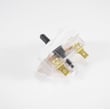
| No heat or overheating | High-limit thermostat | Dryer high-limit thermostat WE4M137 |
| No heat | Heating element | Mica heater WE11X20397 |
| Long dry times, weak airflow | Blower wheel | Dryer blower wheel WE16X20393 |
Why it matters
Airflow problems do more than slow drying; they raise operating temperatures, which can trip safety thermostats and shorten the life of the heating system and drum support components. Following the venting and electrical requirements in the installation guide prevents repeat failures.
You can order replacement parts for GTDX100EM0WW from the parts list for this model, or search by model number on Sears PartsDirect.
Last updated: February 2026
What is the lifespan of a GE dryer?
A GE electric dryer like model GTDX100EM0WW typically lasts 10 years. With consistent vent cleaning, good airflow, and quick repairs when symptoms start, it commonly reaches 13 years of service.
Typical lifespan range (what to expect)
Most full-size residential dryers fall into this range when used normally:
| Usage and care level | Typical lifespan |
|---|---|
| Heavy use, poor venting | 7 to 9 years |
| Average use, basic maintenance | 10 to 13 years |
| Light use, excellent maintenance | 13 to 15 years |
What extends dryer life the most
These actions protect the heater, motor, and drum support parts:
- Clean the lint screen before every load.
- Keep the exhaust duct 4-inch metal ducting and avoid long runs and extra bends.
- Replace crushed, kinked, or foil-style transition ducting with UL-listed metal transition duct.
- Do not use an extension cord; use the correct 120/240V (or 120/208V) 30-amp circuit.
- Stop using the dryer if you notice burning smells, overheating, or repeated tripped breakers.
For model-specific installation and venting limits, follow the installation guide.
Signs your dryer is nearing end of life
A dryer can often be repaired, but these symptoms usually mean multiple wear items are stacking up:
- Drying times keep getting longer even after vent cleaning
- Loud squealing, scraping, or thumping from the drum area
- Drum stops turning intermittently
- Overheating or frequent thermal cutoffs
- Controls or timer operation becomes inconsistent
Common wear parts that affect longevity
When the drum support system wears, friction and heat rise, which shortens motor and heater life.
| Symptom | Often related to |
|---|---|
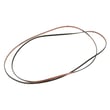
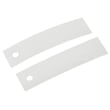
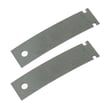
| Squeal or scrape at the front of drum | Dryer drum glide bearing (green) WE03X37317 or dryer drum front glide pad WE03X37318 |
| Rumbling or front support noise | GE dryer drum bearing, front WE3M26 |
| Weak airflow, longer dry times | Dryer blower wheel WE16X20393 |
Why it matters
A dryer that is properly vented and kept clean runs cooler and moves air correctly; that reduces drying time, lowers energy use, and prevents premature failure of the heating element, thermostats, and motor.
You can order replacement parts for GTDX100EM0WW from the parts list for this model, or search by model number on Sears PartsDirect.
Last updated: February 2026
Can a dryer run on a 110 outlet?
No. The GE GTDX100EM0WW is an electric dryer that requires a dedicated 120/240V or 120/208V, 60 Hz, 30-amp circuit, so it will not run from a standard 110 to 120V household outlet. For the correct wiring and grounding details, follow the installation guide.
What power this model needs
For GTDX100EM0WW, the installation requirements call for:
- An individual branch circuit (not shared with other appliances)
- Time-delay fuses or a circuit breaker sized for the dryer
- 3-wire or 4-wire dryer cord connection (depending on local code)
- Proper equipment grounding (no adapters)
Why a regular 110 to 120V outlet will not work
A typical household receptacle is designed for lower power loads. This electric dryer needs two hot legs (L1 and L2) to supply 240V for the heating system, plus neutral and ground as required.
- The motor and controls may appear similar to other appliances, but the heater needs 240V
- Using an adapter or extension cord is unsafe and not allowed for this installation
- An incorrect supply can cause no-heat symptoms, nuisance tripping, or wiring damage
Quick comparison
| Dryer type | Typical outlet/circuit | Will it run on 110 to 120V? |
|---|---|---|
| Electric dryer (like GTDX100EM0WW) | 120/240V (or 120/208V), 30A | No |
| Gas dryer | 120V, 15A to 20A | Yes (for motor/controls) |
Why it matters
Correct voltage and amperage protect the dryer timer, motor, and heating element from damage and help prevent overheating at the receptacle or terminal block. If your dryer tumbles but does not heat, power supply issues (missing one hot leg) are a common cause.
Parts that can be affected by power and heat issues
If you are troubleshooting heat problems after confirming the correct 240V supply and venting, these model-compatible parts are commonly involved:
- Mica heater WE11X20397 (heating element)
- Dryer high-limit thermostat WE4M137 (overheat protection)
- Dryer operating thermostat WE4M181 (temperature regulation)
To find additional replacement parts by model number, search on Sears PartsDirect.
Last updated: February 2026





