Owner’s manual
 Error Codes





How to remove bottom grille on GE refrigerator?
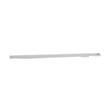
On the GE GFSL6KEXALS bottom-mount refrigerator, the bottom grille (base grille) is typically held in place with screws and/or snap-in tabs. We remove it by taking out any retaining screws first, then pulling the grille straight out from the bottom front of the refrigerator.
Steps to remove the bottom grille
- Unplug the refrigerator or switch off power at the breaker if you will be working near wiring.
- Open the fresh food doors for better access.
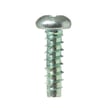
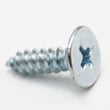
- Look along the top edge of the grille for Phillips-head screws; remove them.
- Grip the grille near both ends and pull it straight toward you to release the tabs.
- If it feels stuck, pull evenly from both sides so the tabs do not twist.
- Set the grille and screws aside so they do not get lost.
If the refrigerator needs to be pulled out
Sometimes the grille is easiest to handle when you have a little more room at the front.
- Raise the front leveling legs before moving the refrigerator.
- Pull the refrigerator straight out (avoid dragging it sideways).
- When pushing it back, do not roll over the power cord or icemaker water line.
- Make sure the anti-tip bracket is engaged (if equipped).
These handling and leveling precautions are covered in the owner's manual.
Quick troubleshooting if it will not come off
| What you notice | What to do |
|---|---|
| Grille moves but will not release | Recheck for hidden screws along the top edge or corners |
| One side pops loose first | Re-seat it, then pull evenly from both ends |
| Plastic feels like it is bending | Stop and locate the tabs; pull straight out, not up or down |
Why it matters
Removing the bottom grille gives access for basic maintenance like cleaning the condenser area and checking for debris that can restrict airflow and reduce cooling performance.
Last updated: February 2026
What is the most common problem with GE GFSL6KEXALS refrigerators?
The most common issue we see with the GE GFSL6KEXALS bottom-mount refrigerator is a cooling problem (fresh food or freezer not staying cold). In many cases, the root cause is airflow restriction, a control setting issue, or a failed cooling component such as a sensor or damper.
Quick checks we recommend first
- Confirm the doors fully close and seal; a door left slightly open can cause warm temps and slow ice freezing.
- Make sure vents inside the fresh food section are not blocked by food containers.
- Verify temperature settings are appropriate (a control set too warm can mimic a “not cooling” failure).
- Listen for the evaporator fan; if airflow is weak, cooling performance drops.
- Check for heavy frost buildup on the back interior panel (often points to a defrost or airflow issue).
Common symptoms and what they usually point to
| Symptom | Most likely category | What to do next |
|---|---|---|
| Fresh food warm, freezer cold | Airflow/damper issue | Inspect damper area and airflow path; review diagnostics in the owner's manual. |
| Both sections warm | Cooling system or fan issue | Check condenser cleanliness and fan operation; consider professional service for sealed system issues. |
| Temps swing up and down | Sensor/control issue | Test/replace the refrigerator temperature sensor WR23X10582 if diagnostics indicate. |
| Ice maker slow or stops | Door left open, temp too warm, cubes stuck | Remove stuck cubes and reset icemaker; confirm freezer temp and door closure (manual guidance covers stuck cubes). |
Parts that commonly solve “not cooling” complaints
If troubleshooting points to a failed component, these model-matched parts are common fixes:
- Refrigerator temperature sensor WR23X10582 (temperature feedback to the control)
- Refrigerator damper motor WR60X10253 (controls cold air flow into fresh food section)
- Refrigerator damper motor cover WR09X10173 (damper housing/cover related to airflow path)
Why it matters
Cooling problems can quickly lead to food spoilage, ice maker issues, and excess frost. Addressing airflow and temperature control problems early helps the GE GFSL6KEXALS maintain stable temperatures and reduces strain on major components like the compressor.
Last updated: February 2026
Is GE GFSL6KEXALS considered high end?
GE GFSL6KEXALS is a GE bottom-mount refrigerator model; it is typically considered a mid-range to upper-mid-range appliance rather than a true luxury line. GE’s premium tiers are usually sold under distinct series (such as Café and Monogram), which are positioned as high-end.
How to tell if your refrigerator is “high end”
We recommend using these practical checks for GFSL6KEXALS:
- Series branding: Premium GE lines are usually clearly labeled as Café or Monogram.
- Built-in vs freestanding: Built-in configurations and panel-ready designs are more common in luxury tiers.
- Feature set: Look for advanced climate zones, dual evaporators, and premium dispenser features.
- Fit and finish: Heavier-duty shelving, upgraded lighting, and premium trim often signal higher tiers.
- Price and parts cost: Higher-end models often have higher replacement-part costs and more specialized assemblies.
What we can confirm for GE GFSL6KEXALS
Your GFSL6KEXALS owner's manual is the best place to confirm the exact feature package and configuration for this model.
Here are a few model-relevant examples of common “ownership” items that are not tied to luxury status but do affect day-to-day performance:
| Item | What it impacts | Example part for this model |
|---|---|---|
| Water filtration | Taste, odor, flow rate | Refrigerator water filter MWFP |
| Door sealing | Temperature stability, frost, energy use | Refrigerator door gasket WR24X10201 |
| Temperature sensing | Cooling accuracy, cycling | Refrigerator temperature sensor WR23X10582 |
Why it matters
“High end” usually affects long-term ownership in two ways: the feature set you get (cooling control, storage flexibility, noise level) and the cost/complexity of repairs (specialized parts and labor). For GFSL6KEXALS, focusing on maintenance items like the water filter and door seal typically delivers the biggest real-world benefit.
Last updated: February 2026