 Owner’s manual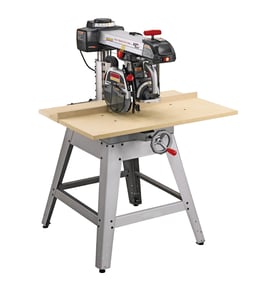

When did Craftsman stop making radial arm saws?
Craftsman radial arm saw production effectively ended in the early 1990s; most Craftsman radial arm saws were made up through about 1992, and new radial arm saws largely disappeared from Sears/Craftsman lineups shortly after that. For model 113198111, use the 113198111 owner's manual to confirm the exact features and guard setup for your specific saw.
What “stopped making” usually means for Craftsman radial arm saws
Craftsman is a brand name used across multiple manufacturers and model runs, so the cleanest way to think about this is by timeline:
- Manufacturing era: Many Craftsman radial arm saws were produced from the late 1950s through the early 1990s.
- Retail availability: Even after production slowed or stopped, some units remained available as old stock.
- Model-by-model differences: Guarding, yokes, motors, and tables can vary a lot between similar-looking saws.
How to date your Craftsman 113198111 more accurately
If you are trying to pin down when your saw was built or sold, these checks work best:
- Locate the model and serial tag on the arm, column, or base.
- Compare the guard, switch, and wiring layout to diagrams in the 113198111 owner's manual.
- Check whether your saw uses a metal or plastic blade guard, and whether it has later-style anti-kickback features.
- Review the motor nameplate (HP, amps, voltage) and match it to the manual specs.
Quick dating clues (typical)
| Clue on the saw | What it often indicates |
|---|---|
| Older-style guard and switch | Earlier production run |
| Updated guard components | Later production run |
| Original manual matches current configuration | Fewer modifications over time |
Why it matters
Knowing the approximate era helps you choose compatible parts and set up the saw safely. On a 10-inch radial saw like the Craftsman 113198111, correct guarding, alignment, and wiring condition directly affect cut quality and safe operation.
Last updated: February 2026
Where can I buy Craftsman replacement parts?
For your Craftsman 113198111 10-inch radial saw, the most reliable way to buy compatible replacement parts is to use the model-based parts listing on Sears PartsDirect and match parts by model number and diagram callouts; our 113198111 owner's manual helps confirm the correct part and hardware.
Best way to shop parts for model 113198111
- Use the model number 113198111 to avoid ordering look-alike parts.
- Compare the part description to the saw’s location in the diagrams (guard area, carriage, yoke, motor, table).
- Confirm fasteners and small hardware; older radial arm saws often use specific washers, spacers, and screws.
- If you are replacing an electrical item (switch, cord, capacitor), match wire count and terminal style.
- Order all wear items together when practical (for example, bearings plus retaining rings) to reduce downtime.
What to confirm before you order
Even without model-specific part numbers shown here, these checks prevent most wrong-part orders:
| What to match | Why it matters | Quick check |
|---|---|---|
| Model number | Ensures fit and safety compatibility | Tag/plate on the saw frame |
| Assembly location | Prevents ordering a similar-looking part | Diagram section in the manual |
| Electrical rating | Avoids overheating and nuisance trips | Volts/amps on the old part |
| Mounting style | Ensures alignment and proper guarding | Hole pattern, shaft size |
Why it matters
A radial arm saw depends on correct alignment, guarding, and stable electrical connections. Using parts matched to Craftsman 113198111 helps keep the carriage travel smooth, the blade tracking true, and the switch and wiring operating safely.
Last updated: February 2026
Are radial arm saws illegal?
Radial arm saws are not illegal to own or use in the U.S., including the Craftsman 113198111 10-inch radial saw. They are powerful tools with higher kickback and blade-exposure risk than many modern saw setups, so safe setup, guarding, and technique matter.
What’s actually restricted (and what isn’t)
Radial arm saws are generally treated like other woodworking power tools: they are allowed, but you’re expected to use them safely.
- You can legally buy, own, and use a radial arm saw.
- Jobsite or shop rules can restrict certain tools (company policy, school shop rules, insurance requirements).
- Some older saws may be missing guards or have worn safety parts; that makes them unsafe, not illegal.
- Using the wrong blade or feed direction increases the chance of climb-cutting and kickback.
- A poorly aligned arm, yoke, or fence can cause binding and dangerous cuts.
Safety checks we recommend for the Craftsman 113198111
Use the owner's manual to confirm the correct guard setup, adjustments, and operating positions for your exact saw.
- Verify the blade guard, anti-kickback features (if equipped), and return spring action work smoothly.
- Confirm the blade is sharp, correct type for the cut, and installed in the correct rotation.
- Square and lock the arm and carriage; eliminate play before cutting.
- Set the fence straight and secure; replace it if it’s warped or chewed up.
- Use proper support for long stock; keep hands out of the blade path.
Quick comparison: why radial arm saws feel “riskier”
| Tool setup | Common risk | Typical cause | Best prevention |
|---|---|---|---|
| Radial arm saw (crosscut) | Climb-cut, sudden pull | Feeding too fast, wrong blade | Correct blade, controlled feed, firm locks |
| Table saw | Kickback | Pinching at blade, poor support | Riving knife/guard, fence alignment |
| Miter saw | Hand proximity | Short stock, awkward holds | Clamps, proper work support |
Why it matters
Many “illegal” claims come from confusion between legality and safety guidance. With a radial arm saw, correct alignment, guarding, and technique reduce the risks that give the tool its reputation.
Last updated: February 2026
Are radial arm saws worth anything?
Yes. A Craftsman radial arm saw like model 113198111 can be worth money if it is complete, runs smoothly, and has key safety and alignment parts intact; value drops fast when guards, fences, or the table system are missing or the motor has issues. Use the 113198111 owner's manual to confirm what parts and adjustments your saw should have.
What drives value the most
- Condition of the motor and bearings: quiet start-up, no burning smell, no excessive sparking at the brushes.
- Completeness: blade guard, anti-kickback parts, yoke and carriage hardware, and the full table/fence setup.
- Accuracy: holds alignment for 90 degree crosscuts and repeatable miters without drifting.
- Wear items: power cord, switch, arbor threads, and carriage rollers should be solid.
- Local demand: radial arm saws are heavy, so value is often higher when the buyer can pick up locally.
Quick worth-it checklist (10 minutes)
- Unplug it; inspect the cord, plug, and switch housing for cracks.
- Slide the carriage through its full travel; it should feel smooth, not gritty or loose.
- Check arm lock and bevel/miter locks; they should clamp firmly.
- Inspect the table boards and fence; missing or hacked-up tables reduce value.
- Spin the blade by hand (unplugged); it should rotate freely without wobble.
Typical value bands (what buyers usually pay)
| Condition | What it means | Typical outcome |
|---|---|---|
| Parts/repair | Missing guard/table, motor issues, heavy rust | Low value; often bought for parts |
| Working, average | Runs, mostly complete, normal wear | Mid-range value |
| Clean, complete, tuned | Complete safety parts, smooth travel, accurate cuts | Higher value; easier to sell |
Why it matters
Radial arm saw value is tied to safety and precision. A complete guard system and a stable table/fence make the saw usable for crosscuts and dados; missing components turn it into a project tool and reduce what it is worth.
Last updated: February 2026
Why are radial arm saws no longer made?
Radial arm saws are far less common today because most woodworkers can do the same cuts with a table saw, miter saw, or track saw using simpler setups and more built-in guarding. For a Craftsman 113198111 10-inch radial saw, the best way to keep it safe and accurate is to follow the alignment and operating procedures in the 113198111 owner's manual.
What changed in the market
Radial arm saws did not disappear because the design cannot work; they lost shelf space because other saw types became easier to use for the average DIYer and jobsite.
- Sliding compound miter saws took over crosscuts and miters with faster setup
- Table saws became the default for ripping and repeatable cuts
- Modern guards, riving knives, and dust collection improved on competing tools
- Many users found radial arm saws harder to keep perfectly aligned over time
- Larger footprints made them less attractive for small shops
Safety and precision factors that affected popularity
A radial arm saw can climb or self-feed if technique, blade choice, or alignment is off. That reputation pushed many buyers toward tools that feel more “plug-and-play.”
Common contributors
- Carriage and arm not square to the fence (crosscuts drift)
- Blade not suited for radial arm saw use (more grabby cuts)
- Worn bearings, rollers, or tracks (rough travel, inconsistent depth)
- Fence and table surface not flat or not securely fastened
- Guard, anti-kickback, or return spring not working smoothly
Quick comparison: why many people switched
| Task | Radial arm saw | Common replacement |
|---|---|---|
| Crosscutting long boards | Very capable | Sliding miter saw |
| Ripping | Possible, but technique-sensitive | Table saw |
| Dados/rabbets | Capable with setup | Table saw with dado set |
| Repetitive accuracy | Good when tuned | Often easier to maintain |
Why it matters for your Craftsman 113198111
If you already own this saw, the value is in keeping it tuned: a properly aligned arm, solid table/fence, correct blade, and smooth carriage travel make it accurate and predictable. The 113198111 owner's manual is the right reference for squaring, depth settings, and safe operating positions.
Last updated: February 2026