Owner’s manual

Is a 20 gallon air compressor big enough for air tools?
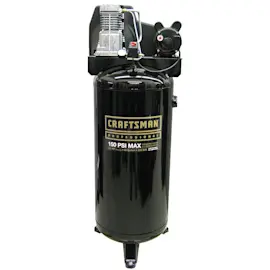
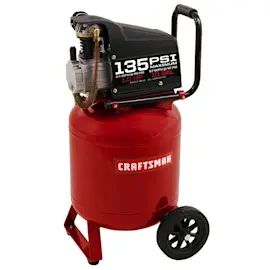
A 20-gallon air compressor is big enough for many air tools used intermittently, but what matters most is air delivery (SCFM) and duty cycle. For Craftsman model 921169230 specifically, the tank is 10 gallons and it delivers 2.4 SCFM at 90 PSI, so it fits light, stop-and-go tool use better than continuous high-CFM work.
How to tell if it will run your air tool
Match your tool’s required SCFM (usually listed on the tool) to the compressor’s SCFM at the same pressure.
- Check the tool’s SCFM rating at 90 PSI (or the PSI you plan to run)
- Compare it to the compressor’s SCFM @ 90 PSI (921169230 is 2.4 SCFM @ 90 PSI)
- Plan for cycling; this model is a 50% duty cycle unit (run time limits matter)
- Use the regulator to set outlet pressure to the tool’s recommended PSI
- If pressure drops fast or the motor runs constantly, you need more SCFM (not just more tank)
What a “20-gallon” tank changes (and what it does not)
A larger tank mainly gives you a longer burst before pressure drops; it does not increase SCFM by itself.
| Factor | Bigger tank (example: 20 gal) | Higher SCFM pump/motor |
|---|---|---|
| Short bursts (nailer, blow gun) | Helps | Helps |
| Continuous tools (sander, sprayer) | Limited help | Best fix |
| Pressure stability | Better buffer | Better overall |
| Motor run time | Can reduce rapid cycling | Can keep up with demand |
Practical guidance by tool type
- Usually OK: brad/finish nailers, staplers, blow gun, tire inflation
- Sometimes OK with pauses: small impact wrench, light ratchet (short bursts)
- Often not a good match: DA sanders, grinders, paint sprayers (continuous airflow)
Why it matters
If the compressor’s SCFM is lower than the tool’s consumption, tank pressure drops, the pump runs hard, and performance suffers. Staying within the duty cycle also helps prevent overheating and premature wear.
For the exact operating specs and safe use steps for Craftsman 921169230, use the owner's manual.
Last updated: February 2026
How do I find my compressor model number?
Your Craftsman air compressor model number is printed on the manufacturer’s data label (data plate) attached to the unit. On model 921169230, check the tank and the main frame area first; the label typically lists both the model and serial number.
Where to look on a Craftsman air compressor
Check these common label locations (start with the easiest-to-see spots):
- On the air tank (front, side, or near the base weld seam)
- On the frame or handle area near the motor/pump assembly
- Near the regulator and gauge panel area
- On or near the pump shroud or motor housing (sometimes on a sticker)
- Under the unit near the feet or base plate (tip the unit safely and look)
For diagrams and the parts list tied to the model identification, use the owner's manual.
What the label usually includes
Most data plates include the same core identifiers. Use this quick guide:
| Label item | What it means | Why you need it |
|---|---|---|
| Model number | The exact unit version (example: 921169230) | Ensures correct parts and instructions |
| Serial number | Unique ID for your specific unit | Helps match production run details |
| Tank size / HP | Basic specs (varies by unit) | Confirms you are looking at the right label |
| Pressure rating | Max pressure information | Helps with safe setup and troubleshooting |
Tips to make sure you have the right number
- Write the model number exactly as shown (include all digits)
- Take a clear photo of the label before it wears or peels
- If you see a shorter number on the manual cover (for example, “16923”), keep it too; it can be a related model identifier used in documentation
- Match the model number on the label to the model number used when searching parts
Why it matters
Air compressor parts like the pressure switch, regulator, safety valve, and gauges can look similar across Craftsman units but differ by model. Using the exact model number prevents ordering the wrong part and speeds up troubleshooting.
Last updated: February 2026
What is the most common cause of air compressor failure?
The most common cause of air compressor failure is poor maintenance that leads to overheating, restricted airflow, and accelerated wear. On the Craftsman 921169230 air compressor, staying on top of filter care, tank draining, and safe operating practices helps prevent leaks, motor strain, and premature pump damage (see the owner's manual).
What usually fails first (and why)
Most “failed compressor” complaints trace back to a few preventable issues:
- Overheating from blocked ventilation, long run times, or dirty cooling surfaces
- Restricted intake airflow from a dirty or missing air filter
- Moisture corrosion from not draining the tank regularly
- Air leaks at fittings, regulator, check valve, or safety valve that force longer run time
- Electrical strain from low voltage, undersized extension cords, or an overloaded circuit
Quick prevention checklist for Craftsman 921169230
These habits reduce the most common failure causes:
- Run the compressor on a dedicated 15 amp circuit
- If you must use an extension cord, use 12 gauge and keep it 25 ft max
- Let the unit cool before maintenance; hot surfaces can burn
- Drain condensation from the tank after use to limit internal rust
- Keep guards and covers installed; don’t run it with damaged guards
Symptom-to-cause guide
| What you notice | Most likely cause | What to check first |
|---|---|---|
| Won’t start | Power supply issue or pressure-related restart problem | Circuit/fuse, cord, switch, tank pressure |
| Runs but won’t build pressure | Leak or pump/check valve issue | Listen for leaks, inspect check valve |
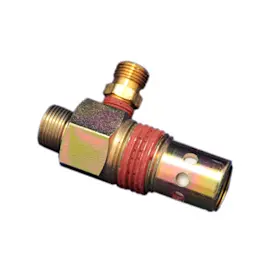
| Constant leaking after shutoff | Check valve not sealing | Drain tank, clean/replace check valve |
| Water spitting from air line | Normal condensation buildup | Drain tank, add an in-line water filter |
Why it matters
When airflow is restricted or leaks are present, the compressor runs hotter and longer. That extra heat and run time is what typically shortens motor and pump life, and it can also create unsafe operating conditions.
Helpful DIY troubleshooting
Last updated: February 2026
Is it worth it to repair a compressor?
For the Craftsman air compressor model 921169230, repair is worth it when the problem is a normal wear item (like a check valve, pressure switch, regulator, or air leak at a fitting) and the tank is sound. If the air tank itself leaks, replacement is the right choice because the tank is not repairable.
Quick decision checklist
- Repair if the unit runs but has symptoms like slow fill, leaking fittings, or pressure control issues.
- Repair if the issue points to a serviceable component (check valve, pressure switch, gauge, regulator).
- Replace if air leaks from the tank body or tank welds.
- Replace if the compressor has been repeatedly overheated from exceeding the 50% duty cycle (more than 30 minutes per hour).
- Repair if the problem is electrical supply related (undersized circuit, wrong extension cord).
What the manual says that affects the decision
The owner's manual for model 921169230 calls out a few make-or-break items:
| Situation | What it usually means | Best next step |
|---|---|---|
| Air leak from tank body or welds | Tank integrity issue | Replace the air compressor |
| Breakers/fuses trip repeatedly | Often check valve or electrical supply issue | Diagnose supply first; then service check valve |
| Low voltage or long/small extension cord | Motor strain and damage risk | Correct power setup before further troubleshooting |
| Moisture in air line | Normal condensation | Drain tank daily; add in-line filtration if needed |
Cost and effort: what typically makes repair worthwhile
Repairs tend to be worthwhile when:
- The compressor still builds pressure, but won’t start, won’t build tank pressure, or can’t adjust output pressure due to a single failed control part.
- The fix is maintenance-driven (draining the tank, checking the air filter, changing oil if your version is oil-lubricated).
- The unit has not been run beyond its rated duty cycle.
For step-by-step troubleshooting, we use these guides often:
Why it matters
A leaking tank is a safety and reliability problem, while most other failures are component-level and can restore normal performance. Following the manual’s power, ventilation (keep about 12 inches of clearance), and daily draining guidance also prevents repeat failures.
Last updated: February 2026
What company makes Craftsman air compressors?
Craftsman is a brand, so Craftsman air compressors are built by different original equipment manufacturers (OEMs) depending on the model and production run. For the Craftsman 921169230, the most reliable way to identify the actual maker is to match the data plate information and parts list details in the owner's manual.
How to identify the OEM for your Craftsman 921169230
We recommend using the compressor’s data label and the manual’s parts information together.
- Check the data plate for a manufacturer name, service number, or code
- Look for a model cross-reference (some labels show both a Craftsman model and an internal OEM model)
- Compare key components listed in the manual (pressure switch, regulator, gauges)
- Note the manual publication details and part list identifiers
- Use the exact model number when searching parts and documentation: 921169230
What the manual tells you (and why it helps)
The manual for this unit is branded Craftsman and includes a detailed exploded view and parts list, which is often the fastest path to identifying the OEM family and sourcing correct replacement components.
Here are examples of major assemblies and parts called out in the parts list:
| Component type | Example listed in the manual | Why it matters |
|---|---|---|
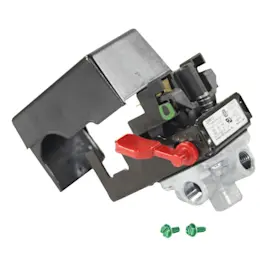
| Pressure control | Pressure switch assembly (135 PSI) | OEMs often use distinct switch styles and cut-in/cut-out setups |
| Air delivery | Regulator, quick connect, outlet tube | Helps match fittings and thread types when servicing leaks |
| Safety and monitoring | Safety valve, tank and tool pressure gauges | Confirms gauge size/range and safety valve style |
Why it matters
Knowing the OEM helps you avoid mismatched parts (especially for the pressure switch, check valve, regulator, and gauges) and speeds up troubleshooting when the compressor will not start, will not build pressure, or leaks air.
Related DIY help
If you are diagnosing a problem while you identify the OEM, these guides align with common Craftsman air compressor issues:
Last updated: February 2026