Error Codes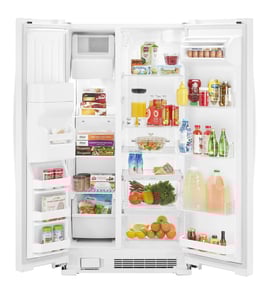


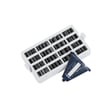
How to replace water filter on KitchenAid side-by-side refrigerator?
On your KitchenAid KBSD702MSS01 side-by-side refrigerator, you replace the water filter by removing the old cartridge from the filter housing, inserting the new filter fully, then locking it in place (push in and twist clockwise until it stops). After replacement, flush water to clear air and carbon fines.
Before you start
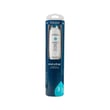
- Use the correct replacement filter for KBSD702MSS01: refrigerator filter EDR3RXD1
- Have a towel ready for a few drips
- If your dispenser has a filter door/cover, open it fully so the filter can seat straight
- If the filter is stuck, do not force it; re-check alignment and the release mechanism
Step-by-step: replace the filter
- Dispense a little water first (if possible) to relieve pressure.
- Open the filter compartment/door.
- Remove the old filter by turning it counterclockwise (left) and pulling it straight out.
- Insert the new filter and push it in firmly.
- Twist the filter clockwise (right) until it stops and feels locked.
- Close the filter door/cover.
Flush and reset (what most owners should do)
After installing a new filter, we recommend flushing the system so water tastes normal and the dispenser flow stabilizes.
- Dispense and discard several gallons of water (or run water for a few minutes)
- If the water sputters, keep dispensing until the flow is steady
- If your model has a filter status light, reset it using the control panel steps for your refrigerator
| Symptom after replacement | Most common cause | What to do |
|---|---|---|
| Water sputters or spurts | Air in the line | Keep dispensing until steady |
| Slow water flow | Filter not fully seated or clogged | Re-seat and lock the filter; replace if needed |
| Leaking at filter area | O-ring not sealing or filter not locked | Remove, inspect, reinstall and lock |
Why it matters
A properly installed refrigerator water filter protects water taste and helps maintain normal dispenser flow; a filter that is not fully locked can leak, restrict water, or cause the dispenser to sputter.
For visuals and model-style tips, follow our guide: how to replace the water filter in a KitchenAid refrigerator.
Last updated: February 2026
What is a standard size side-by-side refrigerator?
A “standard” side-by-side refrigerator size is usually about 30 to 36 inches wide, 67 to 70 inches tall, and 29 to 35 inches deep (depth varies most with handles and door clearance). For your KitchenAid KBSD702MSS01, confirm fit by measuring your opening and allowing space for airflow and doors to swing.
Typical side-by-side size ranges
Most side-by-side refrigerators fall into these common ranges:
- Width: 30 to 36 inches
- Height: 67 to 70 inches
- Depth: 29 to 35 inches
- Door swing clearance: often needs extra space beyond cabinet depth
- Ventilation clearance: leave space around the cabinet for proper cooling
Quick measuring checklist (before you buy or move the fridge)
Measure in inches and write it down:
- Opening width (left to right at the front)
- Opening height (floor to cabinet top)
- Opening depth (back wall to front edge of cabinets)
- Pathway clearance (doorways, hallways, turns)
- Door swing space (especially if a wall or island is nearby)
Why depth is tricky (and why it matters)
Depth can change a lot depending on how you measure. A refrigerator that “fits” the cabinet depth can still stick out once you include handles, hinges, and the space needed for water lines. If the unit is too tight, you can get poor airflow, warmer temps, and higher energy use.
Standard size snapshot
| Dimension | Common range | What affects it most |
|---|---|---|
| Width | 30–36 in. | Cabinet opening, trim panels |
| Height | 67–70 in. | Leveling legs, flooring |
| Depth | 29–35 in. | Handles, hinges, rear clearance |
Related maintenance that helps performance
If you are checking fit because cooling seems weak, also keep up with basic airflow and filtration items:
- Replace the water filter on schedule (see refrigerator filter EDR3RXD1)
- Replace the odor filter if smells linger (see refrigerator air filter W10311524)
- Keep vents inside the compartments unblocked
- Clean dust from the grille area periodically
For step-by-step filter guidance, use how to replace the water filter in a KitchenAid refrigerator.
Last updated: February 2026
What is the disadvantage of a side-by-side fridge?
The biggest disadvantage of a side-by-side refrigerator (including the KitchenAid KBSD702MSS01) is reduced usable width in both compartments; wide items like pizza boxes, party platters, and large sheet pans often do not fit well, even when total cubic feet looks similar.
Common drawbacks you will notice day to day
- Narrow shelves limit storage for wide or bulky foods.
- Freezer space is tall and narrow; large frozen boxes can be awkward to load.
- More door openings can happen because items are split between two vertical sections.
- Ice and water in the door can reduce interior bin space and add more parts to maintain.
- Some models place frequently used fresh-food items at mid to low height, which can mean more bending.
Side-by-side vs French door: quick comparison
| Feature | Side-by-side (KBSD702MSS01 style) | French door (typical) |
|---|---|---|
| Fits wide items | Fair to poor | Good |
| Frozen food organization | Good for bags and tall items | Good for wide items in drawers |
| Eye-level access | Good for both sections | Best for fresh food |
| Door swing clearance | Often better in tight kitchens | Often needs more clearance |
How to reduce the “narrow shelf” problem
- Use clear bins to group smaller items so you can pull out a whole category at once.
- Store wide leftovers in narrower containers (rectangular, stackable).
- Keep a “quick-grab” zone at eye level for daily items.
- Avoid overpacking the air vents; airflow matters more in narrow compartments.
- If odors build up faster due to tighter packing, replace the refrigerator air filter W10311524 on schedule.
Why it matters
Most side-by-side complaints come down to geometry, not cooling performance. The split design trades wide, flexible shelf space for easier access to both fresh and frozen foods without bending for a bottom freezer drawer.
Last updated: February 2026
What is the most common problem with a KitchenAid refrigerator?
The most common KitchenAid refrigerator problems are ice maker and water dispensing issues, followed by cooling complaints (warm fridge or freezer) and leaks. On your KitchenAid KBSD702MSS01 side-by-side refrigerator, these symptoms most often trace back to airflow, filtration, or water-delivery components such as the air filter, water filter, or dispenser parts like the motor.
Most common symptoms we see
- Ice maker not making ice, slow ice production, or small/hollow cubes
- Water dispenser slow, sputtering, or not dispensing
- Fridge section warm while freezer seems OK (airflow imbalance)
- Water leaking under the unit or inside the fresh food section
- Unusual noises (fan-related or airflow-related)
Quick checks that solve many “common problems”
- Confirm temperatures: set refrigerator to about 37°F and freezer to about 0°F.
- Replace overdue filters:
- Water quality and flow issues often improve after replacing the refrigerator filter EDR3RXD1.
- Odors and some airflow complaints improve after replacing the refrigerator air filter W10311524.
- Check door sealing: gaps or a torn gasket can cause temperature swings and moisture.
- Listen for airflow: weak or inconsistent airflow points to a fan or damper issue.
- Purge air after filter changes: trapped air can cause sputtering and slow flow; follow how to purge air from a refrigerator water dispenser video.
Common causes and the parts that match them
| Symptom | Likely cause | Model-matched part to consider |
|---|---|---|
| Slow water, bad taste/odor | Clogged water filter | Refrigerator filter EDR3RXD1 |
| Odors in fresh food section | Saturated air filter | Refrigerator air filter W10311524 |
| No ice from dispenser, weak dispensing | Dispenser drive issue | Dispenser motor W10822606 |
| Ice clumping or moisture near dispenser | Worn seal letting humid air in | Refrigerator ice dispenser driveshaft seal WP2198628 |
| Temps uneven between sections | Airflow/damper or sensor issue | Refrigerator air diffuser WP2220377, refrigerator temperature sensor WP2188820 |
Why it matters
Ice maker problems, temperature fluctuations, and leaks usually get worse when airflow is restricted or water flow is reduced. Staying current on filters and addressing dispenser sealing early helps protect food quality, reduces frost and clumping, and prevents nuisance leaks.
Last updated: February 2026