Owner’s manual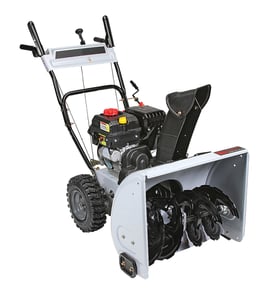




What is the typical lifespan of a gas snowblower?
A typical gas snowblower lasts 10 to 15 years with normal homeowner use and routine maintenance. For the MTD 31AE5KLF795, the manual also lists an Average Useful Life of 7 years or 60 operating hours, and recommends annual inspections after that point; see the MTD 31AE5KLF795 owner's manual.
Two common ways to think about lifespan are:
- Calendar years: how long the machine stays reliable with seasonal use
- Operating hours: how many run-hours the engine and drive system can handle
- Wear items: belts, cables, shear pins, and scraper components that are expected to be replaced
| Usage pattern | Typical lifespan | What usually ends it |
|---|---|---|
| Light homeowner use (short driveway) | 12 to 15 years | Corrosion, neglected fuel system |
| Moderate use (regular storms) | 10 to 15 years | Belts/cables wear, friction drive wear |
| Heavy use (long runs, wet snow, gravel) | 7 to 12 years | Auger/drive wear, gearbox or chassis fatigue |
These steps have the biggest impact on how long a snow thrower lasts:
- Use fresh fuel and stabilize fuel before storage
- Change engine oil on schedule
- Keep the machine clean and dry; store in a dry area
- Lubricate moving points (wheels, auger shaft, drive components)
- Avoid overloading the machine by trying to clear snow too fast
- Replace wear parts early (belts, cables, shear pins, shave plate) before they cause secondary damage
A snowblower can “run” for years while becoming less safe or less effective. The manual’s 7-year or 60-hour guidance is a practical checkpoint to make sure the mechanical and safety systems (controls returning to disengaged, chute condition, drive engagement) are still operating correctly.
Last updated: January 2026
Is a 2 stage or 3 stage snowblower better?
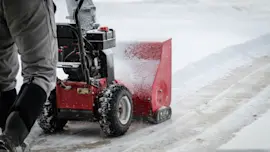
A 2-stage snowblower is the best fit for most homeowners because it uses an auger plus an impeller to handle typical driveway snow efficiently. A 3-stage design adds an accelerator to chew through deeper, heavier, or plowed-in snow faster, but it costs more and is usually larger.
- 2-stage: auger pulls snow in, impeller throws it out; great all-around performance for most storms.
- 3-stage: adds an accelerator in front of the auger; clears faster in deep, wet, or compacted snow.
- Cost and size: 3-stage models are typically more expensive and heavier.
- Maintenance: both need regular checks of belts, cables, and shear pins.
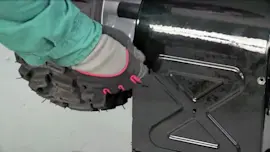
- Surface setup matters: skid shoe height affects scraping and gravel pickup; follow the setup guidance in the 31AE5KLF795 owner’s manual.
| Feature | 2-stage | 3-stage |
|---|---|---|
| Best for | Most driveways, typical snowfalls | Deep, heavy, icy, plowed-in snow |
| Clearing speed | Good | Faster |
| Machine size/weight | Usually smaller | Usually larger |
| Budget | Lower | Higher |
- Choose 2-stage if you clear a standard driveway, get moderate storms, and want strong performance without extra bulk.
- Choose 3-stage if you regularly deal with end-of-driveway plow berms, heavy wet snow, or frequent deep accumulation and want faster intake.
The “better” choice is the one that matches your snow type and workload. Oversizing can mean extra cost and weight; undersizing can mean slower clearing and more strain on wear items like shear pins and drive components.
Last updated: January 2026
Is it worth fixing an old snowblower?
Yes. It’s worth fixing an older MTD snow thrower model 31AE5KLF795 when the issue is a normal wear item (shear pins, belts, cables, shave plate) and the machine still starts, drives, and throws snow reliably. If it needs repeated major drivetrain or engine work, replacement is the better value.
- Fix it if it starts easily and only needs routine parts (shear pins, belts, cables, skid shoes, shave plate).
- Fix it if the repair total is well under half the cost of a comparable new snowblower.
- Fix it if the augers stopped after hitting ice or debris; that commonly means sheared pins.
- Replace it if it frequently breaks down mid-season or needs multiple major assemblies at once.
- Replace it if it will not drive even after cable adjustment and friction wheel inspection.
| Symptom | Likely cause | What to do |
|---|---|---|
| Augers will not turn | Shear pins/cotter pins sheared after impact | Replace with the correct shear pins |
| Leaves snow behind | Worn shave plate or skid shoes | Replace and re-level skid shoes |
| Pulls to one side | Unequal tire pressure | Set both tires equally (15 to 20 PSI) |
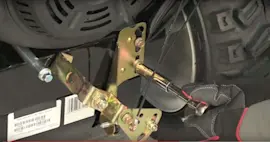
| Poor drive | Worn drive belt or friction wheel wear | Replace belt; inspect friction wheel |
- The manual warns against substituting bolts for shear pins; use craftsman snowblower shear pin 738-04124A.
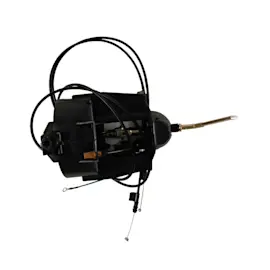
- If auger engagement feels loose or inconsistent, replace the cable; use snowblower auger clutch cable 946-04230b.
- If clearing performance dropped because the scraper edge is worn, replace the shave plate; use shave plate 790-00121.
Wear parts are designed to fail first (especially shear pins) to protect expensive components like the auger gearbox. Fixing those items restores safe operation and full snow-throwing performance at a low cost.
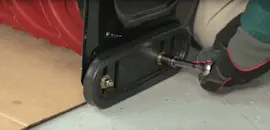
Use the maintenance and service steps in the 31AE5KLF795 owner’s manual to check shear pins, tire pressure, shave plate and skid shoes, and the drive system.
Last updated: January 2026