Owner’s manual
 Error Codes



What is the advantage of a bottom mount fridge?
A bottom-mount refrigerator like the LG LRMVS2806D keeps the fresh-food section at eye level, so you reach everyday items more easily and bend less during normal use. The freezer stays in the lower drawer, which works well when you access refrigerated foods more often.
Key advantages in daily use
- Less bending for fresh food: milk, produce, leftovers, and drinks are easier to see and grab.
- Better organization up top: adjustable shelves and storage zones help you fit tall items and meal prep containers.
- Freezer drawer storage: pullout-style freezer space makes it easier to separate frozen foods.
- Convenience features: many LG bottom-freezer models include options like Door-in-Door storage and automatic ice making (features vary by model).
How this layout fits the LRMVS2806D design
The LRMVS2806D family is a French door, bottom-freezer style. That typically means you get wide refrigerator shelving for platters and better visibility of fresh foods, while frozen items live in a lower pullout drawer.
| Layout | Fresh food access | Freezer access | Best for |
|---|---|---|---|
| Bottom mount (bottom freezer) | Easiest (eye level) | Requires bending | Households that use the fridge most |
| Top freezer | Requires bending more | Easiest (eye level) | Heavy freezer users |
| Side-by-side | Moderate | Moderate | Narrow spaces, equal use |
Why it matters
Most day-to-day kitchen trips are for refrigerated items. Keeping that compartment higher reduces strain and speeds up meal prep, while the freezer drawer still provides deep storage for bulk frozen foods.
For feature details and storage layout specific to your unit, use the LRMVS2806D owner's manual.
Last updated: February 2026
Why does my LG freezer keep icing up at the bottom?
A sheet of ice at the bottom of the freezer in your LG LRMVS2806D is typically caused by a clogged or frozen defrost drain; meltwater cannot flow to the drain pan, so it refreezes on the freezer floor. Use the steps in the LRMVS2806D owner's manual and clear the drain path.
What to check first (fast, high-impact)
- Unplug the refrigerator before working inside the freezer.
- Remove the freezer drawer/bins so you can see the ice sheet clearly.
- Manually defrost the ice (door open, towels down); do not chip ice with sharp tools.
- Find the drain opening under/behind the rear freezer panel area and clear visible debris.
- Flush the drain with hot water using a turkey baster or squeeze bottle until it flows freely.
- If water backs up, the drain tube is likely iced or restricted and needs clearing.
Common causes and fixes
| Symptom you see | Most likely cause | What usually fixes it |
|---|---|---|
| Ice sheet returns every few days | Drain hole or drain tube partially blocked | Hot-water flush, clear gunk, confirm steady drain flow |
| Water/ice only after heavy use or door left ajar | Excess moisture from warm air entering | Improve door closing habits, check gasket seal |
| Frost buildup plus warm temps or odd fan noise | Airflow/defrost issue beyond the drain | Check for fan operation and defrost performance; service if needed |
Parts that are often involved
If the drain tube is cracked, kinked, or won’t clear, replacing it is a common repair.
Why it matters
When the defrost drain can’t carry water away, the freezer repeatedly refreezes that water into a thick ice layer. Over time, this can lead to leaks, drawer binding, and temperature swings that affect ice production and food quality.
Prevention tips
- Keep the freezer door fully closed and avoid long door-open times.
- Do not overpack; leave space for airflow around vents.
- Clean spills promptly so they do not wash into and clog the drain.
- If you see recurring puddles, address them early before they become an ice slab.
Last updated: February 2026
What is the lifespan of an LG refrigerator?
Most LG refrigerators, including the LG LRMVS2806D, last 10 to 15 years with normal use and basic maintenance. In the LRMVS2806D warranty, LG covers the refrigerator for 1 year, the sealed system for 5 years, and the linear/inverter compressor has extended coverage (parts-only in years 6-10). See the LRMVS2806D owner's manual for warranty details.
What affects how long an LG refrigerator lasts
We see lifespan swing up or down based on a few predictable factors:
- Condenser airflow and cleanliness (dust buildup makes the compressor work harder)
- Door seal condition and door habits (warm air leaks increase run time)
- Ice maker and water system upkeep (clogs and leaks create secondary damage)
- Stable temperatures (avoid frequent warm-ups from overloading or long door-open times)
- Power quality (surges and outages shorten control and compressor life)
Maintenance that helps you reach the 10 to 15 year range
These steps reduce strain on the sealed system and help prevent common failures:
- Keep vents inside the fresh food section clear so air can circulate
- Clean dust from the condenser area periodically (frequency depends on pets and dust)
- Confirm doors close fully and the gasket seals all the way around
- Replace filters on schedule to keep airflow and water flow normal
- Address puddles, frost, or unusual noises early instead of waiting
Quick reference: lifespan vs. warranty coverage (LRMVS2806D)
| Item | Typical lifespan expectation | Warranty coverage shown in manual (USA) |
|---|---|---|
| Whole refrigerator | 10 to 15 years | 1 year |
| Sealed system (condenser, dryer, connecting tube, evaporator) | Often 10+ years | 5 years |
| Linear/inverter compressor | Often 10+ years | 5 years parts and labor; years 6-10 parts only |
Why it matters
A refrigerator can keep running past the main warranty period, but maintenance is what protects the expensive components (compressor, evaporator, condenser) and helps you avoid temperature swings that spoil food.
Last updated: February 2026
What is the most common problem with the LG refrigerator?
For the LG LRMVS2806D refrigerator, the most common service issue is a cooling problem: the fridge or freezer runs warm, temperatures swing, or airflow feels weak. Many “not cooling” calls also trace back to settings (OFF/Demo mode), power supply issues, or airflow restrictions; check the LRMVS2806D owner's manual troubleshooting steps first.
Most common symptoms customers notice
- Fresh food section is warm but freezer seems closer to normal
- Freezer is warm and ice production slows or stops
- Food spoils faster, or you see temperature fluctuations
- Fan noise changes, or you hear unusual running sounds
- Frost buildup or poor airflow from vents
Quick checks we recommend first (10 to 20 minutes)
- Confirm power and outlet: reset the breaker or GFCI if tripped.
- Check control settings: make sure the refrigerator is not set to OFF or Demo/Display mode.
- Inspect door sealing: look for gaps, torn gasket areas, or doors not closing fully.
- Verify airflow: do not block interior vents with food packages.
- Clean condenser area: dust buildup underneath or behind the unit can raise temps.
Common causes and the parts that often relate
| Problem area | What it affects | Example part for this model |
|---|---|---|
| Evaporator airflow | Weak cooling in fridge section, warm spots | Refrigerator evaporator fan motor EAU63923603 |
| Condenser airflow | Overall poor cooling, long run times | LG refrigerator condenser fan motor EAU65058502 |
| Temperature sensing | Temps swing, cooling seems inconsistent | Refrigerator temperature sensor 6500JB2002X |
| Door sealing | Moisture, frost, warm temps near door | Kenmore refrigerator door gasket, right ADX72930475 |
Why it matters
Cooling problems are the root cause behind many other complaints (soft ice, slow ice maker, sweating, frost, and food spoilage). Fixing airflow, sealing, and settings early prevents bigger failures and reduces energy use.
If the issue is ice or water related
If cooling seems OK but ice or water quality is the complaint, follow the flushing guidance and dispenser notes in the manual, and use the correct filter for this model. For step-by-step help, use how to replace the water filter in an LG refrigerator.
Last updated: February 2026
How to read LG refrigerator model numbers?
To read an LG refrigerator model number, we recommend starting with the rating label inside the fresh food compartment; it lists the full model and serial number exactly as LG uses them (for this unit, the model family shown in the manual includes LRMVS2806*). Use the exact characters on that label when ordering parts or checking features in the LRMVS2806D owner's manual.
Where to find the model number on LG refrigerators
Most LG French door and bottom-mount refrigerators place the rating label where it is easy to see when the doors are open.
- Open the refrigerator (fresh food) doors
- Look along the inside walls near the top (often left side)
- Check near the crisper frame area if you do not see it up high
- Write down the full model number and the serial number
- Match the characters exactly (letters, numbers, and any suffix)
How to “read” the model number once you find it
The most important part of reading the model number is using it to identify the correct platform and parts list.
| What to capture from the label | Example for this page | Why it matters |
|---|---|---|
| Model number | LRMVS2806D | Ensures correct parts and documentation |
| Series/family | LRMVS2806* | Helps match manuals that cover multiple variants |
| Serial number | (from label) | Used for service lookups and production details |
Tips for ordering parts and filters correctly
Even small model-number differences can change which water filter, air filter, or door parts fit.
- Use the full model number from the label, not just the family name
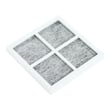
- If you are buying an air filter, match it to the correct LG filter style; for this model page, a common option is the LG refrigerator air filter ADQ73214408
- If you are buying a water filter, confirm the filter type and housing style before ordering; this model page lists the LG lt1000p refrigerator water filter ADQ74793501
- If you are troubleshooting instead of ordering, check the feature and control descriptions in the manual first
Why it matters
Your LG model number is the key to getting the right repair instructions and the right replacement parts. Using the exact model from the rating label prevents fit issues and helps you diagnose problems faster.
Last updated: February 2026