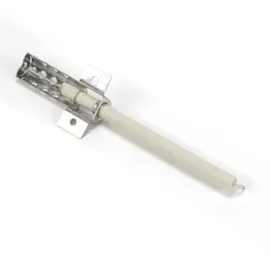
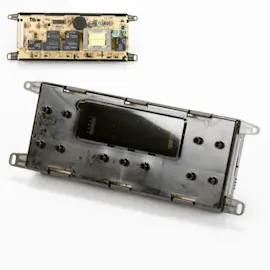
Error Codes



What is the most common problem with GE washers?
The most common GE washer problems are not draining and not spinning, and on the GE GTW500ASN2WS top-load washer those symptoms most often trace back to a drain restriction, a failing lid lock, or a load that is consistently going out of balance.
Most common symptoms and what they usually mean
- Washer won’t drain or leaves water in the tub: drain hose kink/clog, pump obstruction, or a weak pump (see GE washer drain pump assembly WH23X28418).
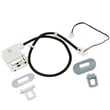
- Washer won’t spin or stops mid-cycle: lid not locking, shifter not shifting, or speed sensing issue.
- Loud banging or walking: unbalanced load, leveling issue, or worn suspension components (see washer suspension rod and spring assembly WH16X26911).
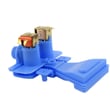
- Slow fill or no fill: clogged inlet screens or a failing valve (see washer water inlet valve assembly WH13X26535).
- Intermittent operation or “dead” controls: wiring connection issues or a failing control board.
Quick checks we recommend before replacing parts
- Redistribute the load (especially bulky items) and run a Spin/Drain cycle.
- Confirm the washer is level and all feet are firmly on the floor.
- Check the drain hose for kinks, clogs, or a standpipe that is backing up.
- Listen during drain: a loud hum with little water movement often points to a blocked or failing pump.
- Look for error codes and match them to the symptom using GE gtw top load washer error codes.
Symptom-to-part cheat sheet (GTW500ASN2WS)
| What you notice | Most likely area | Example part for this model |
|---|---|---|
| Won’t drain | Drain path or pump | WH23X28418 |
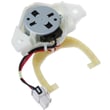
| Won’t spin | Lid lock or shifting system | WH08X37938, WH03X30517 |
| Excessive vibration | Suspension/leveling | WH16X26911, WH16X26910 |
| Won’t fill | Water supply/valve | WH13X26535 |
Why it matters
Drain and spin problems can leave clothes soaking wet and can strain the drive system. Catching the cause early (restriction, lid lock, suspension, or shifter) helps prevent repeat failures and reduces wear on the motor and gear case.
Last updated: January 2026
What is the life expectancy of a GE washing machine?
A GE washing machine typically lasts 10 to 14 years. For your GE GTW500ASN2WS top-load washer, consistent maintenance (leveling, avoiding overloads, and fixing small issues early) is what most often determines whether it reaches the high end of that range.
Typical lifespan and what affects it
Most top-load washers land in a similar window, but these factors move the needle the most:
- Load size and frequency (daily heavy loads shorten life)
- Out-of-balance spinning (stresses the suspension and tub support)
- Water quality (sediment can affect valves and pump performance)
- Drain performance (slow draining strains the pump)
- Prompt repairs (a small leak or noise can become a major failure)
Parts that commonly drive “end of life” decisions
When a washer is nearing the end of its service life, these are the repairs that most often come up on top-load models like GTW500ASN2WS:
- Drain problems: consider the GE washer drain pump assembly WH23X28418
- Excessive shaking or banging: inspect suspension components such as washer suspension rod and spring assembly WH16X26911
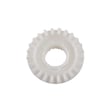
- No agitation or spin shifting issues: the washer shifter assembly WH03X30517 is a common suspect
- Lid won’t lock or won’t start: lid lock and striker wear can contribute
Quick “repair or replace” guide
| Situation | What we recommend | Why |
|---|---|---|
| Washer is under 8 years old | Repair is usually worth it | You still have strong remaining life |
| Washer is 10 to 14 years old | Compare repair cost to replacement | Major parts can approach replacement value |
| Repeated out-of-balance events | Fix leveling and suspension first | Prevents tub, bearing, and drive wear |
Why it matters
A washer that is kept level, not overloaded, and repaired quickly often avoids the cascade failures that shorten lifespan (suspension wear leading to tub damage, or draining issues leading to pump burnout).
Last updated: January 2026
What is the difference between 4.5 cu ft and 5.0 cu ft washer?
A 5.0 cu. ft. washer holds more laundry than a 4.5 cu. ft. washer; that extra 0.5 cu. ft. typically means fewer loads and easier washing of bulky items. For a GE top-load washer like model GTW500ASN2WS, the best choice depends on your typical load size and available space.
What the extra 0.5 cu. ft. changes in real use
- Bigger single loads: more towels, jeans, or mixed loads per cycle.
- Bulky items fit easier: comforters and large blankets have more room to move.
- Potentially fewer loads per week: helpful for larger households.
- Less “packed-in” washing: more tumbling/agitation space can improve rinse-out.
- Slightly higher water and energy use per load: depends on cycle and settings.
Quick comparison
| Feature | 4.5 cu. ft. washer | 5.0 cu. ft. washer |
|---|---|---|
| Best for | Regular weekly laundry | Larger families, bulky bedding |
| Load count | More loads | Fewer loads |
| Bulky item clearance | Good | Better |
| Space needs | Often slightly smaller footprint | Often slightly larger footprint |
How to decide for your laundry routine
- If you wash king/queen bedding often, 5.0 cu. ft. is usually the better fit.
- If you do daily or small-to-medium loads, 4.5 cu. ft. is typically plenty.
- If your washer sits in a tight laundry area, compare overall dimensions (width, depth, lid clearance), not just capacity.
- If you frequently get out-of-balance spin issues, avoid overloading; capacity does not fix suspension problems (that is when parts like washer suspension rod and spring assembly WH16X26911 matter).
Why it matters
Capacity affects how well clothes can move through wash and rinse, how many cycles you run each week, and how often you can wash bulky items without forcing them into the basket.
Last updated: January 2026