Owner’s manual




What is the fuel mix for a Craftsman gas trimmer?
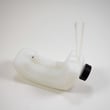
For the Craftsman line trimmer model 358791520, we use a 40:1 gasoline-to-oil mix (unleaded gas plus synthetic 2-cycle air-cooled engine oil). That equals 3.2 oz of 2-cycle oil per 1 gallon of unleaded gasoline; mix it thoroughly before fueling. See the 358791520 owner's manual for the exact fueling procedure and safety steps.
Use this quick chart when mixing fuel for your 2-cycle Craftsman trimmer:
| Gasoline amount | 40:1 oil amount | Notes |
|---|---|---|
| 1 gallon | 3.2 oz | Most common mix size |
| 1/2 gallon | 1.6 oz | Good for small batches |
| 1 quart | 0.8 oz | Useful for occasional trimming |
- Use fresh unleaded gasoline and a quality synthetic 2-cycle air-cooled engine oil.
- Measure oil accurately; too little oil can score the piston and cylinder, too much can foul the spark plug.
- Mix fuel in an approved fuel container; add oil first, then gas, then shake.
- Do not use automotive oil or marine oil; those oils can damage a 2-cycle air-cooled engine.
- Wipe up spills and move the trimmer at least 10 feet away from the fueling spot before starting.
A 40:1 mix is the lubrication system for a 2-cycle engine. When the ratio is off, the trimmer can run rough, lose power, smoke excessively, or fail to start, and internal engine wear accelerates.
If the trimmer has been stored with old fuel, fuel system issues are common. These resources help:
- Tips for a hard to start grass line trimmer
- How to tune up a grass line trimmer video
- Line trimmer runs rough
Last updated: January 2026
Can I use .095 trimmer line?
Yes, you can often use .095-inch trimmer line on the Craftsman 358791520 as long as it fits and feeds correctly through the trimmer head and the line limiter on the shield. The best choice is the largest diameter that advances smoothly without binding or overloading the engine.
- Check the recommended line diameter in the 358791520 owner's manual.
- Make sure the line fits the trimmer head eyelets and can be wound on the spool without kinking.
- Confirm the line advances normally when you tap the head on the ground (the manual describes advancing about 2 inches per tap at full throttle).
- If the engine bogs down, the head stops easily, or line “welds” to the spool, step down to a thinner line.
- Keep the shield installed so the line limiter can control maximum cutting length.
Thicker line can be more durable in heavy weeds, but it also increases load on the clutch and engine.
| Line diameter | Best for | Tradeoffs |
|---|---|---|
| .065 to .080 | Light grass, routine trimming | Less durable in thick weeds |
| .095 | Heavier weeds, tougher trimming | More drag; can reduce acceleration and line feed |
| .105+ | Only if the head is designed for it | Higher risk of poor feed and engine bogging |
Using a line that is too thick can cause poor line advance, extra vibration, and faster wear on the trimmer head. The manual also notes the line cuts efficiently at less than full throttle in many situations, which helps line life and reduces “welding” on the spool.
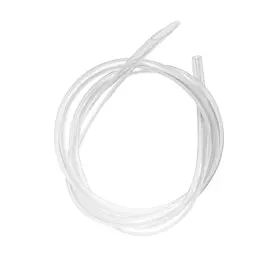
A trimmer that runs rough or stalls under load can feel worse with thicker line. If you suspect a fuel delivery problem (hard starting, surging, or fuel smell), inspect the fuel lines and tank connections; a cracked line is a common cause. If you need a replacement, use the exact-fit ayp lawn & garden equipment fuel line, large 530069216.
Last updated: January 2026
How to replace line on Craftsman gas trimmer?
To replace the cutting line on your Craftsman line trimmer model 358791520, remove the spool, load two equal lengths of 0.080-inch (2 mm) trimmer line evenly in the spool, then reinstall the spool and pull the line ends free so the head feeds correctly. See the 358791520 owner's manual for the exact spool and hub layout.
- Push and release the engine STOP switch.
- Disconnect the spark plug wire so the engine cannot start.
- Let the muffler and cutting head cool before handling.
- Wear gloves and eye protection.
- Use only 0.080-inch (2 mm) diameter trimmer line (never wire, rope, or string).
- Pull the spool straight out by firmly pulling on the tap button.
- Clean the hub and spool surfaces (dirt here can cause poor feeding).
- Cut two lengths of line, 12-1/2 ft (3.8 m) each.
- Insert each line end about 1/2 inch (1 cm) into the small holes on the inside of the spool.
- Wind the line evenly and tightly in the direction of the arrow on the spool.
- Set the line into the spool notches, leaving 3 to 5 inches (7 to 12 cm) unwound.
- Feed the line ends through the hub exit holes.
- Align the spool notches with the hub exit holes, then push the spool in until it snaps.
- Pull the line ends outside the hub to release them from the notches.
- Line is crossed or overlapped on the spool; rewind evenly with no overlaps.
- Wrong line size; use 0.080-inch (2 mm).
- Hub or spool is dirty; clean both surfaces.
- Too much line left loose; keep only 3 to 5 inches unwound before reinstalling.
| Item | Spec for Craftsman 358791520 |
|---|---|
| Line diameter | 0.080 in (2 mm) |
| Line length (each piece) | 12-1/2 ft (3.8 m) |
| Unwound length before install | 3 to 5 in (7 to 12 cm) |
Even, tight winding prevents tangles and helps the bump head feed smoothly, which reduces line breakage and keeps cutting performance consistent.
Last updated: January 2026