 Owner’s manual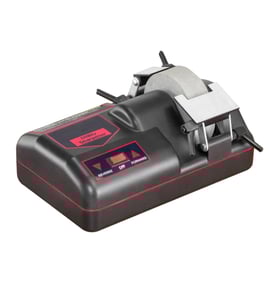

Do pull through knife sharpeners actually work?
Yes, pull-through knife sharpeners can quickly restore a usable edge, but they typically remove metal aggressively and leave a shorter-lasting edge than a guided wet stone method. For better edge control and blade life, we recommend sharpening with the Wen 2900 wet stone machine using the technique in the 2900 owner's manual.
What “works” means for pull-through sharpeners
Pull-through sharpeners are designed for speed and convenience, not precision. They can be fine for inexpensive kitchen knives that just need to cut again, but they are a poor fit for premium steel, thin Japanese-style edges, or single-bevel blades.
Common results you will see:
- Fast edge improvement with minimal skill
- More metal removed per sharpening session
- A rougher, less refined edge that dulls sooner
- Higher risk of uneven bevels if you pull at an angle
A better option with your Wen 2900: controlled sharpening
Our Wen 2900 includes a knife sharpening guide and a process that helps you control heat and contact at the wheel.
Key technique points from the manual:
- Do not force the blade; ease it into the grinding wheel
- Sharpen into the direction of the wheel so heat is carried away from the tip
- Set the tool rest high to expose the knife guide angle
- Keep about 1/4 inch clearance at the guard housing, then lower until the edge just sparks
- Draw the knife across the wheel and rotate outward near the tip, then repeat on the other side
Quick comparison
| Method | Speed | Edge quality | Metal removal | Best for |
|---|---|---|---|---|
| Pull-through sharpener | Fast | Fair | Higher | Budget knives, quick touch-ups |
| Wen 2900 wet stone guide | Moderate | Better | Lower (more controlled) | Kitchen knives, repeatable results |
Why it matters
Every sharpening removes steel. A method that removes less metal while keeping the edge cooler and more consistent helps your knife last longer and perform better between sharpenings.
Parts and diagrams
For replacement components and diagrams for your Wen 2900, use the model parts list, or search by model number on Sears PartsDirect.
Last updated: February 2026
What is the absolute best knife sharpener?
There is no single “absolute best” knife sharpener for everyone; the best choice depends on your knives, how fast you want results, and how much control you want. For hands-on control, the Wen 2900 wet stone machine can produce excellent edges when you follow the angle and technique in the 2900 owner's manual.
How to choose the best sharpener for your needs
- Fast and consistent: electric pull-through or guided electric systems
- Maximum control and edge quality: wet stone or whetstone sharpening
- Repeatable angles: guided rod systems (good for beginners who want precision)
- Best for frequent touch-ups: ceramic rods or fine stones
- Best for damaged edges: coarse abrasives first, then refine
Using the Wen 2900 as a knife sharpener (what matters most)
Our Wen 2900 sharpening steps focus on controlling heat and holding a steady angle:
- Set the tool rest to its maximum up position to expose the knife guide angle.
- Raise the guard housing to about 1/4 inch clearance from the grinding wheel.
- Lower the guide housing until the knife edge just sparks against the wheel.
- Draw the knife edge across the wheel; rotate outward as you approach the tip.
- Flip the knife and repeat on the opposite edge until sharp.
Recommended sharpening angles (quick reference)
The Wen 2900 manual lists typical angles as a guide; kitchen knives are one of the common applications.
| Tool type | Typical sharpening angle guidance | Notes |
|---|---|---|
| Kitchen knife | Use the knife guide angle on the machine | Keep pressure light and consistent |
| Wood chisel | Use the sharpening guide | Maintain a flat bevel |
| Drill bit | 118° tip; 8° to 12° lip relief | Practice improves results |
Why it matters
The “best” sharpener is the one that matches your skill level and protects your blade. Wet stone sharpening (like the Wen 2900) helps you control heat and refine an edge gradually, which supports better sharpness and longer blade life.
Getting the right parts and documentation
For model-specific diagrams, maintenance guidance, and setup details, use the 2900 owner's manual. If you need to look up replacement parts by model number, search using Sears PartsDirect.
Last updated: February 2026
What do pro chefs use to sharpen knives?
Pro chefs most often use a whetstone (water stone) to sharpen knives because it removes metal in a controlled way, keeps the edge geometry consistent, and can produce a very sharp, long-lasting edge. Your Wen 2900 wet stone machine is designed around that same stone-based sharpening approach; see the 2900 owner's manual.
What pros like about stones (and why it matters)
A stone lets you sharpen gradually instead of grinding aggressively, which helps preserve the knife’s edge and reduces the risk of overheating the tip.
- Produces a cleaner, sharper edge than many pull-through sharpeners
- Helps maintain a consistent bevel angle over time
- Removes less metal per session, extending knife life
- Works well for touch-ups and full sharpening
- Better control on curved sections near the tip
Using a wet stone machine like the Wen 2900 for kitchen knives
The Wen 2900 manual’s knife procedure focuses on light contact and controlled passes.
- Set the tool rest to its maximum up position to expose the knife guide angle
- Raise the guard housing to about 1/4 inch clearance from the grinding wheel
- Lower the guide housing until the knife edge just begins to spark
- Draw the knife edge across the wheel; rotate outward as you approach the tip
- Flip the knife and repeat on the other side until sharp
Heat control: the pro-level detail many people miss
Sharpening direction matters because heat can damage the edge.
| What you do | What it helps prevent | Why it matters |
|---|---|---|
| Work into the direction of the wheel | Heat concentrating at the tip | Protects the thinnest, most fragile part of the blade |
| Use light pressure (do not force) | Excess heat and uneven bevels | Cleaner edge and better control |
| Use the recommended wheel area | Gouging and inconsistent sharpening | More predictable results |
Quick angle guidance (typical)
Most kitchen knives are sharpened around 15° to 20° per side. Use the Wen 2900 sharpening guide in the manual as your baseline, then fine-tune based on how the knife performs.
You can find parts and diagrams for the Wen 2900 on this model page, or search by model number on Sears PartsDirect.
Last updated: February 2026