Installation guide
 Owner’s manual
 Error Codes


Are electric wall ovens 110 or 220?
Most electric wall ovens, including Kenmore model 79049533312, are designed to be connected to a dedicated high-voltage circuit (commonly 240V, often called 220V) rather than a standard 120V (110V) household outlet. The exact connection method and circuit requirements are listed in the 79049533312 installation guide.
What to expect for power on an electric wall oven
Electric wall ovens typically use a hardwired connection to a junction box or a dedicated circuit; they are not usually plugged into a standard 120V receptacle.
- Plan for a dedicated 240V circuit (commonly referred to as 220V)
- Use proper grounding and follow local electrical codes
- Do not use an extension cord or remove the grounding prong (if equipped)
- Confirm whether your unit is plug-in or hardwired before installation
- Have a qualified electrician verify wire size, breaker size, and junction box setup
Quick comparison: 120V vs 240V (220V)
| Item | 120V (110V) outlet | 240V (220V) circuit |
|---|---|---|
| Typical use | Small appliances | Electric wall ovens, electric ranges |
| Connection style | Plug-in receptacle | Often hardwired to a junction box |
| Heating performance | Limited | Supports high-wattage heating elements |
Why it matters
Using the correct voltage and wiring protects the oven control, heating elements, and wiring harness from damage, and it helps the oven heat properly and bake evenly. For model 79049533312, following the documented installation and grounding requirements also helps prevent nuisance shutdowns and error conditions.
Related help if you see an error code
If the oven displays an error after a power event or installation, use the Kenmore 790 manual clean wall oven error codes reference to narrow down whether the issue points to wiring, a sensor circuit, or the electronic control.
Last updated: January 2026
Are all 30 inch wall ovens the same size?
No. “30-inch” wall ovens are a size class, not an exact measurement. For Kenmore model 79049533312, the installation guide shows the oven is about 30 inches wide, but the required cabinet cutout width and depth have specific minimum and maximum dimensions that can vary by model.
What “30-inch” usually means (and what varies)
Even within the 30-inch category, these dimensions commonly differ between brands and models:
- Cutout width range (the cabinet opening)
- Cutout depth (G), which is critical so the trim sits flush
- Cutout height (single vs. double oven)
- Trim overlap and door depth when open
- Electrical junction box location and clearance needs
For exact numbers for your installation, use the installation guide.
Typical 30-inch wall oven sizing: quick comparison
These are the common “what you measure” categories that cause fit issues.
| Measurement | What it affects | Why it varies |
|---|---|---|
| Cutout width | Whether the oven slides into the opening | Cabinet standards and trim design differ |
| Cutout depth (G) | Whether the trim butts against the cabinet | Convection fan and chassis depth differ |
| Cutout height | Single vs. double oven fit | Oven configuration and trim kits differ |
| Support/base rating | Safe mounting | 30-inch units are heavier than 27-inch units |
Why it matters
If you assume all 30-inch wall ovens are identical, the oven may not sit flush, the door may hit surrounding cabinetry, or you may hear noise or vibration on convection models when the cutout depth is off. Getting the cutout dimensions right prevents installation problems and protects the cabinet.
Our best practice for measuring before you buy or install
- Measure the existing cutout width, height, and depth in multiple spots
- Confirm the minimum and maximum cutout ranges listed for the oven
- Pay special attention to cutout depth (G) on convection models
- Verify clearance in front for the door when open
- Confirm the cabinet base can support the oven’s weight rating
Last updated: January 2026
Do Kenmore ovens have a reset button?
Kenmore ovens like model 79049533312 do not use a single universal “reset button” for everything; most resets are done by restoring the electronic control to factory defaults or by resetting a tripped safety device after an overheat event. Use the steps in the 79049533312 owner's manual for the correct reset method.
Reset options that apply to this oven
- Control reset (factory defaults): clears user settings and returns the control to original defaults.
- Power reset: turning power off at the breaker can clear some temporary control glitches.
- Overheat protection reset (if equipped): some ovens use a high-limit device that can trip during extreme heat (often after self-clean); the reset method depends on the exact part style.
How to reset the control to factory defaults (model 79049533312)
The Use and Care Guide describes restoring factory default settings:
- Make sure the oven is idle (no cooking function running).
- Press and hold the 7 key for about 6 seconds (until the acceptance tone sounds).
- Press START to complete the reset.
This reset restores items like 12/24-hour display mode, audible settings, temperature display units, and any oven temperature offset.
When a “reset” is really an overheat issue
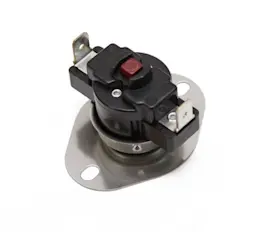
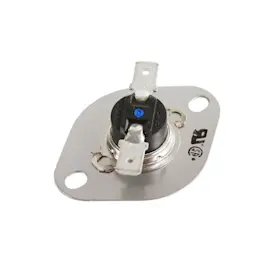
If the oven stopped heating after self-clean, an overheat condition can trip a safety device. A common related part on this model is the frigidaire range high-limit thermostat 318578506.
Quick checks before replacing parts
- Verify the oven has power (breaker not tripped).
- Cancel any active cycle and retry Bake.
- Let the oven cool completely, then try again.
- Check for a cooling fan running during/after use (a failed fan can contribute to overheating).
- If an error code appears, use Kenmore 790 manual clean wall oven error codes to narrow the cause.
What each reset changes
| Reset type | What it affects | What it does not fix |
|---|---|---|
| Factory default reset | User preferences, offsets, stored recipes | Burned-out bake/broil element, failed sensor, wiring issues |
| Power reset at breaker | Temporary control glitches | Tripped high-limit device, failed control board |
Why it matters
Using the right reset prevents unnecessary part replacement and helps you diagnose whether the issue is a control setting, a temporary glitch, or a true heating/safety problem involving components like the high-limit thermostat, temperature sensor, or control.
Last updated: January 2026