Owner’s manual
 Error Codes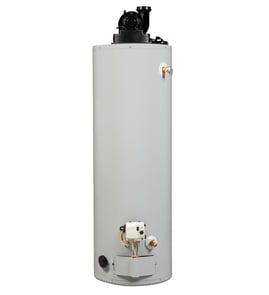


How do I read my water heater model number?
For your Kenmore gas water heater, the model number is printed on the rating plate (data sticker) attached to the tank. On model 153559400, match the full model number exactly as shown so you get the right parts list and the correct manual information in the owner's manual.
Where to find the model number on the tank
Look for a rectangular label on the outside of the water heater. Common locations include:
- On the upper side of the tank near the hot and cold water connections
- On the front of the tank above the gas control/thermostat area
- On the side of the tank near the burner access door
- Near the draft hood/vent connection area
What to write down (and what you can ignore)
When you’re standing in front of the rating plate, capture these items:
- Model number (example: 153559400)
- Serial number (helps identify production run and compatible revisions)
- Fuel type (gas) and any “natural gas” or “LP” marking
- Capacity (gallons) and input (BTU) if you’re comparing replacements
You can usually ignore most of the extra technical lines unless you’re troubleshooting venting or gas supply.
Quick checklist: model number vs. serial number
| Item | What it’s used for | Example format |
|---|---|---|
| Model number | Picking the correct parts and diagrams | 153559400 |
| Serial number | Identifying manufacturing date/run | Letters and numbers |
| Part number | Ordering a specific replacement part | 9007633 |
Why it matters
A single digit off can point to a different Kenmore water heater design, which changes key components like the pilot assembly, burner assembly, or temperature and pressure relief valve. Using the exact model number helps ensure the replacement part fits and operates safely.
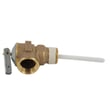
If you’re ordering a safety-related part, match the model number first, then confirm the part by name and ID, such as the water heater temperature and pressure relief valve 100108279.
Last updated: February 2026
How long should a thermocouple last on a water heater?
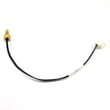
On a Kenmore 153559400 gas water heater, a thermocouple typically lasts 5 to 10 years. Heavy use, a weak pilot flame, soot, or poor combustion air can shorten its life; frequent pilot outages are the most common sign it is failing.
Typical lifespan and what affects it
A thermocouple is a safety sensor; it sits in the pilot flame and tells the gas control that the pilot is lit.
Common factors that change lifespan:
- Pilot flame quality (small, lazy, or yellow flames reduce reliability)
- Dust and lint around the burner compartment
- Sooting from improper combustion or venting issues
- Moisture and corrosion near the burner and pilot
- Repeated overheating events or frequent relighting
Signs the thermocouple is wearing out
If you see these symptoms, the thermocouple or pilot system is usually the first place we check:
- Pilot lights but won’t stay lit when you release the control knob
- Pilot stays lit sometimes, then drops out randomly
- You have to hold the knob longer and longer to keep the pilot on
- Burner shuts down soon after ignition even though the tank is calling for heat
Quick decision guide (repair vs. replace)
| What’s happening | What it usually points to | What we recommend |
|---|---|---|
| Pilot won’t stay lit at all | Weak thermocouple signal or pilot issue | Inspect pilot flame; service/replace pilot components |
| Pilot drops out intermittently | Dirty pilot, airflow/venting, or failing thermocouple | Clean burner area; verify draft; replace failing parts |
| Heater is older and has repeated pilot problems | Multiple aging combustion parts | Consider replacing the pilot assembly |
Parts that are commonly involved
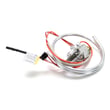
On this model, thermocouple problems are often resolved by replacing the complete pilot assembly rather than trying to reuse old fittings.
Why it matters
A weak thermocouple signal can shut off gas to the burner, causing no hot water and repeated relighting. Keeping the burner area clean and the venting correct helps the pilot burn cleanly and extends thermocouple life.
For model-specific lighting and safety steps, follow the owner's manual.
Last updated: February 2026
What is the most common problem with gas water heaters?
The most common gas water heater problem is ignition failure, usually when the pilot will not stay lit or the burner will not fire. On Kenmore model 153559400, this often traces to the pilot/thermocouple system, airflow or venting issues, or sediment affecting burner operation (all of which reduce or stop hot water production).
Most common symptoms you will notice
- Pilot light goes out repeatedly
- No hot water or water turns lukewarm quickly
- Burner will not ignite even after relighting
- Rumbling or popping noises (sediment in the tank)
- Sooting or unusual burner flame appearance
- Water dripping from fittings or the relief valve discharge pipe
Quick checks we recommend first (safe, basic)
- Confirm the gas control is set to ON and temperature is set to a normal range (many homes use about 120°F).
- Make sure the area around the heater has adequate combustion air and is not blocked by storage items.
- Look for signs of venting problems (loose draft hood, disconnected vent, heavy soot). If you see these, stop and have venting corrected.
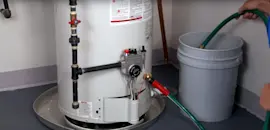
- If you hear heavy rumbling, plan a tank flush to reduce sediment.
- If water is leaking from the relief valve pipe, treat it as an overpressure or overheating warning and address it immediately.
Parts that commonly solve “pilot will not stay lit”
If troubleshooting points to the ignition system, these model-matched parts are common fixes:
| Problem area | What it affects | Model-matched part to check |
|---|---|---|
| Pilot/thermocouple | Pilot drops out, burner will not stay on | Water heater pilot assembly 100093972 |
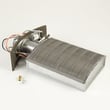
| Burner assembly | Poor ignition, weak flame, shutdowns | Water heater burner assembly 100346612 |
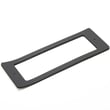
| Manifold door seal | Air leaks that disrupt combustion | Water heater manifold door gasket 100112699 |
Why it matters
A gas water heater that will not ignite or stay lit is not just inconvenient; it can also signal combustion air or venting problems. Fixing the root cause protects hot water performance and helps the burner run cleanly and efficiently.
Helpful model-specific guidance
For diagnostic steps and lighting instructions for Kenmore 153559400, follow the procedure in the owner's manual. For code-based troubleshooting, use Kenmore gas water heater error codes.
Last updated: February 2026
What is the life expectancy of a Kenmore water heater?
Most Kenmore gas water heaters like model 153559400 last 8 to 12 years. With routine maintenance (flushing sediment, checking the anode rod, and verifying safe venting), many units reach the upper end of that range.
Typical lifespan and what affects it
A water heater’s service life is mainly driven by water quality, usage, and maintenance.
- Hard water and sediment shorten tank life by insulating the burner’s heat from the water.
- Anode rod condition is a major factor; a depleted anode lets the tank corrode faster.
- Temperature setting that is consistently high increases stress on the tank and components.
- Venting and combustion issues can overheat parts and reduce reliability.
- Small leaks that go unaddressed often lead to bigger failures.
Maintenance schedule we recommend
Use your owner's manual for model-specific steps and safety details.
| Maintenance item | How often | What you’re looking for |
|---|---|---|
| Flush a few gallons from the drain valve | Every 6 months | Reduced sediment, clearer water |
| Inspect the anode rod | Every 1 to 3 years | Rod not heavily eaten away |
| Test the T and P relief valve | Every 6 to 12 months | Valve opens and reseats without dripping |
| Check draft hood and venting | Every 6 to 12 months | Stable draft, no soot, secure connections |
Parts that commonly extend service life
If your tank is still sound, replacing worn safety and maintenance parts can help you get more years out of the heater.
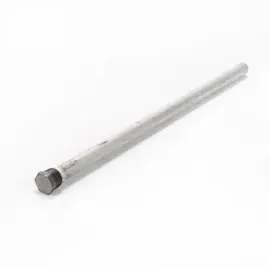
- Anode rod 100109594 (helps protect the tank from corrosion)
- Water heater drain valve 100108361 (helps with routine flushing)
- Water heater temperature and pressure relief valve 100108279 (critical safety component)
- Draft hood 100111362 (supports proper venting)
Why it matters
A water heater near the end of its expected life is more likely to develop leaks, temperature swings, and ignition or pilot problems. Staying on top of sediment removal and corrosion protection is the most effective way to maximize lifespan.
Last updated: February 2026
What are the parts to a gas water heater?
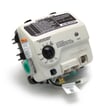
A Kenmore gas water heater like model 153559400 is built around a storage tank plus a gas burner and safety controls that heat water and vent combustion gases. The most commonly serviced parts include the pilot and burner components, drain valve, anode rod, and the temperature and pressure relief valve (T&P).
Main parts you will typically find
- Tank (stores hot water)
- Burner assembly (creates heat under the tank)
- Pilot assembly (lights the burner and proves flame)
- Draft hood (helps route exhaust into the vent)
- Anode rod (reduces tank corrosion)
- Drain valve (used for draining and flushing)
- Temperature and pressure relief valve (T&P) (critical safety valve)
- Manifold door gasket (seals the burner access area)
For model-specific diagrams and part locations, use the owner's manual.
Common replacement parts for Kenmore 153559400
Here are examples of parts we commonly see replaced on this model:
| Part (what it does) | Example part for this model | When it’s commonly needed |
|---|---|---|
| Safety pressure/temperature release | Water heater temperature and pressure relief valve 100108279 | Dripping, leaking, or valve won’t reseat |
| Ignition and flame proving | Water heater pilot assembly 100093972 | Pilot won’t stay lit, weak pilot flame |
| Venting connection at the top | Draft hood 100111362 | Damaged, rusted, or missing hood |
| Draining/flushing outlet | Water heater drain valve 100108361 | Valve leaks, won’t open/close |
| Corrosion protection | Anode rod 100109594 | Rotten-egg odor, accelerated tank corrosion signs |
Why it matters
Knowing the major components helps you troubleshoot safely and order the right replacement part. On gas water heaters, the pilot/burner system and T&P relief valve are especially important because they directly affect safe ignition, combustion, and pressure control.
Quick safety checks before you inspect parts
- Turn the gas control to OFF before opening any burner access area
- Let water cool if you plan to drain or flush the tank
- Never cap or plug the T&P relief valve discharge line
- If you smell gas, stop and contact a qualified technician
Last updated: February 2026