Owner’s manual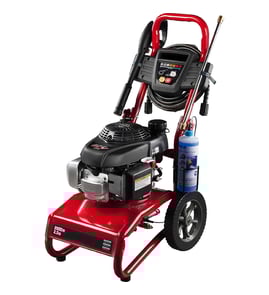



What kind of gas goes in a Craftsman 3000 PSI pressure washer?
For the Craftsman 580750400 gas pressure washer, we use clean, fresh, unleaded gasoline with a minimum rating of 87 octane (87 AKI, 91 RON). Gasoline with up to 10% ethanol (E10) is acceptable; do not use E15 or E85. See the 580750400 owner's manual for the exact fuel guidance and safety steps.
- Use unleaded gasoline, fresh and clean
- Use 87 octane minimum (87 AKI; 91 RON)
- E10 (up to 10% ethanol) is OK
- Do not use E15 or E85
- Do not mix oil into the gasoline (this is not a 2-cycle fuel mix)
Fuel vapors can ignite easily, so we follow the same routine every time:
- Shut the engine OFF and let it cool at least 2 minutes
- Fuel outdoors in a well-ventilated area
- Loosen the fuel cap slowly to relieve tank pressure
- Do not overfill; leave room for fuel expansion
- Wipe up spills before starting
| Item | What to use | What to avoid |
|---|---|---|
| Octane rating | 87 AKI (minimum) | Lower than 87 |
| Ethanol content | Up to 10% (E10) | E15, E85 |
| Fuel type | Unleaded gasoline | Mixed fuel (oil + gas) |
Using the correct gasoline helps the engine start easier, run smoother under load, and prevents fuel-related damage that can shorten the life of your Craftsman pressure washer.
Last updated: February 2026
What is a good PSI for a gas pressure washer?
A good PSI for a gas pressure washer depends on what you’re cleaning; for most household jobs, 2,000 to 3,000 PSI is the sweet spot. Your Craftsman pressure washer model 580750400 is rated at 2,200 PSI, which is a strong all-around rating for patios, siding, and general driveway cleaning (with the right nozzle and technique). See the 580750400 operator’s manual for the model’s rated output and operating limits.
Use PSI as a guide, then fine-tune with spray angle, distance, and nozzle choice.
- Cars, outdoor furniture, grills: ~1,200 to 2,000 PSI (use a wider spray and keep distance)
- Siding, fences, decks: ~1,800 to 2,800 PSI (test a small area first)
- Concrete driveways, patios, pavers: ~2,500 to 3,500 PSI (avoid etching by keeping the wand moving)
- Paint stripping, heavy grime, rust prep: ~3,000 to 4,000 PSI (high risk of damage; use caution)
- Delicate surfaces (soft wood, older mortar): stay at the low end and increase distance
Your unit’s 2,200 PSI rating puts it in the “general-purpose gas washer” range. It is ideal for routine cleaning and can still do concrete work if you use the correct spray pattern and don’t linger in one spot.
| Cleaning need | Typical PSI target | How 2,200 PSI fits |
|---|---|---|
| Vehicle washing | 1,200 to 2,000 | Works well with a wider spray and distance |
| Siding and deck wash | 1,800 to 2,800 | Solid match for most homes |
| Concrete deep clean | 2,500 to 3,500 | Works, but may take more passes |
Even with the right PSI rating, restrictions and leaks reduce performance.
- Purge air from the pump before starting; squeeze the trigger with water on
- Use a water supply that meets the manual’s minimum (adequate flow and at least 20 PSI at the hose end)
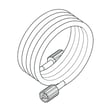
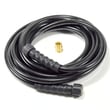
- Inspect for kinks, cuts, or leaks in the high-pressure line; replace a worn hose with the pressure washer hose 84006753
- Match the nozzle to the job; a wider spray is safer on paint and wood
- Never run the pump without water connected and turned on
Choosing the right PSI helps you clean faster while preventing surface damage (etched concrete, stripped paint, splintered wood) and reducing wear on the pump, spray gun, and hose.
Last updated: February 2026
Does Craftsman have a lifetime warranty on pressure washers?
No. For the Craftsman pressure washer model 580750400, the operator manual specifies a Craftsman two-year full warranty from the date of purchase for defects in materials or workmanship; it is not a lifetime warranty. For the exact coverage terms and exclusions, use the 580750400 owner's manual.
The manual’s warranty is focused on manufacturing defects, not normal wear or misuse.
Covered (within 2 years):
- Defects in material or workmanship
- Free repair or replacement if repair is unavailable
Not covered (common exclusions):
- Expendable items that wear out in normal use (hoses, spray tips, filters, spark plugs)
- Damage from product modification, improper repair attempts, or accessories
- Damage from accidents or failure to operate and maintain the unit as instructed
If you are troubleshooting low pressure or leaks, these are common replacement items that are usually considered expendable.
- High-pressure hose
- Spray tips and nozzle extensions
- Spray gun components that leak
- Water inlet screen and filters
- Spark plug and air filter (engine maintenance)
| Item type | Typical warranty status | Example for this model |
|---|---|---|
| Manufacturing defect | Covered | Pump or frame defect due to workmanship |
| Wear item | Not covered | Pressure washer hose 84006753 |
| Maintenance-related issue | Not covered | Dirty inlet screen, old spark plug |
Knowing the warranty term helps you decide whether to pursue warranty service or go straight to maintenance and parts replacement. The manual also makes clear that routine upkeep (oil changes, hose checks, inlet screen cleaning) is required to get full value from the product.
Last updated: February 2026
Where is the model number on a Craftsman pressure washer?
On the Craftsman pressure washer model 580750400, the model and serial number are printed on the identification label near the rear of the base plate. We use that label information to match the correct parts and the correct operator instructions for your exact unit.
Check these common spots on the frame first (a flashlight helps):
- Near the rear of the base plate (most common location for this model)
- On the lower frame rail close to the wheels/axle area
- On the back side of the main frame behind the pump area
- Near the warning/operating instructions tag (do not confuse this with the ID label)
For a diagram and the official wording, use the 580750400 owner's manual.
The identification label typically includes:
- Model number (example: 580750400)
- Serial number
- Brand name (Craftsman)
- Sometimes an engine family/model reference
Write the model and serial number exactly as shown; that is what we use to confirm fit for parts like a hose, spray nozzle, or thermal relief valve.
| Item you see | What it’s for | Use it to order parts? |
|---|---|---|
| Identification label (model/serial) | Identifies your exact pressure washer | Yes |
| Warning/operating instructions tag | Safety and start/stop reminders | No |
| Engine label | Engine specs and ratings | Sometimes (engine parts only) |
Craftsman pressure washers can look similar across series, but parts and fittings can differ. Using the identification label prevents ordering the wrong items (for example, a high-pressure hose or quick-connect spray tip that does not match your pump and gun setup).
Last updated: February 2026
How to tell if your pressure washer pump is bad?
A bad pump on a Craftsman pressure washer model 580750400 usually shows up as low or surging pressure, abnormal pump noise, or leaking at the pump area even after you confirm a proper water supply and purge air from the system per the 580750400 owner's manual.
Many “bad pump” symptoms are caused by air in the line, restricted water supply, or a hose/nozzle issue.
- Confirm the garden hose is supplying strong flow; the manual calls for more than 2.9 GPM and at least 20 PSI at the washer end.
- Make sure the water is ON before starting; do not run the pump without water.
- Inspect and clean the water inlet screen; replace it if damaged.
- Purge air: press the red button on the gun and hold the trigger until flow is steady.
- Check for kinks, cuts, or bulges in the high-pressure hose; a damaged hose can mimic pump failure.
- Swap to a different spray tip if you have one; a partially clogged nozzle causes pulsing.
If the setup checks out, these pump-specific symptoms are strong indicators:
- Pressure stays low even with a clean nozzle and good water supply
- Pressure pulses rapidly and never stabilizes
- Grinding, knocking, or squealing from the pump (not the engine)
- Water leaking from the pump head or fittings that will not seal
- Oil looks milky or contaminated (common after water intrusion)
- Unit loses pressure quickly when you squeeze the trigger
| What you notice | Most common cause | What to do next |
|---|---|---|
| Pulsing pressure | Air in pump, clogged nozzle, inlet restriction | Purge air, clean nozzle, clean inlet screen |
| Low pressure only | Worn valves/seals, unloader issue | Verify supply first; then inspect pump components |
| Water dripping at pump | Worn seals, cracked head, loose fittings | Tighten fittings; if still leaking, service pump |
| Pump overheats in bypass | Trigger not used for long periods | Check/replace pressure washer thermal release valve 318923GS |
Running with a restricted water supply or trapped air can damage seals and valves quickly. Following the startup and water-supply steps in the manual helps you avoid running the pump dry and prevents repeat failures.
Last updated: February 2026
What is the most common problem with pressure washers?
The most common problem on a pressure washer is low or no spray pressure. On the Craftsman 580750400, this is usually caused by a clogged spray tip/nozzle, air trapped in the pump, a restricted water supply, or a kinked or damaged high-pressure hose; pump wear can also contribute.
- Turn ON the water first, then press the gun’s red button and squeeze the trigger to purge air and impurities from the pump.
- Inspect the spray tip for debris; clean or swap to a different tip/nozzle.
- Confirm the water supply is steady and fully open; avoid long, undersized supply hoses.
- Check the high-pressure hose for kinks, cuts, soft spots, or leaks.
- Verify all hose connections are tight and the inlet screen is clear.
If the basics check out, focus on the parts that most often cause pressure loss:
| Symptom | Most likely cause | What we recommend |
|---|---|---|
| Pressure pulses or surges | Air in pump, partially clogged nozzle | Purge air again; clean nozzle |
| Low pressure with normal engine speed | Worn pump seals/valves | Inspect pump for leaks; service/replace pump components |
| Pressure drops after a minute | Overheating from trigger-off recirculation | Avoid long trigger-off periods; check thermal valve |
| Visible leak at hose | Hose damage or fitting issue | Replace hose or fitting |
- Follow the startup checklist and hose-connection checks in the 580750400 owner's manual.
- If you see water dumping from the pump area after sitting with the trigger released, inspect the pressure washer thermal release valve 318923GS.
- If the hose is kinked, leaking, or internally damaged, replace it with the correct pressure washer hose 84006753.
Low pressure is often a simple flow restriction, but running with poor water supply or trapped air can overheat the pump and shorten pump life. Purging air and maintaining proper water flow protects performance and prevents avoidable pump damage.
Last updated: February 2026
What kind of oil do you use in a Craftsman pressure washer?
For the Craftsman 580750400 gas pressure washer, we use the recommended engine oil for the engine crankcase and keep the level at the FULL mark on the dipstick. Add oil before starting, recheck frequently, and never overfill; correct oil level prevents hard starting and engine damage.
Pressure washers have two common oil locations; your manual guidance here is for the engine crankcase.
- Engine crankcase oil: Use the oil type/viscosity specified in the 580750400 owner's manual.
- Do not mix oil into gasoline: The manual specifically warns against mixing oil in the fuel.
- Fuel is separate: Use clean, fresh unleaded gasoline (minimum 87 octane/AKI; up to 10% ethanol is acceptable).
- Fill level matters: Fill only to the FULL mark on the dipstick.
- Set the pressure washer on a level surface.
- Remove the oil fill cap/dipstick.
- Wipe the dipstick clean, then reinsert to read the level.
- Add oil slowly until it reaches the FULL mark.
- Pause to let oil settle, then recheck.
- Tighten the dipstick fully; wipe up any spills.
| Task | What “right” looks like | What to avoid |
|---|---|---|
| Before starting | Oil at FULL mark | Starting with low oil |
| Adding oil | Add slowly, recheck | Overfilling above FULL |
| Fueling | Unleaded gas, 87+ octane | E15/E85, mixing oil in gas |
Running the Craftsman 580750400 with low oil can quickly damage the engine; overfilling can cause hard starting or a no-start condition. Keeping oil at the FULL mark is one of the most important pre-start checks.
Last updated: February 2026
Is it worth repairing a pressure washer?
Yes, repairing a pressure washer is worth it when the fix is a normal wear item (hose, nozzle, leaks, maintenance) and the engine and pump on your Craftsman 580750400 are still in good shape; if the pump or engine has major internal damage, replacement is usually the better value.
- Repair when the problem is low-cost and external (leaks, clogged inlet screen, worn nozzle, damaged hose).
- Repair when the unit starts and runs smoothly at governed speed (no surging, no heavy smoke).
- Repair when you can complete the work safely (disconnect spark plug wire before repairs).
- Replace when the engine has major issues (won’t start after basic tune-up, severe knocking, low compression).
- Replace when the pump is failing internally; this model’s pump is factory sealed and not designed for oil service.
- Replace when the frame/base is badly damaged and won’t hold the pump/engine securely.
Start with the maintenance items the manual calls out; these solve a large share of “no pressure” and “poor performance” complaints.
- Check/clean the water inlet screen
- Inspect the high-pressure hose for bulges, cuts, and leaks
- Check the spray gun and connections for leaks
- Verify the correct spray tip/nozzle is installed and not clogged
- Confirm engine basics: oil level, air filter condition, spark plug condition
For the model-specific maintenance schedule and safety steps, use the 580750400 owner's manual.
| Issue | Typical fix | Usually worth repairing? |
|---|---|---|
| Leaking or damaged hose | Replace hose | Yes |
| Poor spray pattern | Replace/clean nozzle | Yes |
| Pump overheating from extended bypass | Check thermal release valve, reduce trigger-off time | Often |
| Engine runs rough | Tune-up items (air filter, spark plug, fresh fuel) | Often |
| Major pump failure | Pump replacement or unit replacement | Often replace |
- Pressure washer hose 84006753 (leaks, cuts, weak spots)
- Pressure washer spray nozzle set 207977GS (clogged, worn, missing tips)
- Pressure washer thermal release valve 318923GS (overheating symptoms, hot water discharge)
A pressure washer can be unsafe when it’s leaking, missing guards, or operated incorrectly; the manual calls out kickback and slip hazards, and it also specifies disconnecting the spark plug wire before adjustments or repairs. Following those basics protects you and prevents repeat failures.
Last updated: February 2026
How many PSI is a Craftsman 190cc pressure washer?
For Craftsman pressure washers, the PSI depends on the exact model, not just the engine size. The Craftsman 580750400 is rated at 2,200 PSI (PWMA rated), as listed in the 580750400 operator's manual.
Here is the model-specific rating from the manual, plus the related performance spec you will see alongside PSI.
| Spec | Model 580750400 rating |
|---|---|
| Outlet pressure | 2,200 PSI |
| Flow rate | 1.9 GPM |
Engine displacement (cc) helps power the pump, but the pump design, unloader setting, nozzle size, and PWMA rating method determine the final pressure.
Common reasons two “190cc” units can have different PSI:
- Different pump head and piston size
- Different unloader valve calibration
- Different quick-connect spray tip orifice
- Different hose length and restrictions
- Different rating method (PWMA rated vs “max” marketing PSI)
If your Craftsman 580750400 seems weak, we focus on the most common restriction and leak points first.
- Confirm the water supply provides at least 20 PSI at the hose end and enough flow (the manual calls for more than 2.9 GPM)
- Purge air from the pump by holding the trigger with water on before starting
- Inspect the high-pressure hose for kinks, soft spots, or internal collapse
- Clean the water inlet screen and check for debris
- Try a different spray tip (a worn tip lowers pressure)
If you find damage or leaks, these model-matched parts are common fixes:
- Pressure washer hose 84006753 (leaks, bulges, or internal restriction)
- Pressure washer spray nozzle set 207977GS (worn or clogged tips)
- Pressure washer thermal release valve 318923GS (leaks after overheating or extended bypass)
Using the correct PSI helps you clean effectively without damaging surfaces. It also prevents overloading the pump and helps you choose the right spray nozzle and hose setup for safe, consistent performance.
Last updated: February 2026
What size hose is a Craftsman 3100 PSI pressure washer?
For Craftsman model 580750400, the factory setup uses a high-pressure hose (to the spray gun) plus a standard garden hose for water supply. This model’s manual focuses on safe hookup and required water flow; for exact high-pressure hose diameter and length, match the replacement to the original hose style and fittings shown in the 580750400 owner's manual.
Most gas pressure washers in this class use two different hoses, and they are not interchangeable.
- High-pressure hose: connects pump to spray gun; must be pressure-rated for the washer
- Garden hose (supply): connects spigot to pump inlet; provides water to the pump
- Extension hose: optional; adds reach but must match the same fitting style
- Fittings: confirm the end connections match your spray gun and pump ports
- Condition check: replace any hose with cuts, bulges, or kinks before use
Your 580750400 needs adequate incoming water to prevent pump damage and poor performance.
| Connection | What it does | What to verify |
|---|---|---|
| Garden hose to pump inlet | Feeds water to the pump | Water source supplies over 2.9 GPM and at least 20 PSI at the washer end |
| High-pressure hose to spray gun | Delivers pressurized water | Tight connections; no leaks; hose not kinked |
Use these quick checks so the replacement matches your original setup.
- Measure the hose length end-to-end (common lengths are 25 ft to 50 ft)
- Check the inside diameter (many are 1/4-in; some are 5/16-in)
- Identify the end fittings (thread size and style matter as much as PSI rating)
- Confirm the hose is rated at or above your washer’s PSI
- Compare to a known compatible replacement such as the pressure washer hose 84006753 if your fittings match
Using the wrong diameter or fitting style can cause leaks, poor pressure, or damage to the pump and spray gun connection. Meeting the manual’s water supply requirement also helps prevent overheating and premature pump wear.
Last updated: February 2026
Are gas pressure washers 2 stroke or 4 stroke?
Most gas pressure washers are 4-stroke engines, and the Craftsman 580750400 is designed to run on straight gasoline with the engine oil kept in the crankcase (not a gas/oil mix). For the exact engine details and oil checks for your unit, follow the 580750400 owner’s manual.
Use these quick checks before you fuel up:
- Oil fill/dipstick present on the engine: typical 4-stroke
- Separate oil change interval listed: typical 4-stroke
- No fuel/oil mix ratio (like 50:1) mentioned: typical 4-stroke
- Fuel tank label says “gasoline only”: typical 4-stroke
- Manual says “check oil level” before starting: typical 4-stroke
The 580750400 manual specifically calls out checking that oil has been added to the proper level before starting.
For Craftsman gas pressure washers like model 580750400:
- Use fresh, clean gasoline (avoid old fuel)
- Do not add 2-cycle oil to the gas tank
- Check engine oil level before each use
- Do not run the pump without water connected and turned on
If you are setting up hoses or replacing a worn line, match fittings and pressure rating; the pressure washer hose 84006753 is a model-listed option.
| Feature | 2-stroke | 4-stroke (typical for pressure washers) |
|---|---|---|
| Fuel | Gas mixed with oil | Gas only |
| Engine oil | Mixed into fuel | Separate crankcase oil |
| Common on pressure washers | Rare | Common |
Using a gas/oil mix in a 4-stroke engine can foul the spark plug and cause heavy smoke; running straight gas in a true 2-stroke can seize the engine. Following the manual’s oil and startup checklist helps protect the engine and pump life.
Last updated: February 2026