Owner’s manual
 Error Codes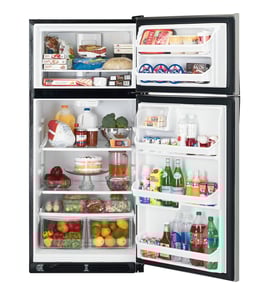

How to tell what model Kenmore refrigerator?
Your Kenmore refrigerator’s model number is printed on the model and serial number label inside the refrigerator (fresh food) compartment. For Kenmore model 10673192302, the label is typically on an inside wall; once you have that number, you can match the correct parts and documentation.
Where to look for the model number label
Check these common spots in the fresh food compartment:
- Inside side wall (left or right), around mid-height
- Ceiling area near the temperature control housing
- Behind or beside the crisper drawers (remove drawers to see the wall)
- Near the door opening frame (hinge side)
- On the inside wall where shelves mount
If you already see a number starting with 106., that is the model family prefix used on many Kenmore refrigerators.
What to write down (and why)
Record both the model number and serial number from the label; we use them to ensure part compatibility and to identify the correct version of components.
| Item on label | Example format | Why it matters |
|---|---|---|
| Model number | 10673192302 | Matches the correct parts diagrams and parts list |
| Serial number | Letters and numbers | Helps identify production run changes |
| Purchase date (your records) | Month/day/year | Useful for warranty and service history |
Tips if the label is hard to read
- Wipe the label gently with a damp cloth and dry it; glare and dust often hide characters.
- Use your phone camera and zoom in; angled light can make faded ink readable.
- Copy the number exactly (no spaces added or removed).
Why it matters
Kenmore uses many similar-looking refrigerator designs; the exact model number (like 10673192302) is what ensures you get the right door gasket, ice maker, light switch, or water valve for your specific top-mount refrigerator.
For more model and serial label details specific to this refrigerator, use the owner's manual.
Last updated: February 2026
What is the life expectancy of a Kenmore refrigerator freezer?
Most Kenmore top-mount refrigerators like model 10673192302 last 12 to 15 years with normal household use. Keeping the condenser area clean, maintaining good door seals, and fixing cooling or defrost issues quickly helps you reach the high end of that range.
Typical lifespan and what affects it
A refrigerator’s life is mostly determined by compressor run time, airflow, and how well the doors seal.
- Ventilation: blocked airflow around the cabinet makes the compressor work harder
- Dirty condenser coils: raises operating temperature and shortens component life
- Door gasket condition: warm air leaks cause longer run times and frost
- Defrost performance: heavy frost can restrict airflow and strain the system
- Usage habits: frequent door openings and overpacking reduce efficiency
Quick maintenance checklist (high impact)
Use these steps as your routine baseline; we cover model-specific care details in the owner's manual.
- Vacuum and brush dust from the condenser area regularly
- Keep food from blocking interior air vents
- Confirm doors close fully and stay aligned
- Clean and inspect gaskets; replace if torn or not sealing
- Set temps to typical targets: 37°F fresh food, 0°F freezer
Common “wear” items vs. major components
| Item type | Examples on this model | What it means for lifespan |
|---|---|---|
| Wear/maintenance parts | Door gaskets, light switch, bulbs | Replacing these restores efficiency and reduces strain |
| Cooling/airflow parts | Evaporator fan motor, condenser fan | Failures can cause warm temps and overwork the compressor |
| Sealed system | Compressor, tubing | Usually the most expensive category; protect it with good airflow |
Why it matters
When a refrigerator runs longer to hold temperature (from dirty coils, air leaks, or frost), it increases energy use and accelerates wear on the compressor and fans. Addressing small issues early is the simplest way to keep your 10673192302 running for its full expected life.
Last updated: February 2026
What is the top part of a fridge called?
On a Kenmore 10673192302 top-mount refrigerator, the top compartment is called the freezer. It is the section designed to keep foods frozen, and it also supplies cold air that circulates down into the fresh food (refrigerator) section.
What the freezer does (and why it affects the refrigerator)
In a top-mount design, cold air is produced in the freezer and then moves through vents to help cool the refrigerator section. If those vents get blocked by food packages, you can end up with warm temperatures or moisture issues.
- Freezes and stores frozen foods
- Helps cool the refrigerator section through airflow vents
- Often houses the ice maker (if equipped)
- Can transfer odors to the refrigerator section if foods are not wrapped
Quick terminology guide
| What you see | Common name | What it’s for |
|---|---|---|
| Top compartment | Freezer | Freezing and primary cooling source |
| Bottom compartment | Refrigerator (fresh food section) | Chilled food storage |
| Openings between sections | Air vents | Air circulation and temperature balance |
Tips to keep temperatures steady
- Do not block freezer or refrigerator air vents with boxes or bags
- Keep foods covered to reduce odor transfer between sections
- After moving the refrigerator, pull it straight out to avoid floor damage
- Leave clearance around the cabinet for ventilation (especially at the top and sides)
Why it matters
Because air circulates between the freezer and refrigerator sections, a problem in the freezer area (blocked vents, poor airflow, heavy frost) often shows up as temperature swings in the refrigerator section.
For model-specific use and airflow guidance, follow the owner's manual.
Last updated: February 2026