 Owner’s manual




What is the most common problem with a GE electric dryer?
The most common problem we see with a GE electric dryer like model PFD95ESPT1DS is no heat or long dry times, usually caused by a power-supply issue (one breaker tripped), restricted airflow from lint buildup, or a failed heating or temperature-sensing component. Check basics first using the PFD95ESPT1DS owner's manual.
Most common symptoms and what they usually mean
- Drum tumbles but no heat: one house breaker tripped or a heating circuit component failed.
- Takes too long to dry: vent or lint screen restriction, or exhaust duct needs cleaning.
- Stops mid-cycle or overheats: airflow restriction can trigger safety temperature limits.
- Won’t start: door not sensed as closed, control issue, or power problem.
- Loud squeal or thump: belt, idler, or drum support wear.
Quick checks we recommend first (fast, high-impact)
- Check both breakers/fuses: many electric dryers use two; the dryer can run but not heat if only one trips.
- Clean the lint screen before every load; never run the dryer without the filter installed.
- Inspect and clean the exhaust duct at least yearly; a partially clogged exhaust lengthens drying time.
- Try a different heat setting if the cycle is set to low or no heat.
Parts that commonly relate to these problems on this model
If troubleshooting points to a failed component, these are common suspects for PFD95ESPT1DS:
| Symptom | Common part area | Example part for this model |
|---|---|---|
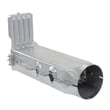
| No heat / weak heat | Heater or temperature control | Dryer heater assembly WE11X29790 |
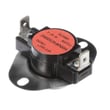
| Overheating / shuts off | Thermostats | Dryer outlet backup thermostat WE04X10190 |
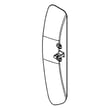
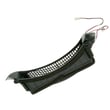
| Long dry times | Airflow and lint handling | Dryer lint screen WE16X32537 |
Why it matters
No-heat and long-dry complaints often trace back to airflow and power supply. Fixing venting and confirming both breakers are on protects the heater circuit, improves drying performance, and helps prevent repeat shutdowns.
Last updated: February 2026
Where to find part number on GE dryer?
On your GE dryer model PFD95ESPT1DS, the model and serial tag (where you will also find the information needed to match the correct replacement part) is typically located on the inside of the dryer door opening, either on the door frame or just inside the door area. Confirm the exact location and label format in the PFD95ESPT1DS owner's manual.
What to look for on the label
Use the tag to capture the details we need to match parts correctly:
- Model number (for this dryer: PFD95ESPT1DS)
- Serial number (helps confirm production series)
- Electrical rating (volts and amps)
- Manufacturing date code (varies by GE)
- Any revision or engineering code listed near the model
How to use the number to get the right part
Once you find the tag, match parts by model first, then confirm the part by name and ID.
- Search parts using the full model number PFD95ESPT1DS
- Compare the part description to your symptom (noise, no heat, won’t start)
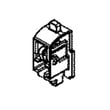
- If the dryer is noisy or squealing, the belt drive system is a common place to start; the dryer idler assembly WE03X30657 is one of the wear items in that area
- If the dryer won’t start, door-latch related issues are common; check the door switch WE04X34281
- If drying performance is poor, confirm airflow and lint filtration; inspect and clean the lint screen and consider replacing the dryer lint screen WE16X32537 if it is damaged or warped
Quick ID checklist (before ordering)
| Item to confirm | Why it matters |
|---|---|
| Model number matches exactly | Ensures parts list compatibility |
| Part ID and part name match | Prevents ordering a similar-looking part |
| Symptom matches the part’s function | Avoids unnecessary returns |
Why it matters
GE often uses similar-looking parts across multiple dryer series; using the exact model tag information helps us match the correct control, thermostat, switch, or mechanical part for PFD95ESPT1DS the first time.
Last updated: February 2026
What if I can't find my part on Sears PartsDirect?
If you can’t find the part you need for your GE PFD95ESPT1DS dryer, we recommend confirming the exact model and serial information first, then using the parts diagrams and part descriptions to match what’s on your dryer. Your PFD95ESPT1DS owner's manual also helps you identify accessories and model-specific items.
Quick steps to find the right part
- Recheck the model number on the dryer’s ID tag and match it exactly to PFD95ESPT1DS.
- Use the part name (for example, idler, thermostat, door switch) plus the part ID when searching.
- Compare your old part to photos and descriptions; look for mounting points and connector style.
- If the issue is a symptom (no heat, won’t start, long dry times), troubleshoot first so you don’t buy the wrong part.
- For steam features, confirm whether your dryer uses steam water hoses and the correct hose kit.
Common “hard to spot” parts customers miss
These are frequently overlooked because they’re inside the cabinet or look similar to other components:
| What you’re trying to fix | Part to check first | What it affects |
|---|---|---|
| Squealing or thumping | Dryer idler assembly WE03X30657 | Belt tension and drum support |
| Dryer won’t start when door closes | Door switch WE04X34281 | Start enable and door safety |
| Overheating or shutting off | Dryer outlet backup thermostat WE04X10190 | Safety temperature limit |
| Poor airflow or lint buildup | Dryer lint screen WE16X32537 | Airflow through the drum |
Why it matters
Matching the correct GE part to PFD95ESPT1DS prevents repeat failures and avoids ordering a look-alike component that fits differently. It also helps you focus on the most likely failure point (for example, airflow restrictions versus a heater problem).
Helpful troubleshooting resources
- Use GE gfd model series error codes if your display shows an error code or service code.
Last updated: February 2026
How do I know if my GE dryer heating element is bad?
If your GE dryer model PFD95ESPT1DS runs but won’t heat (or heats weakly), a failed heating element is a common cause. We confirm it by safely disconnecting power, accessing the heater circuit, and checking the element for continuity and for a short to the metal heater housing.
Quick symptoms that point to a bad heater
- Dryer tumbles normally but clothes stay cold and damp
- Cycle takes much longer than normal, even with a clean vent
- No heat on any heat setting (Timed Dry and sensor cycles)
- Breaker trips when heat should turn on (possible shorted heater)
- Burning smell or scorching near the heater area (stop using until checked)
Safe test steps (continuity and short-to-ground)
Follow the access and safety steps in the PFD95ESPT1DS owner's manual.
- Unplug the dryer (or switch off the breaker). Never test live circuits.
- Remove the panel needed to reach the heater wiring.
- Label and remove the heater wires so you are not reading through the rest of the circuit.
- Set your meter to continuity (or the lowest ohms range).
- Test across the heater terminals:
- Good: continuity (or a low resistance reading)
- Bad: no continuity (open circuit)
- Test each heater terminal to the metal heater housing:
- Good: no continuity
- Bad: continuity (heater is shorted to ground)
What to do with the result
| Meter result | What it means | Next step |
|---|---|---|
| No continuity across heater | Element is open | Replace the heater assembly |
| Continuity to metal housing | Element is shorted | Replace the heater assembly; inspect wiring |
| Heater tests good | Heat problem is elsewhere | Check thermostats, airflow, and controls |
Other parts that can mimic a bad heating element
On PFD95ESPT1DS, these heat-safety parts can stop heat even when the element is fine:
- Dryer outlet backup thermostat WE04X10190 (opens if overheating occurs)
- Dryer blower thermostat WE04X29714 (helps regulate temperature)
- Venting and lint buildup (restricted airflow can trip safety thermostats)
Why it matters
A dryer that is not heating is often a simple electrical failure, but restricted airflow can also cause overheating and repeated thermostat failures. The manual also stresses never operating the dryer without the lint filter in place and recommends periodic exhaust duct cleaning.
Last updated: February 2026





