Owner’s manual
 Error Codes



What is the difference between force defrost RD and FD?
On Samsung refrigerator model RF28HMEDBSR, RD (refrigerator defrost) runs a defrost cycle aimed at the fresh food (refrigerator) evaporator area, while FD (forced defrost) runs a broader, service-style defrost that’s used to clear heavier frost conditions that can affect multiple cooling and ice-making components. For the exact button sequence and display behavior on your unit, use the RF28HMEDBSR owner's manual.
What each mode is used for
- RD (refrigerator defrost): Targets frost buildup that mainly affects refrigerator-side airflow and cooling.
- FD (forced defrost): Used when you need a more complete defrost to restore airflow and operation across the system (commonly used during troubleshooting).
- Practical takeaway: If the refrigerator section is warming but the freezer seems normal, RD is often the more targeted choice; if symptoms involve ice maker or widespread airflow restriction, FD is the more comprehensive choice.
What you may notice during RD vs FD
During either mode, it’s normal to hear changes in fan noise and see the display indicate the selected test/defrost state.
- Fans may stop or change speed temporarily.
- You may hear water dripping or sizzling as frost melts.
- The unit may beep when entering or exiting service functions.
- Cooling performance can be temporarily reduced until the cycle ends.
Common symptoms and the mode that fits best
| Symptom you’re trying to fix | RD (refrigerator defrost) | FD (forced defrost) |
|---|---|---|
| Refrigerator section warm, freezer OK | Often | Sometimes |
| Heavy frost affecting airflow | Sometimes | Often |
| Ice maker area icing up or ice clumping | Sometimes | Often |
| You’re doing deeper troubleshooting/service | Sometimes | Often |
Why it matters
Choosing the right defrost mode helps you clear frost without overusing service functions. RD is more targeted for refrigerator-side cooling issues; FD is the broader option when frost is impacting multiple areas like airflow paths and ice-making.
Parts that commonly relate to frost and airflow issues
If defrosting restores cooling temporarily but the problem returns, these parts are often involved in temperature sensing, airflow, or defrost protection:
- Refrigerator temperature sensor DA32-10104N
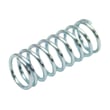
- Refrigerator protector DA47-00243C
- Refrigerator drain cap DA67-01301A
Last updated: February 2026
What's the average lifespan of a Samsung fridge?
Most Samsung refrigerators, including the Samsung RF28HMEDBSR, typically last 10 to 14 years with normal household use. Lifespan depends heavily on airflow, clean condenser coils, stable temperatures, and fixing cooling or ice maker issues early; our RF28HMEDBSR owner's manual covers the care steps that help maximize service life.
Typical lifespan and what affects it
A refrigerator’s life is usually limited by the sealed system (compressor, evaporator, condenser) or by airflow and defrost problems that make the unit run hot and overwork the compressor.
Common factors that shorten lifespan:
- Dirty condenser area and restricted airflow
- Doors not sealing well, causing long run times
- Frost buildup from defrost or fan issues
- Warm room temperatures or tight cabinet clearances
- Water leaks that lead to ice buildup and fan damage
What we recommend to help your RF28HMEDBSR last longer
These are the highest-impact maintenance habits for a bottom-mount Samsung refrigerator:
- Keep vents inside the fresh food section and freezer clear of packages
- Clean dust from the condenser area regularly (more often with pets)
- Set stable temps (avoid frequent large adjustments)
- Replace the water filter on schedule to protect water flow to the dispenser and ice maker
- Address unusual noises, warming, or repeated icing quickly
Helpful parts that support long-term reliability
If you are troubleshooting cooling or water/ice symptoms, these model-matched parts are commonly involved:
| Symptom | Often related system | Example model-matched part |
|---|---|---|
| Weak water flow or slow ice production | Filtration or inlet water supply | Refrigerator water filter DA29-00019A or refrigerator water inlet valve DA62-04027A |
| Warm temps or inconsistent cooling | Temperature sensing or airflow | Refrigerator temperature sensor DA32-10104N |
| Frost buildup, fan noise, or icing | Defrost protection and airflow | Refrigerator protector DA47-00243C |
Why it matters
A refrigerator that runs longer and hotter than normal uses more electricity and wears the compressor faster. Simple maintenance and early repair usually prevent the “domino effect” where airflow, defrost, and temperature control problems turn into major cooling failures.
For ice maker-specific longevity tips, we also use the steps in why your Samsung fridge stopped making ice and how to fix it to prevent repeat freeze-ups and low-ice complaints.
Last updated: February 2026
What is the most common problem with Samsung refrigerators?
The most common Samsung refrigerator problems are cooling issues and ice maker failures. On Samsung RF28HMEDBSR, these symptoms often trace back to airflow problems (evaporator fan), defrost and drain icing, or temperature sensing and control issues that cause warm compartments, frost buildup, or no ice.
What you typically notice first
- Fresh food section getting warm while the freezer still seems cold
- Frost or ice buildup on the back wall or around the evaporator cover
- Ice maker stops producing ice, makes small cubes, or clumps ice in the bin
- Fan noise, rattling, or a “whirring” that changes when doors open
- Water leaking or puddles (often from a partially iced drain)
Common causes and the parts that often fix them
| Symptom | Most common system involved | Example parts for RF28HMEDBSR |
|---|---|---|
| Warm fridge, uneven temps | Evaporator airflow | Refrigerator temperature sensor DA32-10104N, refrigerator evaporator assembly DA96-00842A |
| Frost buildup, intermittent cooling | Defrost and drain management | Refrigerator protector DA47-00243C, refrigerator drain cap DA67-01301A |
| No ice or poor ice production | Ice room airflow, fill, or ice path | Refrigerator water inlet valve DA62-04027A, refrigerator dispenser ice chute cap and gasket assembly DA97-12594A |
Quick checks we recommend before replacing parts
- Confirm the temperature settings are correct and allow 24 hours after any adjustment.
- Make sure vents inside the refrigerator are not blocked by food packages.
- Clean the condenser area and verify the condenser fan is running.
- If the ice maker is the issue, check for a frozen ice chute or clumped ice in the container.
- Replace the water filter on schedule; a restricted filter can reduce water flow to the ice maker.
Why it matters
Cooling and ice maker complaints are often connected. When airflow is restricted or frost builds up, the refrigerator can struggle to hold safe food temperatures and the ice room can warm enough to stop ice production. Addressing the root cause prevents repeat icing, warm spots, and wasted food.
Helpful model-specific resources
- Use the RF28HMEDBSR owner's manual for temperature recommendations, control panel functions, and operating modes.
- For ice maker troubleshooting steps, follow why your Samsung fridge stopped making ice and how to fix it.
Last updated: February 2026