
Does Craftsman make a good table saw?
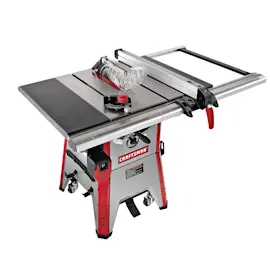
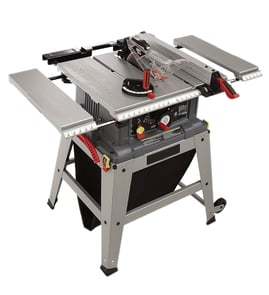
Yes. Craftsman table saws are a solid choice for many DIYers, and the Craftsman model 113221741 (a 10-inch benchtop table saw) is typically valued for practical, budget-friendly cutting performance when it is tuned correctly and used with a sharp blade.
What “good” means for a table saw
A table saw is “good” when it cuts straight, repeats measurements reliably, and stays safe and stable. For most homeowners, that comes down to setup and condition more than the logo on the badge.
Common strengths people like
- Good value for basic ripping and crosscutting
- Sturdy feel on many older Craftsman designs
- Straightforward, serviceable construction for routine maintenance
- Plenty of capability for shop projects when aligned correctly
Common complaints to watch for
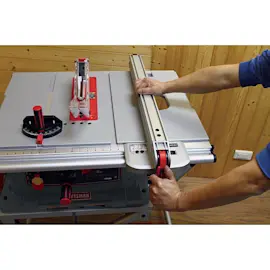
- Fence that does not lock parallel to the blade (causes burning and drift)
- Miter gauge or miter slot slop (hurts repeatable crosscuts)
- Vibration from a worn blade, arbor issues, or loose mounting hardware
- Missing or removed safety parts (guard, splitter/riving knife, anti-kickback pawls)
Quick “is it a good one?” checklist (5 minutes)
- Fence locks down square and stays put when you push on it
- Blade raises/tilts smoothly without binding
- Blade is parallel to the miter slot (no rubbing during a slow push)
- No excessive wobble at the blade (unplug first, then gently check)
- Stand or bench mounting is rigid (no rocking)
What to upgrade first (highest impact)
| Goal | Best first move | Why it helps |
|---|---|---|
| Straighter rips | Tune or replace the fence system | Fence alignment drives cut accuracy |
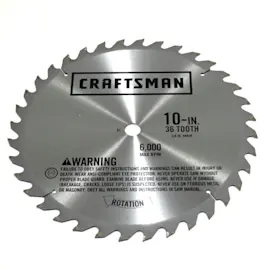
| Cleaner cuts | Install a quality, sharp 10-inch blade | Dull blades cause burning and tearout |
| Safer cutting | Restore/replace guarding and anti-kickback parts | Reduces kickback and contact risk |
| Better repeatability | Use a crosscut sled or tighter miter gauge | Improves consistent crosscuts |
Why it matters
A “good” table saw is one you can trust to cut accurately and safely. Even a budget-friendly saw can perform well when the fence, blade, and alignment are right; a poorly tuned saw can feel frustrating and unsafe regardless of brand.
For help identifying the exact model tag location and matching parts correctly, use how to find your appliance model number (and what it means for parts).
Last updated: February 2026
How to get rid of an old table saw?
If you are getting rid of a Craftsman 113221741 10-inch benchtop table saw, the best options are to sell or donate it if it still runs, or recycle it as scrap metal and e-waste if it does not. Before it leaves your shop, make it safe by removing the blade and securing the cord.
Best disposal options (from most to least value)
- Sell it as-is (working or “needs work”); include the model number 113221741 and clear photos.
- Donate it to a local reuse center, school shop program, or tool library (if they accept power tools).
- Recycle it at a municipal transfer station or metal recycler; most table saws are largely steel and aluminum.
- Use a junk removal service if you cannot transport it.
- Dispose of accessories separately (blade, miter gauge, fence, stand) if your recycler requires sorting.
Make the saw safe before transport
- Unplug the saw and coil/tie the power cord so it cannot snag.
- Remove the blade and store it so the teeth cannot cut through packaging.
- Lower the arbor fully (if applicable) and lock any height or bevel adjustments.
- Remove loose parts (throat plate, guard, fence) and bag them.
- Tape or strap moving parts so nothing shifts in the car.
How to handle the blade safely
Saw blades are sharp and can puncture bags; most facilities prefer them handled as metal scrap.
| Item | What to do | Why |
|---|---|---|
| Steel blade | Wrap in cardboard and tape; take to scrap metal drop-off | Prevents cuts and punctures |
| Carbide-tipped blade | Wrap the same way; ask recycler if they sort carbide | Some recyclers separate materials |
Why it matters
A table saw is heavy, has exposed sharp edges, and includes electrical components. Selling, donating, or recycling keeps usable tools in circulation and reduces landfill waste while preventing injuries during handling.
For tips on locating the correct model number for listings or recycling paperwork, use how to find your appliance model number (and what it means for parts).
Last updated: February 2026
Can an 8 dado blade be used on a 10 table saw?
Yes. On a 10-inch table saw like the Craftsman 113221741, an 8-inch dado stack is commonly used and is typically the better choice because it reduces load on the motor while still cutting standard dado and groove widths.
What to check before you install an 8-inch dado stack
- Arbor size and arbor length: The dado stack’s bore must match your arbor (commonly 5/8 inch), and the arbor must be long enough to safely clamp the full stack.
- Maximum dado width: Many 10-inch benchtop saws limit dado width (often up to 1/2 inch or 13/16 inch depending on design).
- Blade speed rating: The dado set must be rated for at least the saw’s no-load RPM.
- Throat plate clearance: A standard insert opening is too narrow for a dado stack.
- Guard and splitter/riving knife: These usually cannot be used with a dado stack; use extra care and correct setup.
You will need a dado throat plate (zero-clearance insert)
A standard throat plate is designed for a single blade kerf. For dado work, use a dado throat plate or make a zero-clearance insert so the wider stack can pass through cleanly and the workpiece is better supported.
| Setup item | Standard blade setup | Dado setup |
|---|---|---|
| Throat plate opening | Narrow (single kerf) | Wide (matches dado width) |
| Guard/splitter | Usually installed | Often removed for clearance |
| Cut type | Rip/crosscut | Dados/grooves/rabbets |
Why it matters
Using the correct dado diameter and insert helps prevent binding, reduces tear-out, and improves control of the workpiece. On a benchtop saw, an 8-inch dado stack is a practical match for power and stability.
For more DIY safety guidance before you start, review are diy appliance repairs safe.
Last updated: February 2026
What are the common table saw mistakes?
Common table saw mistakes on a Craftsman 113221741 10-inch benchtop table saw include skipping basic safety steps, using the wrong cutting setup, and forcing the workpiece through the blade. These errors increase kickback risk, reduce cut accuracy, and can damage the blade, fence, or motor.
Most common mistakes to avoid
- Cutting without proper PPE (eye protection, hearing protection, and a dust mask when needed)
- Removing or not using the blade guard, splitter, or riving knife when the cut allows it
- Standing directly in line with the blade and workpiece (kickback path)
- Using the rip fence and miter gauge together for the same cut (can pinch the workpiece)
- Cutting freehand instead of using the fence or miter gauge for guidance
- Running a dull, dirty, or incorrect blade for the material (burning, binding, rough cuts)
- Setting the blade too high above the workpiece (more exposed tooth, higher hazard)
Safer setup habits that prevent kickback
Kickback usually happens when the kerf closes, the work twists, or the stock gets trapped between the blade and a guide. These habits reduce the chance of binding:
- Keep the fence parallel to the blade and lock it firmly before the cut
- Use a push stick or push block for narrow rips
- Support long boards with outfeed support so the cut stays flat and controlled
- Feed at a steady rate; do not force the stock if you feel resistance
- Let the blade reach full speed before starting the cut
Quick “do this, not that” guide
| Task | Do this | Avoid this |
|---|---|---|
| Ripping | Use the rip fence and a push stick | Freehand ripping |
| Crosscutting | Use the miter gauge (or a sled) | Using fence and miter gauge together |
| Blade height | Keep gullets just above the stock | Blade set excessively high |
| Body position | Stand slightly to the side | Standing directly behind the board |
Why it matters
Most table saw injuries and damaged workpieces trace back to the same root causes: poor control of the stock, binding at the blade, and hands getting too close to the cut line. A correct setup improves safety and also produces straighter, cleaner cuts.
For general DIY safety mindset and prep, we recommend reviewing are diy appliance repairs safe.
Last updated: February 2026
How much is a craftsman professional table saw 113221741?
For the Craftsman 113221741 10-inch benchtop table saw, the price depends on condition and what is included (stand, fence, miter gauge, blade, and safety guards). Most used listings for comparable Craftsman 10-inch benchtop table saws land in the $100 to $300 range; clean, complete saws typically sell for more.
What changes the price the most
- Completeness: blade guard, splitter/riving-knife style parts, anti-kickback pawls, throat plate, and fence hardware
- Fence condition: smooth locking, straight rails, no cracks or stripped knobs
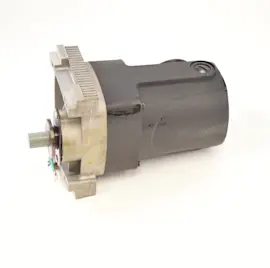
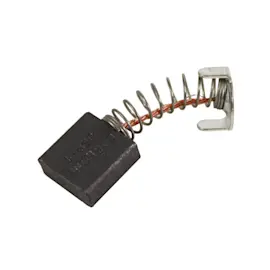
- Motor health: starts quickly, no burning smell, no excessive sparking at brushes
- Arbor and bearings: minimal vibration, no wobble at the blade
- Table top: flat surface, no major rust pitting, miter slots not damaged
- Included extras: dado insert, extra blades, mobile base, or stand
Quick pricing guide (typical used-market ranges)
| Condition of your 113221741 | What it usually sells for | Notes |
|---|---|---|
| Needs repair or missing key parts | $25 to $100 | Often priced as a “parts saw” |
| Runs well, normal wear | $100 to $200 | Most common range |
| Clean, tuned, complete accessories | $200 to $300 | Fence and guards drive value |
How we recommend you estimate your saw’s value
- Confirm the model number on the ID plate matches 113221741.
- List what is included (fence, miter gauge, guard assembly, stand).
- Do three checks: blade raises/tilts smoothly, fence locks square, motor runs without unusual noise.
- Compare against similar 10-inch Craftsman benchtop table saw listings in your area.
Why it matters
Table saw pricing swings widely because missing safety hardware and fence problems are expensive to correct and can make the saw harder to use accurately. A complete, well-tuned Craftsman 113221741 is worth more because it is ready to cut safely and square.
For help confirming the exact model number before you price or shop for replacements, use how to find your appliance model number (and what it means for parts).
Last updated: February 2026