



How to reset motor on GE washer?
On the GE GTW485ASW0WB washer, the most common “motor reset” is a control reset and recalibration step: unplug the washer for 1 minute, restore power, then use the lid-open and lid-close sequence to reinitialize the motor control so it can start and spin normally.
Motor reset steps (lid sequence)
- Turn the washer off.
- Unplug the power cord (or switch the breaker off) for 60 seconds.
- Restore power.
- Within 30 seconds, lift and close the lid 6 times.
- Complete all 6 open-close cycles within about 12 seconds.
- Wait a few seconds, then start a Drain/Spin or a normal cycle to test.
Before you reset: quick checks that prevent repeat failures
- Make sure the tub is not overloaded; redistribute bulky items.
- Confirm the lid closes fully and latches; a lid lock issue can stop the motor.
- Check for standing water; a drain problem can prevent spin.
- Listen for belt squeal or a burning rubber smell.
- Verify the outlet has steady power (avoid loose extension cords).
If it still will not spin: parts that commonly cause “motor” symptoms
These issues often look like a bad motor, but are usually a drive, drain, or sensing problem.
| Symptom | Most likely area | Example part for this model |
|---|---|---|
| Hums but will not spin, squeals | Drive system | Washer drive belt WH01X27538 |
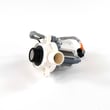
| Won’t drain, won’t go into spin | Drain system | GE washer drain pump assembly WH23X28418 |
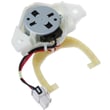
| Agitates but won’t shift into spin (or vice versa) | Mode shifting | Washer shifter assembly WH03X30517 |
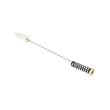
| Shakes, bangs, off-balance stops | Suspension | Washer suspension rod and spring assembly WH16X26911 |
Why it matters
A reset clears a stalled motor-control state after an overload, off-balance event, or power glitch. If the problem returns quickly, checking the belt, drain pump, shifter, and suspension helps you fix the root cause instead of repeatedly resetting.
For code-based troubleshooting, use GE gtw top load washer error codes.
Last updated: February 2026
Is GE GTW485ASW0WB a high efficiency washer?
Yes. The GE GTW485ASW0WB is a high-efficiency (HE) top-load washer, so it’s designed to use less water and energy than traditional top-load models while still giving you options (like deeper fills) when a load needs more water.
What “high efficiency” means on this washer
An HE top-load washer like the GTW485ASW0WB typically:
- Uses lower water levels by default to reduce utility use
- Relies on load sensing and wash action (agitator movement) to clean with less water
- Spins faster than older designs to remove more water and shorten dry time
- Works best with HE detergent to control suds
How to get the best results in HE mode
For the most consistent cleaning and rinsing performance, we recommend:
- Use HE detergent and measure carefully (too much causes oversudsing)
- Load loosely around the agitator; don’t pack items down
- Choose a cycle that matches fabric type and soil level
- If you see dry spots, pause and redistribute the load
- Keep the washer level to reduce vibration and out-of-balance issues
Quick comparison: HE top-load vs traditional top-load
| Feature | HE top-load (GTW485ASW0WB) | Traditional top-load |
|---|---|---|
| Water use | Lower by default | Higher, full-tub fills common |
| Detergent | HE detergent recommended | Standard detergent often used |
| Spin-out | Typically better | Often leaves more water |
| Load size | Larger capacity common | Varies |
Why it matters
HE operation saves water and energy, but it also changes how you load, dose detergent, and choose cycles. If the washer isn’t cleaning well, the fix is often detergent amount, load size, or balance, not a failed part.
If you’re troubleshooting poor spin or agitation that makes HE cleaning seem weak, common wear items to check include the washer drive belt WH01X27538 and the washer shifter assembly WH03X30517.
Related help: GE gtw top load washer error codes
Last updated: February 2026
Is the GE 4.5 top-load washer any good?
For the GE GTW485ASW0WB top-load washer (about 4.5 cu. ft. class), it’s a good choice when you want a large-capacity, traditional agitator-style wash at a reasonable cost. The most common tradeoffs are more noise and occasional out-of-balance spinning with bulky loads.
What “good” looks like for this washer
- Capacity for bulky items: comforters, towels, and mixed loads fit more easily than in smaller tubs.
- Traditional wash action: agitator-style turnover can clean well on everyday cycles.
- Straightforward controls: fewer “smart” features, more basic cycle and water-level choices.
- Parts support: common wear items are available when performance drops.
Common complaints and what usually causes them
| Symptom | What it often means | Parts commonly involved (for this model) |
|---|---|---|
| Loud squeal or burning-rubber smell | Belt slipping or worn | Washer drive belt WH01X27538 |
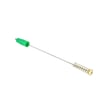
| Shaking, banging, walking | Suspension not controlling tub movement | Washer suspension rod and spring assembly WH16X26911 and washer suspension rod and spring assembly, right (green) WH16X26910 |
| Won’t drain or leaves water behind | Pump issue or restriction | GE washer drain pump assembly WH23X28418 |
How we recommend you judge it in your home
- Run a medium mixed load and listen during agitation and spin.
- Try a bulky load (blankets/towels) and confirm it can reach full spin without repeated rebalancing.
- Check cleaning results with normal detergent dosing (too much soap can worsen performance).
- If you see frequent imbalance, load evenly around the basket and avoid single heavy items.
Why it matters
A washer can be “good” on cleaning and capacity but still feel “bad” if it’s noisy or frequently rebalances. Knowing the typical tradeoffs helps you decide whether you want a traditional, value-focused GE top-load design or a quieter, feature-heavy alternative.
Related help: GE gtw top load washer error codes
Last updated: February 2026
What is the most common problem with GE washers?
For GE washers like model GTW485ASW0WB, the most common service issues are drain and spin problems: the washer will not drain, will not spin out water, or leaves clothes too wet. These symptoms usually trace back to the drain system, lid lock, or drive components.
Most common symptoms we see
- Washer stops with water still in the tub
- Spins slowly or not at all
- Clothes come out dripping wet
- Hums but will not drain
- Intermittent cycle completion (works sometimes, fails other times)
Common causes (and what to check first)
Start with the easiest checks before replacing parts.
- Drain path restriction: check the standpipe, drain hose routing, and for kinks or clogs
- Drain pump problem: listen for the pump during drain; if it is loud, seized, or not moving water, suspect the pump
- Lid lock not engaging (top-load safety): if the lid does not lock, the washer may refuse to spin
- Drive belt wear or slip: a worn belt can prevent proper spin speed
- Out-of-balance control response: a weak suspension can cause repeated rebalancing and reduced spin
Parts that commonly relate to drain and spin complaints
These are model-matched parts we often see involved on GTW485ASW0WB:
| Symptom | Likely area | Example model-matched part |
|---|---|---|
| Will not drain | Drain system | GE washer drain pump assembly WH23X28418 |
| Will not spin or weak spin | Drive system | Washer drive belt WH01X27538 |
| Excessive shaking, won’t balance | Suspension | Washer suspension rod and spring assembly WH16X26911 |
Why it matters
Drain and spin problems are more than an inconvenience. If water is left in the tub, it can lead to odors, poor cleaning, and extra strain on the motor, belt, and control system. Fixing the root cause early helps prevent repeat failures.
Helpful GE troubleshooting info
If your washer is showing a fault code or flashing pattern, use our GE gtw top load washer error codes guide to match the code to the most likely failure and next steps.
Last updated: February 2026


