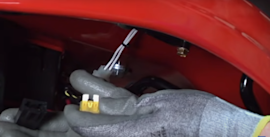
Installation guide
 Owner’s manual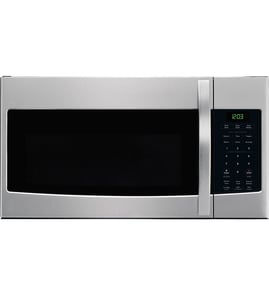

What is the average lifespan of a whirlpool microwave?
A Whirlpool microwave typically lasts 7 to 10 years with normal household use. For your Whirlpool MH1160XSB3 microwave/hood combo, lifespan depends most on ventilation, door/interlock wear, and electrical component health; consistent cleaning and proper use help it reach the upper end of that range.
Typical lifespan and what affects it
Most over-the-range microwave/hood combos fail from a few common wear points rather than the cavity itself.
- Heavy daily use (multiple long cook cycles) shortens lifespan
- Grease buildup restricts airflow and overheats internal components
- Slamming the door stresses the latch and interlock system
- Power surges and repeated breaker trips stress the control and high-voltage circuit
- Running the microwave empty can damage internal components
Signs your microwave is nearing end of life
If you see these symptoms repeatedly, it is usually time to troubleshoot and consider repair versus replacement.
- Food heats slowly or unevenly
- Loud humming or buzzing during heating
- Unit runs but does not heat
- Door feels loose, won’t close cleanly, or takes extra force to latch
- Random shutoffs, dead display, or intermittent power
Repair vs. replace: quick decision guide
Use this as a practical way to decide what to do next.
| What you notice | Most likely area | What we recommend |
|---|---|---|
| Runs but no heat | High-voltage circuit | Use our troubleshooting steps in the owner's manual and consider professional service due to high voltage |
| Dead or intermittent power | Fuse or power connection | Check power supply first; then inspect/replace the microwave fuse W11707984 if appropriate |
| Door won’t start unit | Door interlock switches | Inspect the latch and switch mounts; replace a failed switch such as the microwave/hood micro-switch W10269458 |
| Turntable not rotating | Turntable drive | Check coupler and motor; replace the turntable motor W10642989 if it tests bad |
Why it matters
A microwave/hood combo like the MH1160XSB3 relies on safe door interlocks, steady airflow, and stable electrical protection. Keeping vents clear and addressing small issues early (like a weak door switch) prevents overheating and nuisance shutdowns that shorten overall lifespan.
Last updated: February 2026
Does the whirlpool low profile microwave need to be vented outside?
No. The Whirlpool MH1160XSB3 microwave/hood combo can be installed to recirculate air back into the kitchen, so it does not have to vent outside. If you choose wall or roof venting, the venting setup must be changed during installation (it ships set for recirculation). See the installation guide.
Venting options for the MH1160XSB3
We see three common installation paths for over-the-range microwave/hood combos:
- Recirculation (non-vented): air is filtered and returned to the room
- Wall venting: air is ducted through an exterior wall
- Roof venting: air is ducted up through the roof
If you are not running ductwork to the outside, recirculation is the correct setup.
What changes when you vent outside
For wall or roof venting, the installation instructions call out that changes must be made to the venting system (including handling the damper components). These details matter because the damper has to open freely and fully for proper airflow.
Key installation checks (outside venting)
- Use rigid metal venting (we do not recommend flexible metal vent)
- Keep the duct run short and direct; minimize elbows
- Seal joints with duct tape and seal exterior openings with caulk
- Do not vent exhaust into concealed spaces (walls, ceilings, attic, crawl space, garage)
- Confirm the cutout is clear so the damper blade opens freely
Quick comparison
| Installation type | Duct to outside required | Typical goal |
|---|---|---|
| Recirculation | No | Basic odor and grease reduction |
| Wall venting | Yes | Stronger removal of heat, smoke, and moisture |
| Roof venting | Yes | Stronger removal when wall venting is not practical |
Why it matters
Venting choice affects kitchen air quality and microwave performance. Outside venting generally removes heat and moisture more effectively, while recirculation is often the simplest option when ducting is not available.
Last updated: February 2026
What are common problems with whirlpool microwaves?
Common problems with Whirlpool microwaves like model MH1160XSB3 include not heating, not starting, the turntable not rotating, sparking/arcing, loud buzzing or humming, and keypad or display issues. Many symptoms start with power, door-interlock, or airflow problems; heating failures often involve high-voltage components.
Most common symptoms and what they usually point to
- Runs but does not heat: high-voltage circuit issue (diode, capacitor, magnetron circuit) or a safety thermostat opening
- Dead or won’t start: blown fuse, door interlock switch problem, or power supply issue
- Starts then stops: overheating protection (thermostat) or door switch alignment problem
- Turntable not turning: turntable motor issue or mechanical obstruction
- Sparking/arcing: damaged waveguide cover area, metal in cavity, or food splatter buildup
Quick checks you can do first (no disassembly)
- Confirm the outlet has power; avoid extension cords (this model requires a grounded 3-prong outlet).
- Open and close the door firmly; if the door does not close squarely, the interlock system can prevent operation.
- Make sure no metal (foil, twist ties, metal-rimmed dishes) is inside; foil can cause overheating and arcing.
- Clean the cavity and door sealing surfaces; residue can contribute to arcing and poor door sealing.
- If the unit is mounted over a range, keep airflow paths clear so the microwave/hood combo can vent heat.
Parts that commonly fail on MH1160XSB3
Microwaves contain high-voltage components that can store a dangerous charge even when unplugged. We recommend having a qualified technician handle internal electrical testing and replacement.
| Symptom | Common part area | Example part on this model |
|---|---|---|
| No heat | High-voltage circuit | Diode W11256462, microwave high-voltage capacitor W10850446 |
| Won’t start / intermittent | Door interlock circuit | Microwave/hood micro-switch W10269458 |
| Completely dead | Line protection | Microwave fuse W11707984 |
| Shuts off while cooking | Overheat protection | Thermostat W10598693 |
Why it matters
On a microwave/hood combo, “no heat” and “won’t start” symptoms are often tied to safety interlocks and high-voltage parts. Addressing the correct root cause helps prevent repeat failures and protects the door-seal and interlock system that helps contain microwave energy.
Helpful model-specific references
- Use the owner's manual for operating tips, safety precautions, and electrical requirements.
- For heating-specific troubleshooting, follow our guide: why is my microwave not heating.
Last updated: February 2026
What is the difference between 1.7 and 1.9 cu ft microwave?
A 1.9 cu ft microwave has 0.2 cu ft more interior capacity than a 1.7 cu ft model, which mainly translates to a little more room for larger dishes and easier turntable clearance. For fit and venting, always follow the model-specific requirements in the MH1160XSB3 installation guide.
What the extra 0.2 cu ft typically changes
In day-to-day use, the added capacity usually helps with:
- Slightly larger casserole dishes and covered bowls
- Better clearance for taller containers
- Less chance of food rubbing the side wall while rotating
- More usable space when reheating multiple items at once
What may not change (especially on over-the-range units)
Many over-the-range microwaves keep similar outside dimensions across close capacities, but installation details can still vary by model.
- Mounting plate and upper-cabinet bolt pattern can differ
- Venting orientation (recirculating, wall vent, roof vent) can differ
- Required clearances for the damper and ductwork can differ
Quick comparison
| Item | 1.7 cu ft | 1.9 cu ft |
|---|---|---|
| Interior capacity difference | Baseline | +0.2 cu ft |
| Large-dish comfort | Good | Better |
| Exterior size | Often similar | Often similar |
| Wattage and fan performance | Model-specific | Model-specific |
Why it matters for Whirlpool MH1160XSB3
The 1.7 vs 1.9 cu ft comparison is a general sizing question; it does not describe the exact capacity of Whirlpool MH1160XSB3. The most important decision points for your MH1160XSB3 are installation fit and venting design limits, which are spelled out in the installation instructions.
- Confirm cabinet opening and mounting requirements
- Use the recommended vent size and layout
- Maintain clearance so the damper opens fully
Last updated: February 2026