Owner’s manual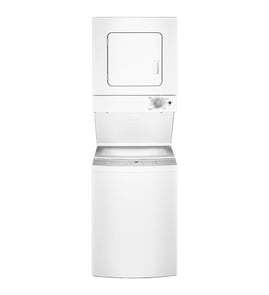





Is it cheaper to buy a washer/dryer combo?
It can be cheaper to buy a washer/dryer combo, but it depends on your budget, space, and how you do laundry. With the Whirlpool WFC8090GX0 all-in-one design, you can wash only, dry only, or wash and dry in one machine, which can reduce installation needs and save space compared with separate units.
Combo units often cost less overall when you value space and simplicity; separate machines often win on capacity and flexibility. Here are the biggest cost drivers:
- Upfront price: Combos are commonly priced like a mid-to-high washer plus a basic dryer.
- Installation parts: You may still need accessories like inlet hoses (not included for this model) and the correct dryer power cord.
- Energy and time: Smaller loads and longer dry times can increase run time, especially if the drum is packed.
- Maintenance and repairs: One appliance means one footprint, but a single failure can affect both washing and drying.
- Ventilation/clearance needs: Tight closets without proper airflow can hurt drying performance.
| Factor | Washer/dryer combo (like WFC8090GX0) | Separate washer + dryer |
|---|---|---|
| Space | Best for small laundry areas | Needs more room |
| Convenience | One load, start-to-finish option | More flexibility for back-to-back loads |
| Load size for best drying | Half-full drum or less is often best | Larger loads dry more easily |
| Install complexity | Fewer appliances, but still needs correct hookups | More hookups overall |
If you are budgeting the “real” cost to get running, plan for common install items:
- WFC8090GX0 owner's manual (confirms inlet hoses are not included and outlines electrical connection options)
- Washer fill hose, 2-pack 8212638RP if you need new inlet hoses
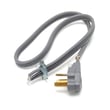
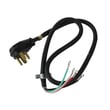
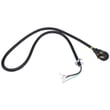
- Dryer 4-prong power cord, 4-ft, 30-amp PT400L if your outlet is 4-wire and you need a matching cord
A combo can be the cheaper choice when space is limited and you prefer a single appliance. If you routinely wash bulky loads, separate machines can be more cost-effective over time because they handle larger loads and drying airflow more easily.
Last updated: February 2026
What are the drawbacks of a combo unit?
A combo unit like the Whirlpool WFC8090GX0 saves space by washing and drying in one machine, but the tradeoffs are longer total cycle times, smaller practical load sizes for best drying, and more sensitivity to installation and airflow. For operating details and capacity guidance, use the WFC8090GX0 owner's manual.
- Longer wash-to-dry time: One drum does everything, so a full wash plus dry often takes longer than separate machines.
- Smaller effective drying loads: Even if you can wash a larger load, drying works best with the drum about half full or less.
- More re-balancing and vibration risk: Mixed or balled-up loads can bounce and vibrate; leveling matters.
- Ventilation and clearance needs: Tight closets and blocked airflow can increase drying time.
- Harder to “multi-task” laundry: You cannot wash one load while drying another.
The manual guidance for this all-in-one style points to a few practical limitations that show up as “drawbacks” in real use.
| Issue you notice | Most common cause | What to do first |
|---|---|---|
| Clothes still damp | Load too large for drying | Reduce to half-full; run a high-speed spin |
| Longer drying times | Heavy items packed tightly | Split bulky items; improve tumbling space |
| Vibration or humming | Unit not level or load balled up | Level all feet; separate items and restart |
| Poor closet performance | Not enough airflow/clearance | Confirm door vents and minimum clearances |
- Keep loads smaller for dry cycles (half drum or less is the sweet spot).
- Run the highest spin allowed for the fabric to remove more water before drying.
- Avoid washing one oversized item with small items (it can ball up and throw balance off).
- If installed in a closet, maintain the recommended clearances and ventilation openings.
- If you are troubleshooting cycle behavior or error displays, use Whirlpool wet and ywet error codes.
Combo units are most efficient when you treat them like a space-saving system, not a full-size washer plus full-size dryer. Right-sizing loads and ensuring proper leveling and airflow prevents long cycles, damp clothes, and vibration.
Last updated: February 2026
What is the downside of a stackable washer and dryer?
The biggest downside of a stackable washer and dryer is reduced convenience and access: you typically have tighter clearances, more sensitivity to leveling and vibration, and repairs can take longer because components are harder to reach. For Whirlpool WFC8090GX0 specifically, it is an all-in-one washer/dryer combo, so the “stackable pair” drawbacks don’t fully apply; the main limitations are load size, airflow/clearance needs, and longer dry times if you overload. See the WFC8090GX0 owner's manual.
- Harder access to the upper dryer controls and lint screen
- Tighter closet clearances; airflow becomes more critical
- More vibration and noise if the floor is not level
- Service access is tighter; some repairs take longer
- Smaller practical capacity than full-size side-by-side sets
Because WFC8090GX0 washes and dries in one drum, the most common “downside” is performance drop when the drum is packed too tightly.
- Load the drum about half full for better washing and drying performance
- Allow recommended spacing around the cabinet for airflow and servicing
- Use a level floor to reduce vibration and improve operation
- Expect longer dry times with bulky items or heavy loads
| Setup type | Main downside | What to do about it |
|---|---|---|
| Stackable washer + dryer (two units) | Tight access and clearances | Plan closet ventilation and service space; level carefully |
| All-in-one combo (WFC8090GX0) | Smaller effective load for best dry results | Keep loads smaller; avoid bulky, tightly packed loads |
Most complaints (damp clothes, long cycles, extra vibration) come from tight spaces and overloading. With WFC8090GX0, keeping loads smaller and giving the unit proper clearance directly improves cycle time and results.
Last updated: February 2026