Owner’s manual
 Error Codes


What is the average lifespan of a Kenmore Elite refrigerator?
Most Kenmore Elite refrigerators, including the Kenmore Elite 79575077910 bottom-mount style, typically last 10 to 15 years with normal household use. Regular maintenance (cleaning coils, keeping door gaskets sealing, and changing filters) helps you reach the high end of that range.
Typical lifespan range (what to expect)
Here’s a practical way to think about service life for a Kenmore Elite bottom-mount refrigerator:
- 10 to 15 years is the normal average for modern refrigerators
- 8 to 10 years is common if the unit runs hot (dirty coils, poor airflow) or has frequent door openings
- 15+ years is realistic with consistent maintenance and stable temperatures
- Major sealed-system repairs (compressor, refrigerant components) often become the deciding factor as the unit ages
| Age of refrigerator | What’s most common | What we recommend |
|---|---|---|
| 0 to 5 years | Minor adjustments, filter changes | Keep airflow clear; follow the 79575077910 owner's manual |
| 6 to 10 years | Fans, sensors, ice maker or valve issues | Diagnose early; replace wear parts as needed |
| 10 to 15 years | Higher chance of cooling-system or control issues | Compare repair cost vs. replacement |
Maintenance that extends lifespan
These steps reduce compressor run time, prevent frost and airflow problems, and help temperatures stay stable:
- Vacuum condenser coils and the grille area regularly
- Keep door gaskets clean and sealing; replace if torn or warped
- Maintain proper cabinet airflow (do not block vents inside)
- Replace the water filter on schedule to protect water flow and the dispenser system
- Keep freezer drawers closing fully to prevent moisture and frost buildup
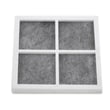
If you use the dispenser, staying current on filtration is especially helpful; the correct filter for this model is the genuine Kenmore refrigerator water filter 9980 AGF80300805.
Why it matters
A refrigerator usually fails “early” because it runs too long and too hot. Simple upkeep (coils, gaskets, filters) lowers stress on the compressor and helps your Kenmore Elite 79575077910 hold safe food temperatures longer.
Last updated: January 2026
What are the common problems with Kenmore Elite refrigerators?
Common problems we see on Kenmore Elite bottom-mount refrigerators like model 79575077910 are no cooling or warm temperatures, ice maker not making ice, water dispenser issues, and frost or moisture problems. Many causes are simple (blocked vents, doors opened often, dirty coils), while others point to a failed component.
Most common symptoms and what usually causes them
- Not cooling or weak cooling: controls set to OFF, unit in Demo Mode, recent install (needs up to 24 hours), defrost cycle in progress, airflow blocked by food
- Too warm in fridge or freezer: frequent door openings, vents blocked, hot room (above about 110°F), warm food load
- Ice maker not working: freezer not at 15°F or below, ice maker turned OFF, water supply issue
- Water dispenser slow or no water: restricted filter, low water pressure, inlet valve problem
- Frost buildup or leaking water: door not sealing, defrost system or drain issue
Quick checks we recommend first (before replacing parts)
- Confirm the temperature controls are ON and not set to OFF; see the 79575077910 owner's manual.
- Make sure Demo Mode is OFF (lights work but cooling is disabled).
- Allow up to 24 hours after installation or moving the refrigerator for temps to stabilize.
- Check for blocked air vents; rearrange items so air can circulate.
- Reduce long or frequent door openings; warm, humid air quickly raises temps.
Parts that commonly solve these issues
| Symptom | Common part involved | Example part for this model |
|---|---|---|
| Bad taste/slow water flow | Water filter | Genuine Kenmore refrigerator water filter 9980 AGF80300805 |
| No water to dispenser/ice maker | Water inlet valve | Refrigerator water inlet valve (match by part number) |
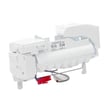
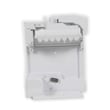
| Ice maker not producing | Ice maker assembly | Ice maker assembly (match by part number) |
Why it matters
Warm temperatures and poor airflow can mimic a “failed compressor” and lead to unnecessary repairs. Starting with control settings, airflow, and water supply specs (potable water, 20 to 120 psi) helps pinpoint the real cause faster.
Last updated: January 2026
What size is Kenmore refrigerator model 79575077910?
Kenmore Elite refrigerator model 79575077910 is a counter-depth, French door refrigerator with a bottom freezer (the 795.7507# series). For exact exterior dimensions (width, depth, height) and capacity for your specific color code, use the 79575077910 owner's manual.
What “size” usually means for this model
When customers ask about size, it typically refers to one or more of these:
- Exterior dimensions: width, depth, height (for fit in a cabinet opening)
- Capacity: total cubic feet (for storage space)
- Counter-depth vs standard-depth: how far the cabinet projects past counters
- Door swing and clearance: space needed to open French doors and pull freezer drawers
Model family details (what we know from the manual)
The Use & Care Guide covers multiple 795.7507# models and identifies the 7507* configuration as:
- Type: counter-depth
- Style: French door
- Freezer: bottom freezer
- Feature set: Preview Grab-N-Go (varies by model)
Quick fit checklist before you buy or move it
Use this checklist to avoid common installation surprises:
- Measure the cabinet opening width and compare to the refrigerator width
- Confirm depth with doors closed and allow extra for handles if applicable
- Check height including hinge cover area
- Allow clearance for door swing and freezer drawer pullout
- Verify the location of the water line if you use the ice maker or dispenser
Typical “counter-depth” expectations (general guidance)
These are common ranges for counter-depth French door refrigerators (helpful for planning, then confirm in the manual):
| Measurement | Typical range |
|---|---|
| Width | ~33 to 36 inches |
| Height | ~68 to 71 inches |
| Cabinet depth (without handles) | ~24 to 30 inches |
Why it matters
Getting the correct size prevents delivery issues, door interference, and poor airflow around the cabinet. It also helps you confirm you will still have room to remove bins, replace a water filter, and service components.
Last updated: January 2026
What does DH mean on Kenmore Elite refrigerator?
On Kenmore Elite bottom-mount refrigerator model 79575077910, dH typically indicates a defrost heating problem (the refrigerator is not sensing normal temperature rise during the defrost cycle). This often points to a defrost heater circuit, wiring, or control issue that needs troubleshooting.
What to check first (safe, quick steps)
- Power reset: unplug the refrigerator for 5 minutes, then restore power.
- Confirm doors fully close and gaskets seal; warm air leaks can worsen frost and defrost errors.
- Look for heavy frost on the rear freezer panel; that often aligns with a defrost system problem.
- Verify the condenser coils are reasonably clean and the condenser fan runs (airflow issues can mimic cooling problems).
- If the code returns quickly after a reset, move to electrical checks.
Parts commonly involved
A dH condition is usually tied to the defrost system or temperature sensing. For this model, a common suspect is the defrost sensor.
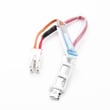
- Defrost temperature sensing: refrigerator defrost sensor assembly 6615JB2005R
- Control and wiring: inspect harness connections for loose pins or corrosion
- Sealed system components are less common for a dH code, but cooling performance symptoms can overlap
Basic troubleshooting path (what we do in order)
- Visual frost check: heavy frost behind the freezer back panel suggests defrost failure.
- Sensor check: test the defrost sensor for proper response per the 79575077910 owner's manual.
- Heater circuit check: check continuity of the defrost heater circuit and wiring connections.
- Control output check: if the heater and sensor test good, verify the control is sending power during defrost.
Symptom-to-likely-cause guide
| What you notice | Most likely area | What to do next |
|---|---|---|
| dH plus heavy frost in freezer | Defrost system not heating | Check sensor, heater circuit, wiring |
| dH but little frost | Sensor reading issue or intermittent wiring | Inspect connectors, test sensor |
| Temps warming in both sections | Airflow restriction from frost or fan issue | Clear frost cause, confirm fans |
Why it matters
When defrost heat is not working correctly, frost can build up on the evaporator and block airflow. That reduces cooling, stresses the compressor, and can lead to warmer refrigerator temperatures and poor ice production.
Last updated: January 2026