 Owner’s manual


What is the life expectancy of a GE washing machine?
A GE washing machine like model GTW490ACJ5WS typically lasts 10 to 14 years with normal household use. Consistent care (correct loading, HE detergent, and periodic cleaning) is what most often determines whether it lands closer to 10 years or pushes beyond it; see the maintenance guidance in the GTW490ACJ5WS owner’s manual.
What affects lifespan the most
- Overloading the basket or packing items tightly around the agitator/Infusor
- Detergent habits (too much soap causes oversudsing and residue)
- Water supply hose age (replace about every 5 years)
- Out-of-balance spinning (repeated heavy vibration stresses suspension and drive parts)
- Moisture left in the tub (can lead to odor and buildup)
Simple habits that help your GTW490ACJ5WS reach the high end of the range
- Load items loosely and evenly around the basket
- Use HE detergent and measure carefully (more is not better)
- Leave the lid open after cycles so the interior can dry
- Run a periodic cleaning routine (basket wipe-down and dispenser cleaning as needed)
- Fix vibration early; persistent shaking can point to worn suspension components
Quick reference: what “normal” looks like vs. early wear
| What you notice | Often normal | Often a sign of wear |
|---|---|---|
| Lower water level than older washers | Yes (high-efficiency design) | No |
| Occasional brief pauses during cycle | Yes | No |
| Frequent banging or walking during spin | No | Yes |
| Clothes consistently wetter than normal after spin | No | Yes |
Why it matters
A washer that is kept level, not overloaded, and kept clean usually avoids the most common premature failures (drain issues, excessive vibration, and drive wear). That is the difference between replacing a washer at around 10 years versus getting 14 years or more.
Last updated: January 2026
What is the most common problem with GE washers?
For GE washers like model GTW490ACJ5WS, the most common service issues we see are drain and spin problems (won’t drain, won’t spin, or clothes come out too wet). These symptoms are often tied to a restriction in the drain path, an out-of-balance condition, or a failed drain/spin-related component.
Most common issues (and what they look like)
- Won’t drain or drains slowly: water left in the tub at the end of the cycle
- Won’t spin or weak spin: clothes are wetter than normal after the cycle
- Out-of-balance during spin: banging, walking, or repeated attempts to balance
- Won’t fill or fills slowly: long fill times, poor water flow
- Lid lock related no-start: cycle won’t begin or stops when the lid won’t lock
For model-specific operating and troubleshooting notes (including load sensing and CHI indicator behavior), use the GTW490ACJ5WS owner’s manual.
Quick checks we recommend first (no parts needed)
- Run Drain & Spin and listen for the drain pump running.
- Check the drain hose for kinks and confirm the standpipe height is correct.
- Redistribute the load if the washer is trying to correct an out-of-balance condition.
- Verify both water supply valves are fully open; clean inlet screens if flow is low.
- Use HE detergent and reduce soap if you see oversudsing (suds can interfere with draining and spinning).
Parts that commonly fix drain/spin complaints on this model
If the washer won’t drain, drains slowly, or leaves water behind, these are common suspects for GTW490ACJ5WS:
| Symptom | Common part to inspect/replace | What it does |
|---|---|---|
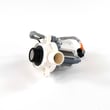
| Won’t drain / humming | Washer drain pump assembly WH23X28418 | Pumps water out during drain and spin |
| Drains but leaks at pump area | Washer pump drain hose WH41X24177 | Routes water from pump to drain path |
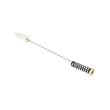
| Loud banging, off-balance spins | Washer suspension rod and spring assembly WH16X26911 | Stabilizes the tub during spin |
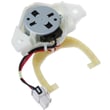
| Won’t spin or shifts oddly | Mode shifter WH03X30517 | Shifts between agitation and spin modes |
Why it matters
Drain and spin problems are the issues most likely to leave you with standing water, wet laundry, and cycle interruptions. Catching a restriction, hose setup issue, or failing pump early can prevent repeat shutdowns and reduce strain on the drive system.
Last updated: January 2026
What is the difference between 4.5 cu ft and 5.0 cu ft washer?
A 5.0 cu. ft. washer has about 0.5 cu. ft. more tub volume than a 4.5 cu. ft. washer, so it fits bulkier loads and can reduce the number of loads you run. For your GE GTW490ACJ5WS, the owner’s manual focuses on loading method and cycle selection rather than listing a tub-capacity spec; use the GTW490ACJ5WS owner’s manual for model-specific loading guidance.
What the extra 0.5 cu. ft. changes
That added space mainly helps with bulky or high-volume loads, and it can also improve wash action because items have more room to move.
- Better fit for bulky items (comforters, blankets, winter coats)
- Less chance of overpacking, which can reduce cleaning and rinsing performance
- Fewer loads for large households or heavy laundry days
- Potentially fewer out-of-balance events during spin when loads are not tightly packed
- Similar detergent and cycle choices; capacity is the main difference
4.5 vs 5.0 cu. ft. at a glance
| Comparison point | 4.5 cu. ft. | 5.0 cu. ft. |
|---|---|---|
| Volume difference | Baseline | +0.5 cu. ft. |
| Percent increase | 0% | About 11% |
| Best use case | Typical mixed loads | Bulky items, larger loads |
Tips that matter on GE high-efficiency top-load washers
These apply directly to how GTW-series washers are designed to wash with lower water levels.
- Load items loosely and evenly around the basket; avoid packing clothes down
- Use the Bulky Items cycle for bedding and bulky loads
- If your model has Precise Fill/auto sensing, let it sense the load; use Deep Fill only when needed
- Measure HE detergent carefully to prevent oversudsing
Why it matters
Capacity is not just “how much fits”; it affects how well water and detergent circulate. Overloading can lead to poor cleaning, residue, and vibration, while a slightly larger tub can make bulky loads easier to wash and balance.
Last updated: January 2026


