



How to replace GE dryer sensor?
On the GE GTD38GASW0WS gas dryer, “sensor” can mean a moisture sensor (dryness sensing) or a safety switch such as the door switch. Replacement is a straightforward access-and-swap job: disconnect power, open the correct panel area, transfer wires one at a time, then reassemble and test.
Identify which “sensor” you mean
Before ordering parts, match the symptom to the component:
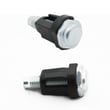
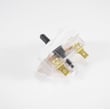
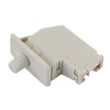
- Dryer stops when door opens or won’t start: door switch is the likely “sensor” (see dryer door switch WE04X28977).
- Dryer runs but won’t start with the button: start switch or button can be the issue (see dryer push-to-start switch WE4M416 or dryer power and start button WE04X24719).
- Drying is inconsistent (over-drying or under-drying): often airflow or lint buildup; a moisture sensor may be involved, but venting and lint path come first.
Quick safety steps (do these first)
- Unplug the dryer (or switch off the breaker).
- Turn off the gas supply valve if you will remove the front panel or work near the burner area.
- Wear cut-resistant gloves; cabinet edges are sharp.
- Take a photo of wire locations before disconnecting anything.
Typical replacement steps (door switch style)
- Open the door and locate the switch at the door opening.
- Remove the mounting screws (or release locking tabs, depending on the bracket).
- Pull the switch out enough to access the wire terminals.
- Move wires one at a time from the old switch to the new switch.
- Reinstall the switch, close the door, restore power, and test.
Symptom-to-part cheat sheet
| Symptom | Most likely part | Example part for this model |
|---|---|---|
| Won’t start, acts like door is open | Door switch | WE04X28977 |
| Won’t start unless you jiggle the start control | Push-to-start switch | WE4M416 |
| Button feels broken or doesn’t actuate | Start button | WE04X24719 |
Why it matters
A failed “sensor” or switch can prevent the dryer from starting, or it can cause unsafe operation. Correctly identifying the component saves time and avoids replacing good parts.
Last updated: February 2026
How to reset GE dryer heating element?
On the GE GTD38GASW0WS gas dryer, there is no “reset” button for a heating element; restoring power can reset the dryer’s controls and safety circuits. Turn the dryer off, shut off power at the breaker for 1 minute, restore power, then run a timed dry cycle to check for heat.
Quick reset steps (safe first)
- Set the control to Off.
- Turn off the dryer’s circuit breaker (or unplug if accessible).
- Wait 60 seconds.
- Turn the breaker on (or plug back in).
- Run Timed Dry, High Heat for 3 to 5 minutes.
- If the drum tumbles but there’s still no heat, move to the checks below.
What usually causes “no heat” on this model
Because GTD38GASW0WS is a gas dryer, heat problems are typically related to airflow, ignition, or safety thermostats (not an electric heating element).
- Restricted venting or lint buildup (most common)
- Failed igniter or burner components
- Open high-limit thermostat
- Gas supply issue (shutoff valve closed, empty LP tank, etc.)
Parts that commonly fix a no-heat condition
| Symptom | Common suspect | Example part for GTD38GASW0WS |
|---|---|---|
| Tumbles, no flame/heat | Ignition failure | Dryer burner igniter WE4M449 |
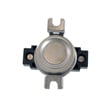
| Overheats then stops heating | Safety opens from poor airflow | Dryer high-limit thermostat WE04X26138 |
Why it matters
A “reset” may get the dryer running again temporarily, but poor airflow can keep tripping safety limits and can also cause long dry times. Cleaning the lint screen and confirming strong exhaust airflow helps the dryer heat consistently.
For airflow and heat troubleshooting steps, use our gas dryer wont heat troubleshooting video.
Last updated: February 2026
Is it worth fixing a 5 year old dryer?
Yes. For a 5-year-old GE gas dryer like model GTD38GASW0WS, repair is usually the better value because the machine is still in the early-to-mid part of its typical service life; the decision mainly comes down to repair cost, safety, and whether the failure is a common wear item.
Quick rule we use to decide
- If the repair is under 50% of the cost of a comparable new dryer, we typically repair.
- If the dryer has good airflow and heats normally after the fix, repair makes sense.
- If you have multiple major failures at once (motor plus burner plus controls), replacement often wins.
Common 5-year repairs that are usually worth it
These are frequent wear items on many GE dryers and are typically straightforward repairs:
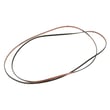
- Belt or no-tumble issues (check the GE dryer drum belt WE03X29897)
- Squealing, scraping, or thumping from drum support parts (glides, idler, bearing)
- Door won’t start the cycle (door switch)
- Start issues tied to the start switch or button
- Long dry times caused by lint buildup or vent restriction (not a “parts” failure)
Cost-to-value cheat sheet
| What you’re seeing | Likely area | Usually worth fixing at 5 years? |
|---|---|---|
| Drum won’t turn, motor runs | Belt/idler | Yes |
| Loud squeal or scrape | Glides/bearing/idler | Yes |
| Won’t start, door must be slammed | Door switch | Yes |
| Runs but no heat | Gas ignition/heating circuit | Often |
| Multiple symptoms plus heavy rust/damage | Several systems | Sometimes no |
Why it matters
A 5-year-old gas dryer typically has plenty of usable life left. Fixing a single failed component (like a belt, door switch, or idler) restores performance without the higher cost and hassle of replacing the entire appliance.
Before you spend money: 5 checks that prevent repeat problems
- Clean the lint screen and confirm it seats correctly (inspect the GE dryer lint screen WE03X23881)
- Check the vent for strong airflow outside
- Avoid overloading; it shortens belt and drum support life
- Listen for new noises after repair (early warning of idler or glide wear)
- If you see error codes, use GE cleanspeak dryer error codes to narrow the failure faster
Last updated: February 2026
What is the life expectancy of a GE gas dryer?
A GE gas dryer like model GTD38GASW0WS typically lasts about 10 to 13 years with normal household use. Consistent airflow (clean lint system and venting) and keeping drum support parts in good shape are the biggest factors in reaching the high end of that range.
What affects lifespan the most
- Vent restriction (long runs, crushed flex duct, clogged wall cap) causes overheating and extra wear
- Lint buildup inside the cabinet or blower housing stresses the motor and reduces drying performance
- Worn drum support parts (belt, glides, idler) increase friction and noise
- Overloading stretches the belt and strains the drive motor
- Heat system cycling issues can overheat components and shorten part life
Quick maintenance that adds years
Use this checklist for GTD38GASW0WS-STYLE GE gas dryers:
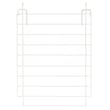
- Clean the lint screen every load; replace a torn or warped screen such as the GE dryer lint screen WE03X23881
- Inspect and clean the vent path (dryer outlet to exterior hood) at least yearly
- Keep loads medium-sized; heavy loads accelerate belt and idler wear
- If you hear squealing or thumping, address it early (often belt, idler, glides, or felt seal)
- If drying times increase, fix airflow first before replacing heat parts
Common wear parts and what they usually mean
| Symptom | Most common cause | Example part for GTD38GASW0WS |
|---|---|---|
| Drum not turning, motor runs | Broken or slipped belt | GE dryer drum belt WE03X29897 |
| Squealing or chirping | Idler pulley or drum support friction | Dryer idler pulley WE03X31620 |
| Thumping, scraping, or rough drum edge | Felt seal or drum glide wear | Dryer drum felt seal WE09X27634 |
| Door must be slammed to run | Door switch not closing reliably | Dryer door switch WE04X28977 |
Why it matters
A dryer that is venting well and turning smoothly runs cooler, dries faster, and puts less stress on the drive motor, thermostats, and gas burner system. That combination is what typically separates a 10-year dryer from a 13-year dryer.
Last updated: February 2026
What is the most common problem with a GE dryer?
The most common GE dryer complaint is no heat or weak heat: the drum tumbles, but clothes stay damp. On a GE GTD38GASW0WS gas dryer, this is usually caused by restricted airflow (lint or venting) or a heating-system safety part shutting the burner down.
Quick checks we recommend first
- Clean the lint screen and confirm it seats correctly; a damaged screen can leak lint into the ducting (see GE dryer lint screen WE03X23881).
- Run a timed dry cycle and check airflow at the outside vent hood; it should be strong and steady.
- Inspect the vent path for kinks, crushed flex duct, long runs, or a stuck vent flap.
- Make sure the gas shutoff valve is fully open and other gas appliances are working normally.
- If the dryer heats briefly then stops, suspect overheating from poor airflow or a thermostat issue.
Common causes and what they look like
| Symptom | Most likely cause | What to do next |
|---|---|---|
| Tumbles, no heat at all | Ignition or gas valve problem | Follow gas dryer wont heat troubleshooting video steps; check igniter and valve circuit |
| Heats for a few minutes, then goes cold | Airflow restriction or high-limit opening | Clean venting; consider dryer high-limit thermostat WE04X26138 if venting is clear |
| Takes too long to dry, heat seems weak | Partially blocked vent or lint buildup | Use dryer takes a long time to dry to confirm venting and load-size checks |
| Dryer will not start (so it cannot heat) | Door switch or start circuit | Check dryer door switch WE04X28977 and start switch |
Parts that commonly fix “no heat” on this model
- Dryer high-limit thermostat WE04X26138 (opens if the dryer overheats)
- Dryer burner igniter WE4M449 (ignites the gas)
- Dryer gas valve assembly WE03X23916 (controls gas flow)
- Gas valve assembly WE23X35318 (valve component used in the burner system)
Why it matters
A gas dryer that is not heating is often a venting and lint problem first. Fixing airflow protects the burner system, improves dry times, and helps prevent repeat failures of thermostats and ignition parts.
Last updated: February 2026
Where to find part number on GE dryer?
On a GE gas dryer like model GTD38GASW0WS, the model and serial tag (where you’ll use the model number to look up the correct parts) is typically located on the inside of the dryer door opening, on the door frame, or just behind the door. Once you have the model number, we match you to the exact parts list.
What to look for on the tag
The tag usually includes several identifiers. Use these to ensure you get the right replacement part.
- Model number (most important for parts lookup): GTD38GASW0WS
- Serial number (helps identify production run)
- Brand: GE
- Sometimes a manufacturing date code
Quick location checklist (most common spots)
Check these areas in order:
- Inside the door opening on the front frame
- On the door itself (inner edge)
- Behind the door near the lint screen housing area
- On the rear panel (less common)
Model number vs. part number (what’s the difference?)
Use this as a quick guide when you’re shopping parts.
| You have | What it identifies | Example |
|---|---|---|
| Model number | The exact dryer version | GTD38GASW0WS |
| Part number / part ID | The exact replacement component | WE03X29897 |
Why it matters
GE often uses similar-looking parts across multiple dryer versions. Using the model tag first prevents ordering a belt, door switch, or timer that fits a different configuration.
Example of a model-matched part
If you’re replacing a common wear item, start with a model-matched listing such as the GE dryer drum belt WE03X29897.
Last updated: February 2026