Owner’s manual
 Error Codes


What is the common problem with Samsung refrigerators?
The most common problems we see with Samsung refrigerators like model RT21M6213SG are cooling issues (warm fresh-food section or freezer), water leaks, and unusual noises. These symptoms are often tied to airflow restrictions, defrost system trouble, or fan and sensor problems; our owner's manual troubleshooting table is a good first check.
Most common symptoms and what they usually point to
- Fridge warm or freezer warm: temperature setting, blocked air vents, dirty condenser area, or a failing fan/sensor
- Frost or ice buildup: defrost heater or defrost safety device issues
- Water under the fridge or in the crisper area: defrost drain restriction or water supply/valve issues
- Buzzing, clicking, or rattling: evaporator fan, condenser fan, or compressor-related noise
- Lights out: LED lighting is typically a board/module issue
Quick checks we recommend first (no parts needed)
- Confirm the controls are set colder and allow 24 hours for temperatures to stabilize.
- Make sure the power cord is plugged in firmly and the outlet is working.
- Keep food packages from blocking interior air vents (blocked vents can cause overcooling or poor cooling).
- Verify the refrigerator has at least 2 inches (5 cm) of clearance at the sides and rear for airflow.
- If you unplugged it, wait at least 5 minutes before plugging it back in.
Parts that commonly solve these problems on RT21M6213SG
If basic checks do not fix the symptom, these model-matched parts are common repair paths:
| Symptom | Likely system | Example part on this model |
|---|---|---|
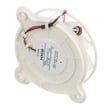
| Warm temps, weak airflow | Evaporator airflow | Refrigerator evaporator fan motor (DA31-00287C) |
| Temps swing, false readings | Temperature sensing | Refrigerator temperature sensor (DA32-00070A) |
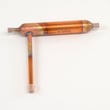
| Heavy frost, warm fridge | Defrost system | Refrigerator defrost heater (DA47-00460G) or refrigerator defrost thermal fuse (DA47-00301F) |
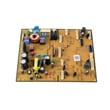
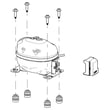
| No cooling, clicking | Sealed system/control | Refrigerator electronic control board (DA92-00979C) or refrigerator compressor MSV4A1AL1RTT3 |
Why it matters
Cooling and airflow problems can lead to food spoilage and can also create secondary issues like ice buildup, leaks, and fan noise. Catching the root cause early usually prevents repeat failures.
Last updated: February 2026
What is the average lifespan of a Samsung refrigerator freezer?
A Samsung top-mount refrigerator like model RT21M6213SG typically lasts about 13 years with normal household use and basic maintenance. Real-world lifespan depends most on compressor health, airflow (clean coils), door seal condition, and keeping temperatures set correctly.
Typical lifespan and what it means
Most refrigerators (including the freezer section) age as a system. The freezer does not usually “wear out” separately; cooling performance depends on shared components like the compressor, evaporator fan, defrost system, and temperature sensors.
- Typical refrigerator lifespan: 13 years
- Many units run 10 to 15 years with good care
- Major sealed-system failures (compressor, condenser, evaporator, drier) are the most common “end-of-life” drivers
For model-specific operation and care guidance, use the owner's manual.
What shortens (or extends) lifespan
These are the biggest factors we see affecting longevity on top-mount refrigerators:
- Dirty condenser coils causing high run time and heat stress
- Poor door sealing letting warm, moist air in (more frost, more compressor work)
- Blocked vents from overpacked shelves reducing airflow
- Defrost problems leading to ice buildup and warm temperatures
- Power issues (loose outlet, damaged cord, frequent outages)
Quick maintenance checklist
- Vacuum condenser area and keep rear/bottom airflow clear
- Keep freezer around 0°F and fresh food around 37°F
- Confirm doors close fully and gaskets sit flat
- Avoid covering interior air vents with food packages
- Listen for new noises (fan rubbing, clicking, buzzing) and address early
Common “wear” parts vs. long-life parts
| Category | Examples | What you’ll notice when failing |
|---|---|---|
| Airflow and cooling support | Evaporator fan motor, condenser fan motor | Warm temps, weak airflow, unusual fan noise |
| Defrost system | Defrost heater, defrost thermal fuse | Frost buildup, freezer warms, fridge warms |
| Controls and sensing | Temperature sensor, electronic control board | Erratic temps, error behavior, cycling issues |
| Sealed system (major) | Compressor, filter dryer | Poor cooling, long run times, no cooling |
Why it matters
Knowing the typical lifespan helps you decide whether to repair or replace. If your RT21M6213SG is near the 10 to 15-year range and needs a major sealed-system repair (like a compressor), comparing repair cost to replacement value usually makes the decision clearer.
Last updated: February 2026
What is the common problem with Samsung fridge ice maker?
The most common ice maker problems on a Samsung refrigerator like model RT21M6213SG are no ice or slow ice production because the freezer is not cold enough, the ice maker is turned off, or the water line is kinked. Start by confirming the ice maker is enabled and airflow is not blocked (see the owner's manual).
Common symptoms we see
- Ice maker not producing any ice
- Slow ice production
- Small or hollow cubes (often tied to water supply issues)
- Ice clumps or a jammed bucket
- Water leaking or dripping near the ice maker area
Quick checks that fix many “no ice” complaints
Use these steps first because they match the most common causes listed for this model:
- Make sure the freezer is cold enough; adjust the freezer temperature colder if needed.
- Check that the cold air outlet is not clogged by food packages.
- Confirm the ice maker is turned on (on many versions, press and hold the Ice Maker button for 3 seconds).
- Inspect the water line behind the refrigerator; straighten it if it is bent or kinked.
- If you recently unplugged the refrigerator, wait at least 5 minutes before plugging it back in.
Parts that commonly relate to ice maker and water-supply issues
If the basic checks do not restore ice production, these parts are often involved in water fill and temperature control problems:
| What it affects | What to check | Related part on this model |
|---|---|---|
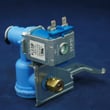
| Water filling into ice maker | Weak or no water flow, dripping | Refrigerator water inlet valve DA97-13268A |
| Freezer temperature feedback | Erratic temps, icing patterns | Refrigerator temperature sensor DA32-00070A |
| Cooling airflow | Warm freezer, poor circulation | Refrigerator evaporator fan motor (listed for this model) |
Why it matters
An ice maker depends on two things: steady freezer temperature and consistent water supply. A slightly warm freezer or a kinked water line can stop ice production completely, even when the refrigerator section still feels “cold enough.”
Last updated: February 2026