Error Codes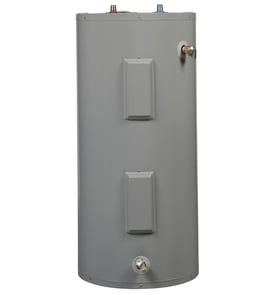



How long do state water heaters usually last?
Most State tank-style water heaters, including model ES650DOCS, typically last 8 to 12 years. Lifespan depends most on water quality, how hot you run it, and whether key wear items like the anode rod and thermostats are maintained.
- 8 to 12 years is the normal service life range for standard residential tank water heaters.
- Hard water and heavy use shorten life by accelerating sediment buildup and corrosion.
- Higher temperature settings increase wear on heating elements and thermostats.
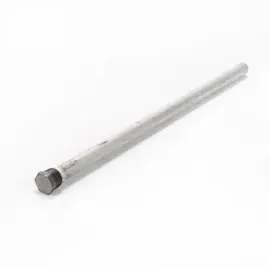
- Replacing the anode rod on schedule is one of the best ways to extend tank life.
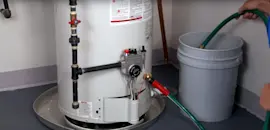
- Flush a few gallons from the drain valve periodically to reduce sediment.
- Keep temperature set around 120°F for a good balance of comfort and reduced scaling.
- Inspect and replace the anode rod when it is heavily depleted.
- If temperatures swing, test and replace the thermostats as needed.
- If hot water is weak or slow to recover, check the heating element for failure or heavy scale.
| Symptom | Common wear item | Example part for ES650DOCS |
|---|---|---|
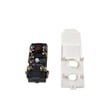
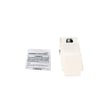
| Fluctuating water temperature | Thermostat | Thermostat 100108683 (upper), thermostat 100108421 (lower) |
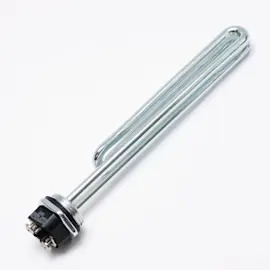
| Slow recovery or no hot water | Heating element | Element 100108283 |
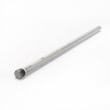
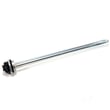
| Rusty smell, faster tank corrosion | Anode rod | 2-way 100109624 |
Once a tank starts leaking internally, it is not a repairable part swap. Staying ahead of corrosion (anode rod) and overheating (thermostats) helps you avoid sudden loss of hot water and premature tank failure.
Last updated: February 2026
What are common problems with ES650DOCS water heaters?
Common problems on the State ES650DOCS electric water heater include no hot water, water that is too hot, fluctuating temperatures, tripped high-limit reset, rumbling or popping from sediment, and slow recovery. The most frequent causes are a failed thermostat, a burned-out heating element, or heavy mineral buildup.
- Confirm the breaker is on and the water heater has power.
- Press the high-limit reset button (often behind the upper access panel) if it tripped.
- Check for signs of overheating: very hot water, scorching at wiring, or a hot smell.
- Listen for rumbling or popping; that points to sediment on the element.
- Look for rusty or discolored hot water; that often points to an anode rod issue.
- Inspect for leaks around the element gasket areas and plumbing connections.
| Symptom | Most likely cause | Parts that commonly fix it |
|---|---|---|
| No hot water | Upper thermostat not switching power, upper element open | Thermostat 100108683, element 100108283 |
| Not enough hot water | Lower thermostat out of calibration, lower element open, sediment | Thermostat 100108421, element 100108283 |
| Water too hot | Thermostat stuck closed or set too high | Thermostat 100108683 or thermostat 100108421 |
| Fluctuating temperature | Thermostat cycling issues, element scaling | Thermostat 100108421, element 100108283 |
| Rusty or smelly water | Worn anode rod | 2-way 100109624 |
Electric water heaters like the ES650DOCS rely on two thermostats and two heating elements to heat the tank in stages. When an element fails, a thermostat sticks, or sediment insulates the element, recovery slows and temperatures become inconsistent. A depleted anode rod can also lead to discolored or odorous water.
Use this as a simple decision guide:
- No hot water at all: start with the upper thermostat and upper element.
- Some hot water, then it goes cold: check the lower thermostat and lower element.
- Rumbling/popping: drain and flush the tank; then evaluate the element for scale.
- Rusty hot water: replace the anode rod.
For step-by-step repair help, use our DIY guide: how to replace an electric water heater thermostat.
Last updated: February 2026
How do I find the model number on my ES650DOCS?
Your State electric water heater’s model number is printed on the rating label (data plate) attached to the tank. On ES650DOCS units, that label is usually on the side of the water heater near the upper access panel; it lists the model and serial number.
Check these common label locations first:
- Side of the tank, above or beside the upper access panel
- Side of the tank, near the lower access panel
- Near the piping connections at the top of the tank
- On the outside jacket close to the electrical junction box
If you remove an access panel to look, reinstall it afterward; the panel helps protect wiring and insulation.
We recommend these steps so you can read the label without risking an electrical shock:
- Make sure the area around the tank is dry and well lit
- Look for a rectangular sticker or metal plate that includes “Model” and “Serial”
- If the label is partially covered, gently wipe dust off with a dry cloth
- If you need to remove a cover, turn off power at the breaker first
- Take a clear photo of the label so you can zoom in on the characters
| Label item | What it’s used for |
|---|---|
| Model number (example: ES650DOCS) | Matching the correct parts list and diagrams |
| Serial number | Identifying production details for service history |
| Voltage/wattage | Confirming correct electrical parts like thermostats and elements |
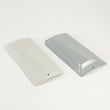
Using the exact model number from the rating label prevents ordering the wrong thermostat, heating element, or access panel for your State water heater. Once you confirm the model, you can match parts by description and ID, such as the access panel 100109599.
Last updated: March 2026