



Where is the part number on a GE dryer?
On a GE dryer like model GFT14ESSM3WW, the model and serial label (often used to identify the correct replacement part number) is usually located on the cabinet opening just inside the door, or on the back of the dryer near the top.
Where to look first (fastest checks)
- Open the dryer door and check the door opening (cabinet frame) around the opening
- Look along the inside edge of the front panel near the door switch area
- Check the back of the dryer cabinet near the top
- If your unit is stacked, use a flashlight and look along the sides near the top rear
What you will see on the label
Most GE dryer ID labels include:
- Model number (example: GFT14ESSM3WW)
- Serial number
- Electrical ratings (voltage and amps)
- Sometimes a barcode and manufacturing date code
Why the label matters for ordering parts
We use the model number and serial number to match the correct version of parts for your exact dryer configuration. That helps avoid ordering a part that looks similar but does not fit.
| What you need | Where it’s used | Example for this dryer |
|---|---|---|
| Model number | Confirms the exact dryer design | GFT14ESSM3WW |
| Serial number | Confirms production run details | From the label |
| Part ID | Identifies the replacement part listing | WE01X26341 |
Example: a part you might match by model
If you are replacing a common “no start” or “door won’t latch/run” related component, the dryer door switch WE01X26341 is one example of a model-matched part listing you can cross-check after you find the label.
Why it matters
Using the correct model identification prevents fit issues, wiring mismatches, and repeat repairs, especially on control and safety components.
Last updated: February 2026
How do I find the right GE part number?
For your GE GFT14ESSM3WW electric dryer, the right part number comes from matching the dryer’s model number to the parts list and diagram, then confirming the part by name and location on the machine before ordering.
Step-by-step: how we match the correct part
- Confirm the model number is GFT14ESSM3WW (use the model tag on the dryer cabinet, typically around the door opening).
- Use the model-specific parts list for GFT14ESSM3WW to narrow choices to parts that fit your exact dryer.
- Match by part name and function, not just by looks (many GE parts are similar).
- Compare any symptoms to the likely part category (heat, controls, door, moisture sensing).
- If multiple versions appear, match by where it installs and what it connects to (wires, harness plugs, mounting holes).
Common part-number examples for this model
These are examples of model-matched parts you can use as a reference point when identifying what you need:
| Dryer symptom or need | Part to check on this model | What it affects |
|---|---|---|
| Dryer will not start when door closes | Dryer door switch WE01X26341 | Start enable and door safety circuit |
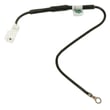
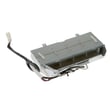
| No heat or heat shuts off early | Haier heater assembly WE11X27519 | Heating output |
| Long dry times or odd auto-dry behavior | Humidity sen WE01X26415 | Moisture sensing and cycle control |
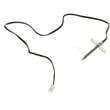
| Overheating or temperature issues | Outlet therm WE04X26348 | Temperature monitoring and safety |
Why it matters
Using the exact model number (GFT14ESSM3WW) prevents ordering a part that looks right but has different wiring, mounting, or calibration. That is especially important for electrical parts like a heater assembly, thermostat, control board, or door switch.
If you are unsure which part number you need
- Start with the symptom (no heat, no start, long dry times, error code).
- Check for a displayed error code and cross-reference it with GE gfd model series error codes.
- If your dryer uses a different GE interface style, also check GE cleanspeak dryer error codes.
Last updated: February 2026
What is the most common problem with a GE dryer?
The most common GE dryer problems are no heat/poor drying and won’t start. On your GE GFT14ESSM3WW electric dryer, the most frequent root cause behind both symptoms is restricted airflow (lint buildup or a blocked vent path), which can overheat the dryer and trip safety controls.
Most common symptoms and what usually causes them
- No heat or weak heat: heater circuit issue, temperature sensing issue, or airflow restriction
- Long dry times: lint screen or condenser/air path restriction, overloaded drum, low heat
- Won’t start: door not registering closed, control issue, or safety condition
- Stops mid-cycle: overheating from poor airflow, moisture sensing issues
- Runs but clothes stay damp: humidity sensing problem or airflow restriction
Quick checks we recommend first (fast, no parts)
- Clean the lint screen thoroughly; wash it with warm water if fabric softener residue is present.
- Reduce load size; heavy loads can mimic “no heat” because moisture removal is slower.
- For ventless/condensing styles, clean the condenser and confirm the drain path is clear.
- Run a timed dry cycle; compare results to sensor dry to spot a sensing issue.
- If the dryer won’t start, confirm the door closes firmly and the latch engages.
Parts that commonly fix these problems on model GFT14ESSM3WW
If basic airflow and loading checks do not help, these model-specific parts are common suspects:
| Symptom | Common part to check/replace | What it affects |
|---|---|---|
| Won’t start | Dryer door switch WE01X26341 | Confirms door is closed so the motor can run |
| No heat/overheats | Outlet therm WE04X26348 | Monitors outlet temperature and helps prevent overheating |
| Auto cycles end too soon or dry poorly | Humidity sen WE01X26415 | Helps the control estimate dryness |
| No heat | Haier heater assembly WE11X27519 | Provides the electric heat source |
Why it matters
Airflow problems and heat-control failures can cause long dry times, overheating, and repeated shutdowns. Fixing airflow first often prevents repeat failures of thermostats and heater components.
Helpful DIY references
- Electric dryer wont heat troubleshooting video
- Electric dryer wont start troubleshooting video
- How to clean and maintain your clothes dryer
Last updated: February 2026
What are the main parts of a dryer?
The main parts of a dryer work together to tumble clothes, move air, add heat, and control temperature and cycle time. On your GE GFT14ESSM3WW electric dryer, key systems include the drive (motor and drum), heating, airflow, and controls; many of these parts are replaceable.
Main dryer systems (what they do)
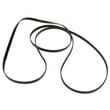
- Drive system: turns the drum so clothes tumble (motor, belt, drum supports)
- Heating system: produces heat for drying (electric heater assembly)
- Airflow system: pulls air through the drum and removes moisture (blower, ducting, condenser on ventless styles)
- Temperature sensing and safety: prevents overheating and helps regulate heat (thermistors, sensors)
- Controls and user interface: runs cycles and reads inputs (control board, knobs, interface)
- Door and safety interlocks: stops operation when the door is open (door switch)
Common replaceable parts for model GFT14ESSM3WW
Here are examples of real parts on this model that map to those systems:
| Dryer function | Example part on this model | What you’ll notice when it fails |
|---|---|---|
| Heating | Haier heater assembly WE11X27519 | No heat, weak heat, long dry times |
| Temperature sensing | Outlet therm WE04X26348 | Overheating, shuts off early, error symptoms |
| Moisture sensing | Humidity sen WE01X26415 | Auto cycles end too soon or run too long |
| Door safety | Dryer door switch WE01X26341 | Dryer will not start or stops when door is closed |
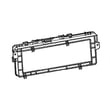
| Controls | Control board WE04X27515 | Dead panel, won’t run, cycle issues |
| Drive | Haier motor assembly WE17X26577 | Hums, won’t tumble, intermittent running |
Why it matters
Knowing the “main parts” helps you troubleshoot faster. For example, no heat usually points to the heater or temperature sensing, while won’t start often points to the door switch or controls. If you’re seeing a code, our GE gfd model series error codes guide helps narrow it down.
Quick maintenance that protects the main parts
- Clean the lint screen every load
- Keep airflow paths clear (lint buildup causes heat and sensor problems)
- Avoid overloading (reduces strain on the motor and drive system)
- Use the right cycle for the load (improves sensor accuracy)
Last updated: February 2026





