
What to do when a wall heater is not working?
If your Williams 650DVX-R wall furnace is not working, start with the basics: confirm the heater has power (if it uses electricity), the thermostat is calling for heat, and the gas supply is on. Then check the safety and ignition sequence components that commonly stop operation.
- Set the thermostat to HEAT and raise the setpoint several degrees above room temperature
- Verify the unit’s power switch (if equipped) is on and any nearby service switch is on
- Check the home electrical panel for a tripped breaker or blown fuse (many wall heaters need power for controls/blower)
- Confirm the LP gas shutoff valve is fully open and the tank has fuel
- Make sure the front grille and air openings are not blocked by dust, rugs, or furniture
These items commonly prevent a wall heater from lighting or staying on:
| Symptom | Most likely cause | What to do |
|---|---|---|
| No response at all | No power, bad thermostat setting, loose wiring | Restore power, recheck settings, inspect wiring connections (power off first) |
| Tries to start but won’t light | Gas off, air in LP line, ignition issue | Confirm gas supply; cycle thermostat off/on; inspect ignition components |
| Lights then shuts off | Dirty flame sensor/pilot area, venting/airflow issue, safety switch opening | Clean burner area; check for blocked venting; verify airflow openings |
| Blower runs but no heat | Burner not lighting, gas/ignition problem | Focus on gas supply and ignition sequence |
- Turn the thermostat OFF before removing the front cover.
- Shut off electrical power at the breaker before inspecting wiring.
- If you smell gas, do not operate switches; shut off the gas supply and contact Sears PartsDirect support or a qualified technician.
- If the heater is vented, check that the vent termination is clear of debris.
Wall heaters use safety controls (limit switches, flame sensing, ignition safeguards) to prevent overheating or unburned gas. A simple airflow blockage, power issue, or gas supply problem can stop the heater completely, even when nothing is “broken.”
For help identifying the correct replacement parts by model number and diagrams, use how to find your appliance model number (and what it means for parts).
Last updated: February 2026
How long do Williams wall heaters last?
Most Williams wall heaters, including the Williams 650DVX-R wall furnace, typically last 15 to 20 years with normal use. With clean combustion, correct gas pressure (LPG/propane), and timely replacement of wear parts, it’s common for them to run longer.
A wall heater’s life is mostly determined by heat exchanger condition, burner cleanliness, and safe venting.
- 15 to 20 years: typical service life for a gas wall heater
- Longer than 20 years: common when maintenance is consistent and the unit is correctly installed
- Shorter lifespan: more likely with dust buildup, corrosion, or repeated overheating
These are the most common “life-limiting” issues we see on LPG wall heaters:
- Heat exchanger corrosion or cracking
- Burner or orifice blockage from lint, dust, or debris
- Pilot/ignition problems that cause frequent cycling
- Venting or combustion air restrictions
- Gas valve or thermostat wear (especially after many seasons)
Turn the heater off and let it cool before doing any cleaning.
- Vacuum dust from the front grille and around the burner area
- Keep the area around the heater clear (no storage, drapes, or furniture blocking airflow)
- Watch the flame: it should be steady and mostly blue (yellow tipping suggests cleaning is needed)
- Confirm the wall heater isn’t short-cycling (rapid on/off)
- If you suspect an electrical issue on a fan-equipped unit, use a meter test process like how to use a multimeter to test electrical parts video
| Situation | Usually best choice | Why |
|---|---|---|
| Minor ignition or control issue | Repair | Often a single component or cleaning resolves it |
| Repeated shutdowns, heavy soot, or poor flame | Service/repair first | Combustion and airflow problems are often correctable |
| Heat exchanger damage or severe corrosion | Replace | Core safety and performance issue |
A wall heater can still “run” past its prime, but efficiency and reliability drop as burners, controls, and the heat exchanger age. Staying ahead of cleaning and airflow issues helps your Williams 650DVX-R heat more evenly and reduces nuisance shutdowns.
Last updated: February 2026
How to relight a Williams wall heater?
To relight a Williams 650DVX-R LPG wall heater, turn the gas control to PILOT, press and hold the knob to feed gas to the pilot, ignite the pilot, hold the knob briefly to heat the safety sensor, then switch to ON.
- Set the thermostat to the lowest setting (or OFF).
- If you smell gas, do not light the heater; stop and contact Sears PartsDirect support.
- Turn the gas control knob to OFF and wait 5 minutes.
- Open the access panel to reach the gas control and pilot viewing area.
- Use a flashlight so you can confirm the pilot flame.
- Turn the gas control knob to OFF; wait 5 minutes.
- Turn the knob to PILOT.
- Press and hold the knob in.
- Light the pilot using the built-in igniter (if equipped) or a long fireplace match.
- Keep holding the knob 30 to 60 seconds after the pilot lights.
- Release the knob slowly; the pilot should stay lit.
- Turn the knob to ON.
- Set the thermostat to call for heat; confirm the main burner ignites.
- Pilot flame is weak or dirty; the pilot orifice can be restricted.
- Pilot flame is not hitting the thermocouple tip.
- Drafts or negative pressure are blowing out the pilot.
- Propane supply is low or the tank valve is not fully open.
| Symptom | Most common cause | Next step |
|---|---|---|
| Pilot goes out when knob is released | Thermocouple not hot enough or failing | Hold longer; check flame contact |
| No pilot flame | No gas to pilot or blocked pilot | Confirm gas is on; check for blockage |
The pilot heats the thermocouple so the gas valve stays open safely; if the pilot is unstable, the heater will shut down or fail to heat.
For DIY safety basics before working around gas and wiring, see are diy appliance repairs safe.
Last updated: February 2026
Where is the reset button on my wall heater?
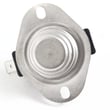
On the Williams 650DVX-R wall furnace, there may not be a single, obvious “reset button.” Many wall heaters use a high-limit safety switch that either resets automatically after the unit cools or has a small manual-reset button on the limit switch itself, located behind the front cover.
After the heater is completely cool and power is off, remove the front grille/cover and look for a small limit switch mounted to the hot-air/heat exchanger area. Common identifiers include a small round or rectangular switch with two wires.
- Behind the front grille or front access panel
- On a metal surface in the hot-air path (near the heat exchanger area)
- Near the burner compartment area (mounted to sheet metal, not on the gas valve)
- Near a fan kit area if your heater has a blower installed
Use this process to reset safely and prevent repeat trips.
- Set the thermostat to the lowest setting.
- Turn the heater off; let it cool 20 to 30 minutes.
- Shut off electrical power to the heater.
- Remove the front cover/grille.
- If you see a small button on a limit switch, press once firmly until it clicks.
| What you see | What it means | What to do |
|---|---|---|
| Limit switch with a small button | Manual-reset high limit | Reset once after full cool-down |
| Limit switch with no button | Automatic-reset limit | Restore airflow; it resets after cooling |
| Heater still will not run | Another safety/control issue | Check power, thermostat, wiring, and airflow |
A tripped limit means the heater overheated. The fix is usually restoring airflow (blocked grille, heavy dust, fan not running) or correcting an electrical issue.
For basic electrical testing steps, use how to use a multimeter to test electrical parts video.
Last updated: February 2026