



Are Craftsman and Husqvarna parts interchangeable?
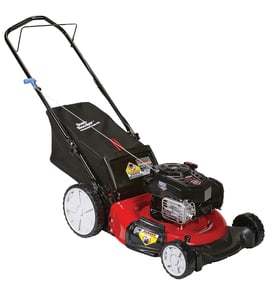
Yes, many Craftsman and Husqvarna parts can interchange when the equipment was built on the same platform and uses the same OEM part identifiers. For your Craftsman model 13197802 (22" self-propelled walk-behind mower), the reliable way to confirm fit is matching the exact part ID and how it mounts.
How to confirm interchangeability (the method that works)
We treat “interchangeable” as “same fit and function,” not just “looks similar.” Use these checks before you buy:
- Match the part ID and description for your model (best indicator of exact fit)
- Compare mounting pattern (blade center hole style, bolt size, keyways, clip style)
- Confirm dimensions that affect fit (blade length, hub diameter, washer thickness)
- Verify left-hand vs right-hand threads on fasteners (common mismatch)
- Check whether the part is for self-propelled drive vs push mower (sprockets and clips differ)
Common parts that are often shared
On walk-behind mowers, these items are frequently shared across brands that use the same supplier designs:
- Deck blades
- Washers and spacers
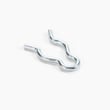
- Retainer clips and cotter pins
- Some brackets and hardware
- Some drive components (when the drive layout matches)
If you are replacing a wear item on 13197802, starting with a known match from the parts list is the fastest path.
Parts on this model page you can use as “known-good” references
Use these as your baseline for cross-checking:
| Part type | Example from this model page | What to compare |
|---|---|---|
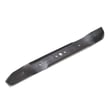
| Blade | Blade 532406713 | Length (22-in class), center hole style, lift profile |
| Retaining hardware | Cotter pin 532051793 | Pin diameter and usable length |
| Clips | Lawn mower retainer clip, 4-pack 582934801 | Clip size and groove fit |
| Drive component | Sprocket 582002201 | Tooth count, bore size, alignment |
Why it matters
A “close” match can still cause vibration, poor cut quality, belt or drive wear, or unsafe loosening. Matching the correct part ID for Craftsman 13197802 keeps the deck, blade, and self-propel system running as designed.
Last updated: February 2026
What happens if you push a hydrostatic mower?
Pushing a hydrostatic-drive mower with the drive engaged forces the transmission to turn without proper fluid flow; it can be very hard to move and can damage the hydrostatic unit. On a Craftsman 13197802 walk-behind mower, only push it after you disengage the drive system (or lift the drive wheels off the ground).
What you may notice if you push it
- The mower feels like the wheels are locked or dragging
- The mower barely rolls, even on flat ground
- You hear belt squeal or feel jerky wheel movement
- The self-propel system stops working correctly afterward
- The mower rolls easier only when the drive is fully disengaged
Safe ways to move the mower
- Stop the engine and remove the spark plug wire before handling the wheels or underside.
- Disengage the drive control (release the self-propel/bail bar) and wait for all movement to stop.
- If you must move it farther, roll it slowly; do not force it.
- For loading into a truck, use ramps and keep the drive disengaged.
Quick do and don’t table
| Situation | Best practice | What to avoid |
|---|---|---|
| Moving it a few feet in the garage | Release drive control and roll slowly | Forcing the wheels to turn under load |
| Loading for transport | Use ramps, push with drive disengaged | Dragging it by the handle with wheels skidding |
| Working near the blade | Disconnect spark plug wire first | Reaching under the deck with plug wire connected |
If pushing it caused a problem
If the mower is now hard to roll or self-propel is weak, check common wear items first: the drive belt path, wheel engagement hardware, and fasteners. On this model, damaged or missing hardware can also affect how the drive and deck components stay aligned.
Helpful parts we stock for Craftsman 13197802 include the blade 532406713 and small retaining hardware like the cotter pin 532051793.
Why it matters
Hydrostatic drives rely on hydraulic fluid movement to lubricate and control internal pressure. Forcing the system to turn by pushing can create abnormal pressure and heat, which shortens transmission life and can lead to loss of drive.
Last updated: February 2026
What years did they make the Craftsman 13197802?
Craftsman model 13197802 is a specific 22-inch self-propelled walk-behind mower model number; the exact production years are not consistently published by model number alone. The most reliable way to pin down the year for your exact mower is to use the product date information on the mower’s model/serial tag.
How to find the year on your mower
Look for the model/serial label on the mower deck (often near the rear wheel area), on the handle support, or near the engine mounting area. Once you find it:
- Write down the model number and the serial number exactly as shown
- Look for a date code or a serial number format that includes a build date
- If the label is worn, clean it gently and take a clear photo before it fades further
- Match the mower’s configuration to common wear parts (blade style, fasteners, drive hardware)
Parts clues that help confirm you have the right model
When you are validating the model, checking the parts list for 13197802 helps confirm you are shopping the correct diagram set. Common wear items for this model include:
- Blade 532406713 (22-inch deck mulching blade)
- Screw 532428867 (common fastener used on assemblies)
- Cotter pin 532051793 (hairpin-style retainer used on linkages)
- Sprocket 582002201 (drive-related hardware)
Quick reference: what each part typically tells you
| Part | What it’s used for | Why it helps |
|---|---|---|
| Blade | Cutting and mulching | Confirms deck size and blade mount style |
| Cotter pin | Retaining linkage pins | Confirms control/drive linkage style |
| Sprocket | Drive system component | Helps validate self-propelled drive design |
Why it matters
Craftsman walk-behind mowers can share similar names across multiple years, but parts compatibility is driven by the exact model number and serial/date code. Confirming the build date helps you choose the correct blade, hardware, and drive parts the first time.
Last updated: February 2026