Installation guide
 Owner’s manual



How to identify a Whirlpool washer model?
To identify your Whirlpool washer model, find the model and serial number on the appliance’s rating label, then match that exact model number (for example, WFW87HEDW1) when ordering parts or using the WFW87HEDW1 owner's manual. This ensures you get the correct fit and troubleshooting info.
Where to look for the model number label
On Whirlpool front-load washers like WFW87HEDW1, the rating label is typically in one of these spots:
- Along the door opening (door frame area) when you open the washer door
- Behind or around the door opening on the cabinet front
- On the back panel of the washer
- Occasionally behind the lower front access panel area
What to write down (and why)
Record both numbers exactly as shown.
- Model number: identifies the design and which parts diagrams apply
- Serial number: identifies the production run (helps with revisions)
- Brand: Whirlpool (useful when searching manuals and error code info)
- Type: front-load washer (helps narrow troubleshooting steps)
Quick check: model number vs. serial number
| Item | What it does | Example format |
|---|---|---|
| Model number | Matches parts and documentation | WFW87HEDW1 |
| Serial number | Identifies manufacturing date/run | Letters plus numbers |
Why it matters
Whirlpool often uses similar-looking washers with different internal parts (door lock, drain pump, bellow, control). Using the exact model number helps us point you to the right diagrams and the right replacement part the first time.
Last updated: February 2026
What does F1 and E1 mean on a Whirlpool washer?
On the Whirlpool WFW87HEDW1 washer, an F1 E1-style code points to a water supply problem or a condition that makes the washer think it is not filling correctly (often triggered by low water flow or excessive suds). Clear the code, correct the cause, then restart the cycle per the WFW87HEDW1 owner's manual.
What to check first (fast fixes)
- Make sure both hot and cold water faucets are fully open.
- Confirm both fill hoses are connected tightly and not kinked.
- Check the inlet screens at the washer’s water valve for debris.
- Use HE detergent only and reduce the amount if you see suds; too many suds can lead to fill-related errors.
- Press POWER once to clear the code, then reselect the cycle and restart.
Why suds can cause an E1-type water error
This washer is designed for HE (High Efficiency) detergent. When suds are excessive, the washer can pause to reduce suds and may also display a water supply error because the fill and drain behavior no longer matches what the control expects.
Detergent quick guide
| What you see | Most likely cause | What we recommend |
|---|---|---|
| Lots of foam, long cycle time | Too much detergent or non-HE detergent | Switch to HE; use less |
| Code returns after clearing | Water flow restriction | Check faucets, hoses, screens |
| Intermittent fill issues | Household water pressure/valve issue | Verify steady flow at both taps |
When a part is likely involved
If water supply is good and detergent use is correct, the issue can be in the fill system. A common suspect is the water valve that controls incoming water.
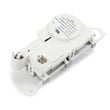
- Consider inspecting the washer water inlet valve WPW10435242 if the washer consistently fails to fill or fills very slowly.
Why it matters
Fill and water-level errors can stop the cycle with clothes still soapy or wet. Fixing the water supply restriction or suds issue prevents repeat shutdowns and helps protect the drain system and control from repeated fault conditions.
Last updated: February 2026
Are Whirlpool washer parts interchangeable?
Whirlpool washer parts are only interchangeable when the replacement part is listed as compatible with your exact washer model. For Whirlpool model WFW87HEDW1, we recommend using FSP (Factory Specified Parts) so the part fits right and works right, just like the original.
What “interchangeable” really means
Parts can look identical across Whirlpool-built washers, but small differences (mounting points, electrical connectors, hose routing, software compatibility) can cause leaks, error codes, or poor performance.
Use the WFW87HEDW1 owner's manual to confirm the correct part and any model-specific installation notes.
How we recommend you confirm compatibility
- Match the model number exactly: WFW87HEDW1
- Compare the part ID on the parts list to the part you are replacing
- Check whether the part is electrical (locks, valves, controls) or mechanical (hoses, clamps, boots); electrical parts are less forgiving
- If the washer is showing a code, use the code to guide the part choice
- When in doubt, replace with the exact listed part ID for your model
Common WFW87HEDW1 examples
These are model-listed parts that are safe “like-for-like” replacements when they match your symptom:
| Symptom | Part type to check | Example model-listed part |
|---|---|---|
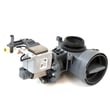
| Won’t drain, drains slowly | Drain pump | Pump asm,dra WPW10605427 |
| Door won’t lock or won’t start | Door lock | Washer door lock WPW10443885 |
| Leaks at the door, odors, tears | Door boot (bellow) | Bellow W11106747 |
| Won’t fill or fills slowly | Water inlet valve | Washer water inlet valve WPW10435242 |
Why it matters
Using the correct Whirlpool FSP replacement part protects wash performance (spin balance, fill levels, draining) and helps prevent repeat failures caused by poor fit, leaks, or connector mismatches.
Last updated: February 2026
What is the most common problem with Whirlpool washers?
For Whirlpool washers, the most common issues we see are drain and spin problems (loads still wet), excess suds from too much or non-HE detergent, and vibration or “walking” from leveling or unbalanced loads. On the Whirlpool WFW87HEDW1 front-load washer, these often trace back to drain restrictions, installation setup, or detergent use described in the WFW87HEDW1 owner's manual.
Most common symptoms and what usually causes them
- Washer won’t drain or spin; clothes are still wet: drain hose issues, clogs, or a drain pump problem.
- “Sud” or excessive suds behavior: too much detergent or non-HE detergent; the washer may run a suds-reduction routine.
- Vibration, rocking, or washer “walking”: feet not firmly on the floor, jam nuts not tight, washer not level, or load too large/unbalanced.
- Won’t run or fill: water supply not fully on, inlet screens clogged, kinked inlet hoses, or power supply issue.
- Door won’t unlock at end of cycle: often tied to suds, draining, or cycle conditions that keep the door locked.
Quick checks we recommend first (WFW87HEDW1)
- Use HE detergent only and measure carefully; too much can slow or stop draining/spinning.
- Confirm both hot and cold faucets are on and hoses are not kinked.
- Check inlet valve screens for debris if fill is slow.
- Verify the washer is level and stable; tighten leveling leg jam nuts.
- Confirm the drain hose installation is correct; it should not extend more than about 4.5 in. (114 mm) into the standpipe.
Parts that commonly relate to these problems
| Symptom | Common part involved | Example part for WFW87HEDW1 |
|---|---|---|
| Not draining / still wet | Drain pump | Pump asm,dra WPW10605427 |
| Leaks at door / odor buildup | Door boot (bellow) | Bellow W11106747 |
| Door won’t lock or start | Door lock | Washer door lock WPW10443885 |
| Shaking / banging | Shock absorber | Washer shock absorber W11415987 |
Why it matters
Drain, suds, and vibration problems can trigger error conditions, extend cycle times, and leave clothes wetter than normal. Fixing detergent use, leveling, and hose setup prevents repeat failures and reduces wear on the drain pump, door lock, and suspension.
Last updated: February 2026