


Why does my GE dryer keep saying clean lint filter?
On our GE PTD90EBPT1RS dryer, the “Clean Lint Filter” message usually means airflow is restricted or the dryer is not sensing normal airflow after a cycle. Cleaning the lint screen is step one, but the alert often returns when lint is packed in the housing, ducting, or the vent system.
What to do first (quick checks)
- Remove and clean the lint screen; wash off any fabric-softener film with warm water and a soft brush, then dry it fully.
- Vacuum inside the lint screen opening and the lint chute as far as you can reach.
- Check the outside vent hood; confirm the flap opens strongly while the dryer runs.
- Run a timed dry cycle for 5 to 10 minutes and feel for strong airflow at the vent.
- Power reset: unplug the dryer (or switch off the breaker) for 2 minutes, then restart.
If the message keeps coming back
Restricted airflow is the most common cause, but a sensing issue can also trigger the reminder.
Airflow and lint buildup (most common)
- Crushed or kinked vent hose behind the dryer
- Long vent runs with multiple elbows
- Lint buildup in the wall duct or vent hood
- Lint leaking past a damaged or warped lint screen
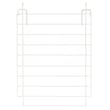
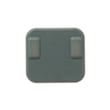
If your lint screen is torn, bent, or not seating tightly, replacing it often stops repeat warnings; use the exact GE dryer lint screen WE03X23881.
Sensor and heat-related causes
If airflow is good but drying is inconsistent, the dryer may be reacting to abnormal temperature or moisture readings.
| Symptom you notice | What it points to | Example part on this model |
|---|---|---|
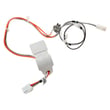
| Clothes overdry or cycles end oddly | Moisture sensing issue | Dryer moisture sensor WE1M575 |
| Heat seems erratic | Temperature sensing issue | Dryer thermistor WE4M448 |
| Dryer shuts heat off too soon | Overheat protection tripping | Thermostat hi limit WE04X30381 |
Why it matters
A persistent “Clean Lint Filter” message is more than a reminder; it is a warning sign that airflow or sensing is off. Fixing it helps drying performance, reduces cycle time, and prevents overheating.
Parts and help
You can order PTD90EBPT1RS replacement parts from the parts list for this model, or search by model number on Sears PartsDirect. For airflow-related issues, we commonly see the lint screen and venting as the first place to focus.
Last updated: February 2026
Is a 7.3 cubic foot dryer big?
Yes. A 7.3 cubic foot dryer is a large-capacity size; it comfortably handles bulky items (like comforters) and bigger mixed loads, so you can dry more at once in your GE PTD90EBPT1RS and run fewer cycles.
What “7.3 cu. ft.” means in real use
Capacity is the drum volume, not the weight limit. In day-to-day laundry, 7.3 cu. ft. is considered large because it gives clothes more room to tumble, which improves airflow and drying performance.
Typical capacity ranges (most household dryers):
| Dryer capacity | Common label | Best for |
|---|---|---|
| 5.0 to 6.0 cu. ft. | Standard | Singles, couples, smaller loads |
| 6.1 to 7.0 cu. ft. | Large | Families, frequent laundry |
| 7.1+ cu. ft. | Extra-large | Bulky items, fewer loads |
How to get the best results from a large-capacity dryer
Even with a big drum, overloading can cause long dry times and wrinkles. We recommend these habits:
- Load loosely; items should tumble freely
- Mix similar fabrics and weights (towels with towels, not towels with tees)
- Clean the lint screen every load; replace it if it is damaged or warped (see GE dryer lint screen WE03X23881)
- Keep the exhaust path clear to prevent slow drying
- If cycles end too soon or run too long, check moisture-sensing components (see dryer moisture sensor WE1M575)
Why it matters
A large-capacity drum helps drying efficiency only when airflow is strong. Restricted airflow or a sensing issue can make a big dryer act “small” by extending dry times or leaving loads damp.
Quick symptom-to-part cheat sheet (common)
- Long dry times, heat seems weak: GE dryer heater assembly WE11X21156, thermostat hi limit WE04X30381
- Squealing or thumping: Dryer idler pulley WE03X31620, dryer drum belt WE03X33648
- Auto cycles inconsistent: Dryer moisture sensor WE1M575, dryer thermistor WE4M448
Ordering parts for your dryer
We list model-matched replacement parts for GE PTD90EBPT1RS on this page; you can also search by model number on Sears PartsDirect.
Last updated: February 2026
What is the most common problem with a GE dryer?
The most common problem we see with a GE dryer like model PTD90EBPT1RS is poor or no heating, which is usually caused by restricted airflow (lint buildup or a clogged vent) or a failed heating component such as the dryer heating element WE11M10001.
Most common symptoms and what they usually mean
- Runs but no heat: failed heating element, thermostat, or temperature sensor
- Takes too long to dry: restricted venting, lint blockage, weak airflow
- Stops mid-cycle: overheating from poor airflow, safety thermostat opening
- Won’t start: door not latching, control issue, or a safety circuit problem
- Burning smell or very hot cabinet: severe airflow restriction (stop using until venting is cleared)
Quick checks we recommend first (fast, high-impact)
- Clean the lint screen and confirm it is not coated with fabric softener residue.
- Check airflow at the outside vent hood while the dryer runs; it should be strong and steady.
- Inspect the vent path behind the dryer for kinks, crushing, or long runs with many elbows.
- Run a timed dry test (10 to 15 minutes on high heat) to see if heat is consistent.
- If you’re seeing an error code, use GE cleanspeak dryer error codes to narrow the failure to a sensor, heater circuit, or control.
Common “no heat / long dry” parts for PTD90EBPT1RS
| Symptom | Likely area | Example part on this model |
|---|---|---|
| No heat | Heater circuit | Dryer heating element WE11M10001 or GE dryer heater assembly WE11X21156 |
| Overheats or shuts off | High-limit safety | Thermostat hi limit WE04X30381 |
| Erratic temperature | Temperature sensing | Dryer thermistor WE4M448 or dryer heating element control thermistor WE4M398 |
| Poor drying | Airflow and lint capture | GE dryer lint screen WE03X23881 |
Why it matters
Airflow problems do more than slow drying; they can overheat the heater housing and trip safety thermostats, which leads to repeated shutdowns and premature part failure.
Ordering the right part
We recommend matching parts to GE PTD90EBPT1RS exactly and ordering from the parts list for this model, or searching by model number on Sears PartsDirect.
Last updated: February 2026