Installation guide
 Owner’s manual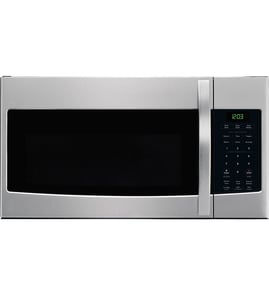



How many amps does a Frigidaire microwave pull?
For the Frigidaire FFMV1845VSA microwave/hood combo, plan on a dedicated 120V, 60Hz circuit rated at 15 amps or higher. That 15A rating is the electrical supply requirement; actual running amperage varies by cooking load and fan/light use (see the FFMV1845VSA owner's manual).
When people ask how many amps a microwave “pulls,” they usually mean one of these:
- Circuit requirement (recommended): what the outlet and breaker must support (15A or more for this model)
- Typical running draw: changes with power level, food load, and whether the vent fan and lights are on
- Startup surge: brief higher draw when components kick on
Use this list to avoid nuisance tripping and overheating wiring:
- Use a properly grounded 3-prong outlet
- Use a separate circuit serving only the microwave
- Use 120V AC, 60Hz power
- Use a 15A (or higher) protected supply
- Do not use an extension cord
Even with a 15A circuit requirement, most over-the-range microwaves usually run below the breaker limit during normal heating.
| Scenario | What you should plan for | Why |
|---|---|---|
| Electrical supply for FFMV1845VSA | 120V, 15A (or higher) dedicated circuit | Matches the model’s stated electrical requirement |
| Real-world draw while cooking | Often in the high single digits to low teens (amps) | Varies with load, settings, and line voltage |
| Cooking plus hood fan and lights | Higher than cooking alone | Added motor and lighting load |
Sizing the circuit correctly helps prevent tripped breakers, dim lights, and overheated wiring. It also protects key components like the control board and high-voltage system from low-voltage stress.
If you’re troubleshooting breaker trips or a dead unit, follow the electrical checks in the FFMV1845VSA installation guide.
Last updated: February 2026
What are the dimensions of the FFMV1845VSA?
The Frigidaire FFMV1845VSA microwave/hood combo measures 29.88 in. wide x 15.04 in. deep x 16.41 in. high (outside dimensions, including the handle). For the most accurate fit details for your cabinet and venting setup, use the dimensions listed in the FFMV1845VSA owner’s manual.
- Width: 29.88 in.
- Depth (front to back): 15.04 in.
- Height: 16.41 in.
- Measurement note: outside dimensions include the door handle
To avoid clearance problems with cabinets, backsplash, or ducting, we recommend measuring these areas before ordering parts or planning an install:
- Cabinet opening width (inside-to-inside)
- Distance from wall to cabinet face (helps confirm depth clearance)
- Vertical clearance from cooktop to cabinet bottom
- Vent path (recirculating vs. outside venting)
- Door swing clearance (handle and door need room to open fully)
These are common planning checks for over-the-range microwaves like the FFMV1845VSA; confirm your exact requirements in the FFMV1845VSA installation guide.
| What to check | What it affects | What to do |
|---|---|---|
| Cabinet width | Whether the unit fits between cabinets | Measure inside cabinet-to-cabinet width |
| Depth clearance | Door/handle clearance and vent grille space | Measure from wall to cabinet front |
| Mounting height | Safe cooking clearance over the range | Measure cooktop-to-cabinet bottom |
| Venting route | Noise, airflow, and installation parts | Identify recirculating or ducted venting |
Correct dimensions prevent installation delays, cabinet interference, and venting issues. They also help when selecting related components such as the vent grille or filters for your Frigidaire microwave/hood combo.
Last updated: February 2026
What is the average lifespan of a Frigidaire microwave?
A Frigidaire microwave like model FFMV1845VSA typically lasts 7 to 10 years with normal household use. Heavy daily use and poor airflow shorten life; regular cleaning, proper venting, and on-time filter changes help it reach the upper end of that range.
Most over-the-range microwave/hood combos wear out from heat, grease, and door-switch stress more than from “age.” These factors have the biggest impact:
- Daily run time (multiple long cook cycles per day reduces lifespan)
- Vent fan use while cooking (reduces heat buildup in the control area)
- Grease and dust buildup in the vent grille and filters
- Door slamming or pulling (stresses latch and interlock switches)
- Power quality (surges can damage the control board)
Use these habits to keep performance steady and prevent common failures:
- Clean the cavity and door seals regularly; avoid harsh abrasives
- Run the hood fan when cooking on the range to limit heat and steam
- Replace the charcoal filter (recirculating setups) on schedule; many units need it every 6 to 12 months depending on use
- Keep the vent grille clear so airflow is not restricted
- Follow the cleaning and care steps in the FFMV1845VSA owner’s manual
| What you notice | Most likely meaning | What to do next |
|---|---|---|
| Slightly longer cook times over years | Normal efficiency loss or low line voltage | Test with a cup of water; verify outlet power |
| Loud buzzing plus no heat | High-voltage system issue | Stop using; schedule service |
| Fan runs but keypad acts erratic | Control or moisture/grease intrusion | Clean vents; consider control diagnosis |
| Door won’t close or feels loose | Latch wear or alignment issue | Inspect door latch parts |
A microwave/hood combo that is near end-of-life can still “run” but cook unevenly, overheat internally, or strain electrical components. Staying on top of airflow and door operation helps prevent nuisance shutdowns and expensive electrical failures.
Last updated: February 2026