 Owner’s manual




Do LG washers have a filter that needs to be cleaned?
Yes. On the LG WT7405CV washer, the filters you routinely clean are the water inlet filter screens (at the hot and cold fill valves). Keeping those inlet filters clean helps prevent fill problems and inlet-related error messages; follow the steps in the WT7405CV owner's manual.
What filter(s) should I clean on this model?
For WT7405CV, the maintenance procedure called out is cleaning the water inlet filters (small screens inside the inlet valves where the hoses connect).
Common “filter” items to maintain:
- Water inlet filter screens (hot and cold)
- Bleach dispenser cover (rinse buildup off monthly)
- Inlet hoses (flush into a bucket before reconnecting)
- Drain path basics (make sure the drain hose is not kinked or crushed)
How to clean the water inlet filters (quick steps)
We recommend this routine when the washer fills slowly, won’t fill properly, or shows an inlet-related message.
- Unplug the washer.
- Turn off both hot and cold water faucets.
- Unscrew the fill hoses from the back of the washer.
- Carefully pull out the inlet screens (pliers help).
- Soak screens in white vinegar or a lime scale remover; then rinse well.
- Press screens back in, flush the hoses into a bucket, and reconnect.
Symptoms that point to clogged inlet filters
| What you notice | What it often means | What to do |
|---|---|---|
| Slow fill or no fill | Screens clogged with sediment/scale | Clean inlet filters and flush hoses |
| Inlet-related error message | Low flow at the valves | Verify faucets fully open; clean screens |
| Hoses look fine but fill is weak | Debris trapped at the valve screens | Clean screens; check household pressure |
Why it matters
Those inlet screens protect the inlet valve from grit and scale. Running the washer without the screens can lead to leaks, valve problems, and potential flooding.
Last updated: February 2026
Why is my LG top loader washer leaking from the bottom?
A bottom leak on an LG WT7405CV washer is usually caused by a loose or damaged water inlet hose connection, a cracked fill hose, or a leaking drain component such as the pump or drain hose. Start by checking hose fittings for cross-threading and inspecting for cracks per the WT7405CV owner's manual.
Quick checks that fix many bottom leaks
- Turn off both water faucets; unplug the washer.
- Look for drips at the hot and cold inlet connections (back of washer) and at the faucet ends.
- Confirm the hose fittings are straight (not cross-threaded) and snug (not overtightened).
- Inspect inlet hoses for bulges, cracks, or wetness; replace worn hoses (LG recommends replacing about every 5 years).
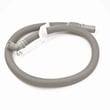
- Check the drain hose for kinks, pinches, or rubbing that can create a split.
Most common leak sources on this model
If the leak is coming from underneath during drain or spin, the drain system is the first place we look.
| Where you see water | Most likely cause | What to do next |
|---|---|---|
| Back, near wall | Inlet hose or inlet valve connection | Reseat hose, replace hose if cracked |
| Under center/front during drain | Drain pump or pump hoses | Inspect pump area; replace pump if leaking |
| Under left/right side | Drain hose routing or clamp | Reposition hose; replace damaged hose |
A leaking pump housing or seal typically means replacing the pump assembly rather than trying to reseal it.
Parts that commonly solve a bottom leak
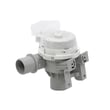
- Washer drain pump assembly AHA75673404 if water appears during draining or right after the tub empties.
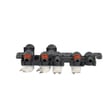
- LG washer water inlet valve assembly AJU75152602 if the leak starts while filling and you see water tracking down from the valve area.
Installation details that prevent repeat leaks
These setup items directly affect leaking and siphoning:
- Use new inlet hoses when installing; old hoses can leak or burst.
- Do not intentionally stretch hoses; avoid pinching or crushing behind the washer.
- Keep the drain hose end 29.5 to 96 inches above the bottom of the washer; best results are at or below 66 inches.
- Do not tape the drain hose airtight into the standpipe; an air gap prevents siphoning.
Why it matters
Even a small bottom leak can damage flooring and can also lead to fill, drain, or spin problems if water reaches wiring, the motor area, or the control components.
Last updated: February 2026
How much does it cost to replace a rubber seal on an LG washing machine?
For an LG washer like model WT7405CV, replacing a rubber seal (door boot or tub seal, depending on design) typically runs $150 to $350 total with professional service; the part is commonly $50 to $150, and labor is usually $100 to $200.
What changes the price the most
- Which seal you mean: door boot (front-load) vs tub seal (some top-load designs)
- Labor time: seal access can require removing the top, cabinet, or tub components
- Leak damage: a leaking seal can also affect bearings, wiring, or the drain system
- Service call minimums: many companies charge a flat diagnostic fee
- DIY vs pro: DIY saves labor but requires careful disassembly and reassembly
Typical cost breakdown
| Item | Typical range | Notes |
|---|---|---|
| Rubber seal part | $50 to $150 | OEM parts cost more but fit correctly |
| Labor | $100 to $200 | Higher if the tub must be pulled |
| Service/diagnostic fee | $0 to $120 | Sometimes credited toward the repair |
| Estimated total | $150 to $350 | Most common real-world range |
Before you replace the seal: quick checks
- Confirm the leak is not from the inlet hoses or hose connections
- Look for cracks, pinholes, or a folded seal lip
- Check for detergent buildup that prevents a good seal
- Verify the washer is level; excessive vibration can worsen leaks
- Review the leak and installation notes in the WT7405CV owner's manual
Parts that are often involved when leaks are misdiagnosed
If the washer is not draining correctly, water can appear to be a “seal leak.” These parts are common culprits on this model:
- Washer drain pump assembly AHA75673404 (drain issues, standing water)
- LG washer water inlet valve assembly AJU75152602 (overfilling, slow seep at valve)
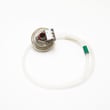
- LG washer water-level pressure switch 6501EA1001R (incorrect fill level)
Why it matters
A worn seal can turn into a recurring leak that damages flooring and can lead to bigger repairs. Fixing the correct source early keeps the WT7405CV reliable and prevents repeat service calls.
Last updated: February 2026


