Error Codes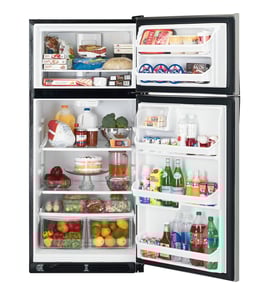




Is a top or bottom mount fridge better?
A top-mount and a bottom-mount refrigerator can both be “better”; it depends on how you use your Whirlpool WRT511SZDM04 day to day. Top-mount models usually cost less and keep the freezer at eye level, while bottom-mount models put fresh food up higher so you bend less.
Quick comparison
| Feature | Top-mount (like WRT511SZDM04) | Bottom-mount |
|---|---|---|
| Fresh food access | Lower; more bending | Higher; less bending |
| Freezer access | Higher; easier reach | Pull-out drawer; easier organization |
| Typical price | Lower | Higher |
| Energy use | Often similar; varies by model | Often similar; varies by model |
| Best for | Frequent freezer use | Frequent fresh-food use |
How to choose for your kitchen
- If you use the freezer daily (frozen meals, bulk items), a top-mount keeps it easier to reach.
- If you cook often and want produce, dairy, and leftovers at a comfortable height, a bottom-mount is usually more convenient.
- If you have limited space, compare door swing and drawer clearance; bottom-mount freezer drawers need room to pull out.
- If you want simpler ownership and lower upfront cost, top-mount is typically the value pick.
- If organization matters, bottom-mount freezer baskets and drawers can make items easier to sort.
Why it matters
Your “best” layout is the one that matches what you access most. Choosing the right mount style reduces bending, improves day-to-day convenience, and can help you keep food organized so the refrigerator holds temperature more consistently.
Helpful related DIY info
If you’re comparing models because you’re troubleshooting performance (not just shopping), start with Whirlpool refrigerator error codes to narrow down cooling or fan-related issues.
Last updated: February 2026
What are the disadvantages of a top mount fridge?
Top-mount refrigerators like the Whirlpool WRT511SZDM04 are reliable and space-efficient, but the main disadvantages are convenience and organization: fresh-food items sit lower (more bending), freezer access is higher, and you typically get fewer premium storage and dispenser features than many bottom-freezer designs.
Common drawbacks you may notice
- More bending for daily use: the refrigerator compartment is below eye level, so you reach down more often for produce, drinks, and leftovers.
- Less flexible organization: many top-mount layouts have fewer adjustable bins, drawers, and specialty zones.
- Harder access for some users: the freezer is up high, which can be inconvenient for kids or anyone with limited reach.
- Fewer built-in features: external water and ice dispensers are less common on basic top-mount models.
- Door-seal sensitivity: if doors are slightly out of alignment, you can get warm spots, frost, or higher energy use.
Top-mount vs. bottom-freezer: quick comparison
| Feature | Top-mount (like WRT511SZDM04) | Bottom-freezer |
|---|---|---|
| Fresh-food access | Lower, more bending | Higher, easier daily access |
| Freezer access | Higher, easier for heavy items | Lower, often drawer-style |
| Storage features | Typically simpler | Often more flexible |
| Upfront cost | Often lower | Often higher |
What to do if the “disadvantages” are causing problems
If your concern is performance (not just layout), these checks usually help:
- Make sure doors close squarely and the gasket seals all the way around.
- Clean and avoid blocking air vents inside the compartments.
- If you hear warm-fridge symptoms with a quiet or noisy fan, troubleshoot airflow.
- If you see frost buildup, address door sealing and defrost symptoms early.
For step-by-step help with sealing issues, use our guide: how to fix a fridge door seal.
Why it matters
Most complaints about top-mount fridges come down to ergonomics and airflow. When the doors seal well and air circulates properly, a top-mount design like the Whirlpool WRT511SZDM04 cools consistently and can be a practical choice for many kitchens.
Last updated: February 2026
What is the most common problem with a whirlpool refrigerator?
The most common Whirlpool refrigerator problem is a cooling issue caused by airflow or defrost trouble, such as frost buildup on the evaporator that blocks cold air from moving into the fresh food section. On Whirlpool model WRT511SZDM04, we start by checking the evaporator fan and defrost system.
What you’ll usually notice
- Refrigerator section warm but freezer still cold
- Frost or ice buildup on the freezer back wall
- Fan noise changes (louder, intermittent, or silent)
- Water dripping or puddling after a defrost cycle
- Food freezing in the refrigerator section due to poor airflow
Quick checks you can do first
- Confirm airflow: Make sure vents between freezer and refrigerator are not blocked by packages.
- Check door sealing: A leaking gasket pulls in humid air and accelerates frost buildup.
- Look for frost patterns: Heavy, even frost on the freezer rear panel often points to a defrost problem.
- Listen for the evaporator fan: When the compressor is running, you should typically hear the fan circulating air.
- Clean condenser area: Dust buildup can reduce cooling performance and increase run time.
Parts that commonly fix “not cooling” and “not defrosting” symptoms
If your WRT511SZDM04 has weak airflow or inconsistent temperatures, these parts are frequent culprits:
| Symptom | Common cause | Example part for this model |
|---|---|---|
| Freezer cold, fridge warm | Evaporator fan not moving air | Refrigerator evaporator fan motor WP2315539 |
| Frost buildup, temps rise over time | Defrost control not cycling properly | Adaptive defrost control W11616408 |
| Warm temps and long run times | Condenser fan not moving heat away | Motor, condenser fan W11127829 |
Why it matters
A small airflow or defrost issue can quickly turn into spoiled food, excessive frost, and a compressor that runs longer than it should. Catching it early helps your Whirlpool top-mount refrigerator cool evenly and operate efficiently.
For step-by-step troubleshooting, we use how to fix your evaporator cooling fan as a starting point.
Last updated: February 2026
How far should a fridge stick out past the counter?
For a Whirlpool WRT511SZDM04 top-mount refrigerator, it’s normal for the front of the doors and handles to extend past a standard 24-inch-deep counter. Most full-depth refrigerators end up sticking out about 4 to 8 inches once you include the doors, handles, and the required air space behind the cabinet.
Typical “stick-out” ranges (what you’ll usually see)
Your final projection depends on cabinet depth, door style, and handle depth. Use these common ranges when planning:
- Standard (full-depth) refrigerator: typically 4 to 8 inches past a 24-inch counter
- Counter-depth refrigerator: typically 1 to 3 inches past a 24-inch counter (doors still extend)
- Handle depth: often adds 1 to 2+ inches by itself
- Rear clearance: plan at least 1 to 2 inches behind the refrigerator for airflow
- Side clearance: allow a little space so doors can swing without rubbing walls or cabinets
Clearances to plan for (so it cools properly)
Even if you want a built-in look, ventilation matters as much as the cabinet opening.
| Area | What to plan for | Why |
|---|---|---|
| Behind the refrigerator | 1 to 2 inches | Helps heat leave the condenser area |
| Sides | Small gap as needed | Prevents rubbing and improves door swing |
| Top | Some open space | Reduces heat buildup in tight enclosures |
How to measure it correctly
Measure before you commit to placement or cabinetry changes.
- Measure counter depth from the wall to the counter front (usually 24 inches).
- Measure the refrigerator cabinet depth (not including doors/handles).
- Add door thickness + handle depth to estimate the front projection.
- Add rear clearance (1 to 2 inches) to avoid pushing the unit tight to the wall.
- Confirm the door can open wide enough to remove shelves and bins.
Why it matters
If the refrigerator is pushed too far back with no breathing room, it can run hotter, run longer, and struggle to hold steady temperatures. Planning for the “stick-out” also prevents door-swing issues and protects door gaskets from getting twisted.
If you’re troubleshooting warm temperatures or weak airflow after installation, our how to fix your evaporator cooling fan guide is a good next step; the evaporator fan motor is a common airflow component on this model (see refrigerator evaporator fan motor WP2315539).
Last updated: February 2026