Error Codes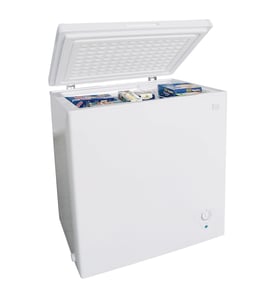



How many cubic feet is a Kenmore freezer model 25312551100?
Kenmore chest freezer model 25312551100 is a compact chest freezer; units in this model range are about 4.4 cubic feet of storage. For the exact capacity for your specific unit, confirm the number on the EnergyGuide label or the rating label on the cabinet.
Where to find the exact capacity on the freezer
Check these common label locations and fields:
- Inside the cabinet near the top rim (often on a side wall)
- Back exterior panel near the power cord entry
- Wording such as “Capacity”, “Total volume”, or “cu. ft.”
- The same label that lists voltage, refrigerant type, and serial number
If your EnergyGuide paperwork is missing, you can replace it with the correct energy guide 216794605.
What “4.4 cu ft” means for real storage
A practical planning rule for chest freezers is 35 to 45 lb of food per cubic foot (varies by packaging and baskets).
| Capacity | Typical food load range | Best use |
|---|---|---|
| 4.4 cu ft | 154 to 198 lb | Small households, overflow storage |
Why it matters
Knowing the cubic feet helps us plan food storage, avoid overpacking (which can slow freezing and cause temperature swings), and set realistic expectations for energy use in a Kenmore chest freezer.
Related tip: keep temperature settings consistent
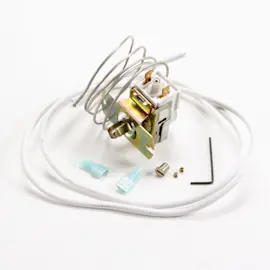
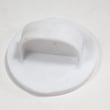
If the temperature seems to change unexpectedly, check that the control knob is not loose or cracked. A worn knob can slip and change settings; the correct replacement is the freezer temperature control knob 216707200.
Last updated: January 2026
What are the most common issues with 25312551100?
The most common issues we see with the Kenmore 25312551100 chest freezer are warm temperatures or no cooling, heavy frost buildup, and lid or light problems. These symptoms usually trace back to airflow and sealing issues, temperature control problems, or compressor start and electrical components.
Most common symptoms and what they usually mean
- Freezer not cold enough or not freezing: temperature control setting, dirty condenser area, weak compressor start components, or a control issue.
- Runs constantly: lid not sealing, frequent openings, warm room temperature, or condenser airflow restriction.
- Heavy frost or ice buildup: lid not sealing, lid left ajar, or moisture entering the cabinet.
- Light stays on or won’t turn on: door switch or bulb issue.
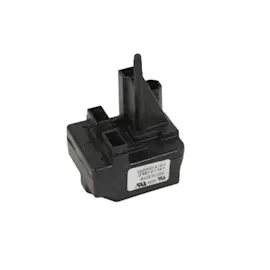
- Clicking/humming then stops: compressor start problem; follow how to replace a freezer compressor start relay for the typical repair approach.
Quick checks we recommend first
- Set the control colder and give it 24 hours to stabilize.
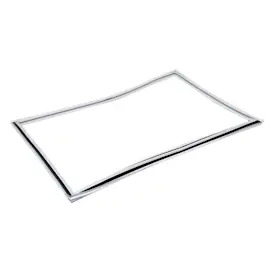
- Confirm the lid closes squarely and the hinge is tight; inspect the gasket area for gaps.
- Make sure the condenser area has breathing room; vacuum dust from accessible coils and vents.
- Check for a stuck light switch; replace common wear items if needed.
- If you hear repeated clicking near the compressor, stop cycling power and move to component testing.
Parts that commonly solve these problems (when symptoms match)
| Symptom | Likely area | Example part for this model |
|---|---|---|
| Light issues | Lighting | Freezer light bulb 5304517886 |
| Light stuck on/off | Switch | Freezer door switch 216822900 |
| Lid not aligning | Hinge/lid hardware | Freezer door hinge 297322100 |
| Temperature won’t regulate | Control knob/control | Freezer temperature control knob 216707200 |
| Clicking/no start | Compressor start circuit | Chest freezer run capacitor 5304464438 |
Why it matters
Catching a sealing, control, or start-component problem early protects frozen food, reduces energy use, and helps prevent compressor damage, which is the most expensive repair on a chest freezer.
Last updated: March 2026
What can cause a chest freezer to stop working?
A Kenmore chest freezer model 25312551100 can stop working due to a power or control issue, poor airflow from dirty condenser areas, or a failed cooling-system component. Start with basic checks (power, settings, lid seal), then move to parts like the control knob or control board.
Quick checks first (fastest fixes)
- Confirm the outlet has power (try a lamp) and reset any tripped breaker.
- Make sure the temperature control is not set to OFF or the warmest setting; inspect the freezer temperature control knob 216707200 for cracks or a loose fit.
- Verify the lid closes fully and the gasket is sealing; warm air leaks can make the freezer seem “dead.”
- Check for heavy frost buildup that blocks cooling; defrost if needed using how to defrost a freestanding freezer.
- Allow time after changes: most chest freezers need 4 to 24 hours to pull down to temperature after being unplugged, defrosted, or heavily loaded.
Common causes (what they look like)
| What you notice | Likely cause | What to do next |
|---|---|---|
| No lights, no sound | No power, failed wiring | Check cord, outlet, and connections; inspect harness condition |
| Runs but not cold | Dirty condenser area, low airflow, lid leak | Clean around condenser area, improve clearance, check lid seal |
| Clicking, hum then stops | Start device issue or compressor problem | Follow how to replace a freezer compressor start relay steps; test components |
| Light does not work but cooling seems OK | Door switch or bulb issue | Check freezer door switch 216822900 and bulb seating |
| Erratic temps | Control issue | Inspect control knob; consider refrigerator electronic control board 5304491583 |
Parts that commonly solve “stopped working” symptoms on this model
- Freezer temperature control knob 216707200 (setting slips or won’t adjust)
- Refrigerator electronic control board 5304491583 (inconsistent operation)
- Freezer door switch 216822900 (light and some lid-related functions)
- Main harness 216793100 (intermittent power to components)
- Compressor 5304475102 (sealed-system repair, typically technician-level)
Why it matters
A freezer that stops cooling can be a simple control or airflow problem, but continued running with poor cooling can lead to food loss and added strain on the compressor. Quick diagnosis helps you choose the right repair path and parts.
Last updated: January 2026