 Owner’s manual



How to hard reset kenmore washer?
For the Kenmore washer model 11047566600, a hard reset is done by removing power long enough for the control to fully shut down, then restoring power and running a quick check. This clears many temporary control glitches and some stored error conditions.
- Press Power/Cancel to stop the cycle.
- Unplug the washer (or switch the breaker off).
- Wait 2 minutes.
- Restore power.
- Start a Rinse/Spin or Drain/Spin cycle to confirm normal operation.
A reset will not fix a mechanical failure (drain restriction, door lock issue, drive problem). Use these quick checks next:
- Make sure the door closes and latches firmly.
- Verify the washer drains strongly (no slow drain or standing water).
- Reduce load size and re-balance bulky items to prevent out-of-balance stops.
- Check for detergent oversudsing; use HE detergent and the correct dose.
- If you see an error code, follow the model’s troubleshooting steps in the 11047566600 owner’s manual.
If symptoms return quickly, a component may be failing. These parts are commonly involved:
| Symptom after reset | What it often indicates | Example part for this model |
|---|---|---|
| Door won’t lock, won’t start | Door lock/latch issue | Latch WPW10253483 |
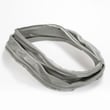
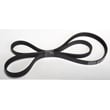
| Won’t spin or slips under load | Belt or drive issue | Washer drive belt WP8540101 |
| Repeated drain errors or slow drain | Drain restriction or pump filter blockage | Filter WPW10730972 |
Resetting power clears the control’s temporary memory, which can restore normal operation after a power flicker or a one-time control glitch. If the same error returns, the washer is usually protecting itself from a real condition it detects.
Last updated: January 2026
What is the cubic foot of my Kenmore washer model 11047566600?
The exact cubic-foot capacity for Kenmore washer model 11047566600 is listed in the product specifications section of the 11047566600 owner's manual. For most Kenmore front-load washers in this model family, capacity commonly falls in the 3.0 to 4.5 cu. ft. range.
Use these quick checks to confirm the number without guessing:
- Look in the specifications or features section of the 11047566600 owner's manual.
- Check the model and serial tag (often around the door opening) to confirm you are using the full model number 11047566600.
- If the manual lists capacity in liters, convert to cubic feet (see table below).
- If you are comparing to a replacement washer, use capacity plus basket size and cycle options to match performance.
| If the manual shows | That equals (approx.) |
|---|---|
| 85 liters | 3.0 cu. ft. |
| 99 liters | 3.5 cu. ft. |
| 113 liters | 4.0 cu. ft. |
| 127 liters | 4.5 cu. ft. |
Capacity affects how much laundry you can wash per load and how well the washer tumbles and rinses. Overloading a front-load washer can also contribute to vibration, poor spin performance, and longer dry times.
If you are checking capacity because loads are going out of balance or not spinning out well, we recommend reviewing Kenmore front load washer ue error code for common unbalanced-load causes and fixes.
Last updated: January 2026
What is the life expectancy of a Kenmore washer?
For a Kenmore washer like model 11047566600, the typical life expectancy is 10 to 15 years with normal household use. Regular cleaning, correct detergent use (HE detergent for front-loaders), and fixing small leaks or vibration issues early can help it reach the high end of that range.
- Light use (1 to 3 loads/week): often 12 to 15 years
- Average use (4 to 7 loads/week): often 10 to 13 years
- Heavy use (8+ loads/week): often 7 to 10 years
- Poor maintenance (overloading, chronic suds, ignored leaks): can shorten life significantly
Most “end of life” failures are repairable, but the cost can outweigh the value when multiple items stack up.
| Common issue | What you may notice | Parts often involved |
|---|---|---|
| Drain or water flow restriction | Slow drain, standing water, odor | Pump filter, hoses |
| Door seal leaks | Water at front, mildew smell | Door boot, clamps |
| Excess vibration | Walking, banging, off-balance errors | Shock absorbers, counterweight |
| No spin or weak spin | Wet loads, burning rubber smell | Drive belt, motor |
- Clean the pump filter and check pockets regularly; a clogged filter can strain the drain system (see filter WPW10730972).
- Wipe the door boot dry after laundry day and leave the door ajar to reduce mildew and seal damage.
- Run a monthly tub-clean cycle (or hot cycle) with washer cleaner; avoid excess detergent.
- Level the washer and keep loads balanced to reduce wear on shocks and bearings.
- Address small leaks immediately; water damage can reach wiring and the electronic control.
A washer that is maintained and kept leak-free typically costs less to own because it avoids repeat failures like drain clogs, door seal leaks, and vibration damage that can shorten the service life.
For model-specific care and cleaning steps, follow the 11047566600 owner’s manual.
Last updated: January 2026





