Error Codes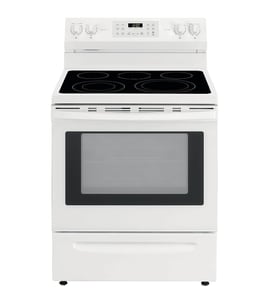




How do I find my KitchenAid range model number?
Your KitchenAid range model number is on the appliance’s rating label; for model KSDB900ESS5, we use that exact number to match the correct parts list and ensure items like controls, igniters, and oven components fit your range.
Where to look on a KitchenAid slide-in range
Check these common label locations first:
- Inside the oven door frame (open the oven door and look along the front frame)
- On the lower drawer frame (warming drawer or storage drawer area)
- Behind the bottom drawer (pull the drawer out and look on the frame or side panel)
- Along the side trim near the door hinge area
- On the back panel (if you can safely access the rear)
What to write down (and why)
Record the details exactly as shown on the label:
- Model number (example: KSDB900ESS5)
- Serial number (helps identify production run for some parts)
- Type (sometimes listed; useful for service references)
- Gas type (natural gas or LP, if shown)
Why it matters
Many parts vary by revision even within the same KitchenAid range family. Using the full model number helps us match the correct items, especially electronic parts and gas components.
Quick examples of parts that depend on the exact model
Here are a few KSDB900ESS5 parts where model matching is important:
| Part type | Example part on this model | What it affects |
|---|---|---|
| Oven heating | Bake element W10779716 | Baking heat performance |
| Ignition system | Spark module (red) WPW10475149 | Burner sparking/ignition |
| Gas control | Gas valve W11109973 | Gas flow to burners |
| User interface | Keypad W11025616 | Button response and settings |
If the label is hard to read
- Wipe gently with a damp cloth and mild soap; avoid abrasive cleaners
- Take a clear photo and zoom in to confirm characters
- Copy the model number exactly, including any suffixes
Last updated: February 2026
How long do KitchenAid ranges last?
KitchenAid ranges typically last 10 to 15 years. For your KitchenAid KSDB900ESS5 dual fuel slide-in range, consistent cleaning, good airflow around the oven, and replacing wear parts promptly can push service life toward the high end of that range.
Typical lifespan and what affects it
Most ranges fail early due to heat stress on electronics, ignition issues, or oven heating problems, not because the cabinet “wears out.” These factors have the biggest impact:
- Heat exposure to the control area (blocked vents, failed cooling fan)
- Oven use patterns (frequent high-heat baking, broiling, self-clean cycles)
- Burner ignition health (spark and gas flow consistency)
- Cleaning habits (keeping ports, grates, and oven cavity from heavy buildup)
- Timely repairs when symptoms first appear
What “end of life” usually looks like on a range
If you see these issues repeatedly, it often signals the range is nearing the point where repairs become more frequent:
- Oven takes much longer to preheat or won’t hold temperature
- Burners click constantly or ignite inconsistently
- Control panel becomes unresponsive or resets
- Cooling fan runs abnormally loud or not at all
- Uneven baking, scorching, or weak broil performance
Common parts that can extend the life of a KSDB900ESS5
Replacing the right part at the right time often restores normal performance and reduces strain on other components.
| Symptom | Common fix area | Example part for KSDB900ESS5 |
|---|---|---|
| Oven not heating or uneven baking | Oven heating circuit | Bake element W10779716 |
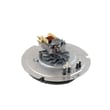
| Control area gets very hot, fan noisy | Cooling/ventilation | Cooling fan assembly W11107275 |
| Burners won’t spark or keep clicking | Ignition system | Spark module (red) WPW10475149 |
| Display/buttons don’t respond | User interface | Keypad W11025616 |
Why it matters
A range that is struggling to ignite or heat correctly often runs longer and hotter to do the same job. That extra heat and run time accelerates wear on the oven control, wiring, and cooling system, shortening overall lifespan.
Last updated: February 2026
What are common KitchenAid problems?
Common problems we see on the KitchenAid KSDB900ESS5 dual fuel slide-in range include burners that click but do not light, uneven baking or no-heat in the oven, a noisy cooling fan, and control panel or keypad issues. Many of these symptoms trace back to ignition parts, heating components, airflow cooling, or electronic controls.
Most common symptoms (and what they usually point to)
- Burner keeps clicking or won’t ignite: dirty burner ports, moisture after cleaning, or an ignition/spark issue
- Oven not heating or baking unevenly: failed bake element or temperature sensing/control problem
- Fan noise after using the oven: worn or obstructed cooling fan
- Buttons not responding or random beeping: keypad or control board issue
- Weak or uneven flame: burner head alignment/cleanliness or gas valve problem
Quick checks you can do first (safe, no disassembly)
- Confirm the burner cap and burner head are seated flat and centered.
- Clean burner ports gently (no toothpicks that can break off); let everything dry fully.
- Try a different burner to see if the issue is isolated or affects all burners.
- For baking complaints, test with an oven thermometer and compare rack positions.
- If the control panel acts up, reset power at the breaker for 1 minute, then retest.
Parts that commonly solve these problems on KSDB900ESS5
| Symptom | Likely part area | Example part for this model |
|---|---|---|
| No bake heat, slow preheat | Oven heating | Bake element W10779716 |
| Loud fan, overheating cabinet | Cooling/venting | Cooling fan assembly W11107275 |
| Constant clicking, ignition issues | Spark/ignition | Spark module (red) WPW10475149 |
| Dead or erratic buttons | User interface | Keypad W11025616 |
| No response, display/control issues | Electronic control | Control, mrc2 W11099784 |
Why it matters
On a dual fuel range like the KSDB900ESS5, the cooktop ignition system and the oven’s electric heating and controls work together. A small issue (like a weak igniter circuit or failing bake element) can cause bigger symptoms such as poor cooking results, repeated clicking, or overheating.
Last updated: February 2026