Owner’s manual
 View engine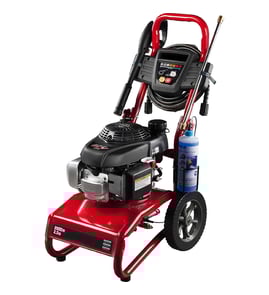



What is an 1800 PSI pressure washer good for?
An 1800 PSI pressure washer is ideal for light to medium outdoor cleaning, such as washing cars, patio furniture, grills, and rinsing dirt off sidewalks. For a Craftsman pressure washer like model 580761800, the best results come from using the right spray tip and keeping a safe distance; see the 580761800 owner's manual for operating and nozzle guidance.
What you can clean well at 1800 PSI
- Cars, trucks, boats (use a wider fan spray and more distance)
- Patio furniture, outdoor cushions (avoid forcing water into seams)
- Sidewalks and small patios (best for dirt, algae film, and light staining)
- Fences and decks (use caution on soft wood to prevent etching)
- Garage doors, siding spot-cleaning (avoid spraying directly into vents or gaps)
What 1800 PSI is not best for
- Deep oil stains on concrete (often needs detergent, dwell time, and repeated passes)
- Large driveways with heavy embedded grime (a higher PSI and higher GPM unit cleans faster)
- Stripping paint or heavy prep work (risk of damage increases and results vary)
Quick setup tips that improve cleaning power
- Use the narrowest spray pattern that is still safe for the surface.
- Start 2 to 3 feet away, then move closer until cleaning improves without damage.
- Work in overlapping passes; keep the wand moving to avoid streaks.
- If using soap, apply from bottom up and rinse from top down.
- Make sure your water supply is steady; low flow causes weak spray and surging.
Typical job fit: 1800 PSI vs higher PSI
| Task | 1800 PSI | 2500 to 3200 PSI |
|---|---|---|
| Car washing | Excellent | Risk of damage if used too close |
| Patio/sidewalk dirt | Good | Faster |
| Driveway heavy grime | Slow to fair | Good to excellent |
| Paint stripping | Not ideal | More capable (use caution) |
Why it matters
Matching PSI and spray pattern to the surface prevents damage (etched concrete, splintered wood, peeled paint) and saves time. If your spray is weak or pulsing, a worn nozzle or leak can also reduce effective pressure; inspect the wand connections and consider replacing a damaged nozzle such as the adjustment nozzle 205015CGS when needed.
Last updated: January 2026
Can you put 87 gas in a pressure washer?
Yes. For the Craftsman gas pressure washer model 580761800, regular unleaded gasoline with an 87 octane rating is the standard fuel choice for normal operation. Use fresh fuel and follow the fuel and storage guidance in the 580761800 owner's manual.
What fuel to use (and what to avoid)
Use gasoline that keeps the engine running cleanly and prevents hard-start issues.
- Use fresh, unleaded gasoline (87 octane is the baseline)
- Buy fuel in small quantities so it does not sit for long periods
- Avoid old or stale gas (common cause of surging and no-start)
- Avoid fuel contaminated with water or dirt
- If your area sells ethanol blends, keep ethanol content low when possible (ethanol attracts moisture during storage)
When higher octane helps (and when it does not)
Higher octane does not increase pressure or cleaning power; it mainly helps prevent engine knock in certain conditions.
| Fuel choice | When it makes sense | What you should expect |
|---|---|---|
| 87 octane unleaded | Everyday use | Normal performance |
| 89 to 93 octane unleaded | Hot weather, heavy load, or if you hear pinging/knock | Smoother running in some cases |
| Old gas or questionable fuel | Never | Hard starting, surging, poor power |
Quick checks if it runs rough after fueling
If the engine surges, stalls, or will not start after refueling, focus on fuel delivery first.
- Drain and replace with fresh 87 octane
- Check the fuel cap vent (a blocked vent can starve fuel)
- Inspect the chemical pickup filter if you are using detergent (a restriction can affect operation); see filter 709496
- Confirm the spray tip/nozzle is not partially blocked; see adjustment nozzle 205015CGS
Why it matters
Correct fuel helps the engine maintain steady RPM, which is what the pump needs to build consistent pressure. Fresh 87 octane prevents most “starts then dies” and “surging” complaints on gas pressure washers.
Last updated: January 2026
Is it worth it to repair a pressure washer?
For the Craftsman 580761800 gas pressure washer, repair is worth it when the problem is limited to wear parts (hose, seals, O-rings, nozzle) and the total parts and labor stay well below the cost of a comparable new gas unit. If the pump or engine has major damage, replacement usually makes more sense.
Quick decision checklist
- If the washer starts and runs but pressure is low, repair is usually cost-effective.
- If water leaks from fittings or the pump head, repair is usually cost-effective.
- If the engine will not start even after basic fuel and spark checks, costs rise quickly.
- If the pump is cracked, seized, or contaminated with water in the oil, replacement is often the better value.
- If you need multiple major assemblies at once (pump plus engine work), replacement is usually the smarter spend.
Common repairs that are usually “worth it”
Many performance issues on model 580761800 come from normal wear or restrictions, not a failed machine.
- Replace a damaged high-pressure hose such as the hose 84006753
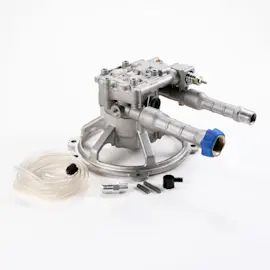
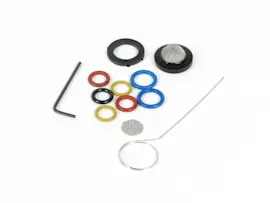
- Fix pump seepage with seals like the seal 93667GS or a worn o-ring 97847GS
- Restore chemical pickup by cleaning or replacing the injector filter filter 709496
- Correct spray pattern issues by servicing the nozzle and wand connections
Cost and value comparison
Use this as a practical rule-of-thumb when deciding.
| Situation | Typical outcome | Recommendation |
|---|---|---|
| Minor leak, worn O-ring, clogged injector | Low parts cost, quick DIY | Repair |
| Low pressure from worn seals or unloader issues | Moderate parts cost | Repair if engine is strong |
| Engine problems plus pump problems | High time and cost | Replace |
Why it matters
A gas pressure washer’s value is tied to pump condition, engine health, and safety. Fixing small leaks and pressure-loss issues early helps prevent pump damage, reduces downtime, and keeps the unit operating at its rated performance.
What we recommend before you decide
Follow the maintenance and troubleshooting steps in the 580761800 owner’s manual, then price out the specific parts you need.
- Confirm strong garden-hose flow to the inlet (no kinks, clean screen)
- Purge air from the system before starting the engine
- Inspect for leaks at quick-connects and fittings
- Check nozzle for blockage and correct spray tip selection
- If pressure surges, inspect seals and O-rings and consider injector restrictions
Last updated: January 2026
What PSI should my pressure washer be?
Your Craftsman power washer model 580761800 is rated for 1800 PSI. That pressure level is ideal for light to medium home cleaning like vehicles, patio furniture, and general rinsing; use the correct nozzle and distance to avoid surface damage. See the 580761800 owner's manual for the rated pressure and operating tips.
What 1800 PSI is best for
- Washing cars, trucks, and boats (use a wider fan spray)
- Cleaning patio furniture and grills
- Rinsing decks and fences (keep the wand moving)
- Light mildew and dirt on siding (avoid forcing water behind panels)
- General outdoor cleanup on walkways (not heavy stain removal)
PSI, nozzle choice, and distance (what changes the “real” pressure)
Even with an 1800 PSI rating, pressure at the surface depends heavily on the spray pattern and how close you hold the wand.
- Wider fan spray reduces cutting power and lowers damage risk
- Narrower spray concentrates force and can gouge wood or strip paint
- Moving 6 to 12 inches farther away can dramatically reduce impact
- A worn or inconsistent spray pattern can point to a nozzle issue; inspect the adjustment nozzle 205015CGS
Quick reference table
| Cleaning job | Recommended approach with 1800 PSI | Damage risk level |
|---|---|---|
| Car paint | Wide fan spray, 18 to 24 in. away | Low when used correctly |
| Wood deck | Wide fan spray, keep moving | Medium |
| Vinyl siding | Spray downward, avoid seams | Medium |
| Concrete | Slow passes; may need pretreat | Low to medium |
Why it matters
Using the rated PSI for model 580761800 helps you clean effectively without etching concrete, furring wood, or forcing water into siding. It also reduces strain on the pump seals and O-rings.
Last updated: January 2026