Error Codes




Does the KitchenAid dishwasher have a lifetime warranty?
KitchenAid dishwashers such as model KDPM604KPS3 do not come with a lifetime warranty as standard coverage; typical coverage is a limited warranty with a defined time period (commonly one year for parts and labor). For warranty terms that apply to your unit, use your purchase date and warranty paperwork.
What warranty coverage usually means
Most dishwasher warranties are written to cover defects in materials or workmanship for a set time window. Coverage details can vary by seller, installation situation, and what part fails.
Common warranty details to confirm:
- Coverage length for parts and labor
- What is considered a defect vs. normal wear
- Whether service must be performed by an authorized servicer
- Exclusions (filters, seals, clogs, cosmetic issues)
- Proof of purchase requirements
If you are troubleshooting a failure during the warranty period
Even when a repair is covered, it helps to identify the failing system so you can describe symptoms clearly.
Typical dishwasher problem areas:
- No fill or slow fill (water inlet valve, float switch)
- Not draining (drain hose, drain path restrictions)
- Leaks at the door (tub gasket, door bottom seal)
- Poor cleaning (spray arm/manifold, filter, sump and motor)
Helpful parts for common symptoms on KDPM604KPS3:
Quick symptom-to-part map
| Symptom | Most likely area | Example part on this model |
|---|---|---|
| Won’t fill | Water inlet system | Fill valve assembly |
| Overfills or won’t stop filling | Float/overfill protection | Float switch |
| Dishes gritty or food left behind | Filtration/wash action | Dishwasher filter |
Why it matters
Warranty coverage is time-based; confirming the exact term helps you decide whether to pursue a warranty repair or move straight to diagnosing and replacing a failed part.
Last updated: February 2026
What is the most common problem with KitchenAid dishwashers?
The most common issue we see with KitchenAid dishwashers, including model KDPM604KPS3, is poor cleaning (dishes come out with food residue). In most cases, the cause is restricted water flow or circulation from a dirty filter, clogged spray system, or a wash pump that is not moving enough water.
Quick checks that fix most “not cleaning” complaints
- Clean the filter and remove any debris (seeds, labels, glass) that can block flow; if the filter is damaged, replace the dishwasher filter W11568785.
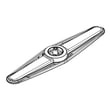
- Spin and rinse the spray arms and manifold; clear any plugged jet holes (toothpick works well) and check for cracks; replace if needed with the dishwasher manifold and spray arm assembly W11545334.
- Confirm hot water supply to the dishwasher (most homes target about 120°F at the sink) and run hot water at the faucet before starting a cycle.
- Load correctly so tall items do not block spray rotation; keep plates from nesting.
- Use fresh detergent and avoid overfilling; make sure the dispenser door can open freely.
- Choose a cycle that matches soil level; heavier soil needs a heavier cycle.
What to suspect if cleaning is still poor
| Symptom | Most likely area | Common part to inspect on KDPM604KPS3 |
|---|---|---|
| Weak spray, gritty residue | Filtration or spray system | Dishwasher filter W11568785, dishwasher manifold and spray arm assembly W11545334 |
| Detergent not dissolving well | Water temperature or circulation | Wash system (pump/sump) |
| Dishes look “rinsed” but not washed | Low wash pressure | Sump and motor assembly |
Why it matters
Poor cleaning is usually a water movement problem. When the filter or spray system is restricted, the dishwasher cannot maintain the pressure and coverage needed to remove soil, so performance drops even if the unit fills and drains normally.
Helpful DIY reference
If you are also seeing blinking lights or a fault code, use the KitchenAid microclean he dishwasher error codes guide to match the code to the most likely cause before replacing parts.
Last updated: February 2026
What are the commonly replaced parts in a dishwasher?
For a KitchenAid KDPM604KPS3 dishwasher, the most commonly replaced parts are the ones tied to filling, draining, washing, and sealing. When symptoms show up (won’t fill, won’t drain, leaks, poor cleaning), these parts are the first places we check and replace.
Commonly replaced dishwasher parts (and what they affect)
- Water fill parts: a failed inlet valve or inlet can cause no fill, slow fill, or overfilling.
- Drain parts: a clogged or split drain hose can cause standing water or leaks.
- Wash system parts: spray arm and manifold issues can cause poor cleaning or low spray pressure.
- Filtration: a dirty or damaged filter can lead to debris redepositing on dishes.
- Door sealing and leak points: worn gaskets and door seals can cause water on the floor.
- Safety and start components: a bad latch or float switch can prevent filling or starting.
KDPM604KPS3 parts we often see replaced
| Symptom | Likely part to check | Example part for this model |
|---|---|---|
| Won’t fill or fills slowly | Fill valve / water inlet | Fill valve assembly W11434044, water inlet W11535094 |
| Won’t drain or leaks at drain line | Drain hose | Dishwasher drain hose W11551233 |
| Poor cleaning, weak spray | Spray arm/manifold | Dishwasher manifold and spray arm assembly W11545334 |
| Grity dishes, debris in tub | Filter | Dishwasher filter W11568785 |
| Leaks at door | Door seals and gaskets | Gasket-tub,d W11483553, seal, door bottom W11664713 |
| Won’t start or stops mid-cycle | Door latch/switch | Latch assembly (includes switch) W11412299 |
Why these parts fail most often
These components handle water flow, heat, detergent, and constant movement every cycle. Mineral buildup, food debris, and normal wear on rubber seals and switches make them the most frequent replacement items in most dishwashers.
Quick checks before you order a part
- Clean the filter and check for broken mesh or cracks.
- Inspect the spray arm holes for clogs and the arm for splits.
- Look for kinks, pinholes, or loose connections on the drain hose.
- Check the door seal area for tears, flattening, or debris preventing a tight seal.
- Make sure the float moves freely (no debris holding it up).
Last updated: February 2026