Installation guide
 Error Codes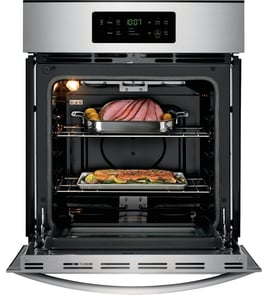




How long do GE wall ovens last?
GE wall ovens typically last 12 years with normal household use. With consistent care (keeping vents clear, avoiding harsh cleaners, and fixing heating issues early), many units reach 15 years. This guidance applies well to the GE PT7050SF1SS electric wall oven.
Typical lifespan and what affects it
A wall oven’s life is mostly driven by heat stress on electronics, door sealing, and how often self-clean is used.
- Average lifespan: 12 years
- Common extended lifespan: 15 years
- Heavy use (daily high-heat cooking): tends to shorten life
- Frequent self-clean cycles: increases heat stress on controls and wiring
- Poor airflow around the cabinet cutout: can overheat components
Quick maintenance that helps it last longer
Use these habits to reduce wear on the control board, cooling system, and door components.
- Keep the cooling fan vents unobstructed and free of grease buildup
- Wipe spills after the oven cools; avoid abrasive pads on interior coatings
- Confirm the oven is installed with proper clearances per the installation guide
- Replace a worn gasket promptly to prevent heat leakage
- Address temperature problems early (often tied to the sensor)
Parts that commonly impact “end of life” symptoms
When a wall oven seems “worn out,” it is often a few serviceable parts.
| Symptom | Common cause | Example part for PT7050SF1SS |
|---|---|---|
| Bakes too hot or too cool | Temperature sensing issue | Wall oven temperature sensor WB21X10165 |
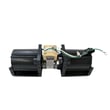
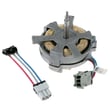
| Shuts down or runs hot around the frame | Cooling airflow/control issue | Wall Oven Cooling Fan Assembly WB26T10066 |
| Longer preheat, uneven results | Heat loss at door | Wall Oven Door Seal WB35X32825 |
Why it matters
Knowing the expected lifespan helps you decide whether to repair or replace. If your PT7050SF1SS is near 12 to 15 years old, investing in a sensor, door seal, or cooling fan repair can restore performance and prevent repeat overheating problems.
Last updated: February 2026
How to reset a GE wall oven?
To reset your GE PT7050SF1SS electric wall oven, turn the oven’s circuit breaker OFF for at least 1 minute, then turn it back ON. This power-cycles the electronic control and clears many temporary glitches after a power surge or control lockup.
Reset steps (safe and effective)
- Set the oven controls to OFF.
- Turn the dedicated wall-oven breaker to OFF (or remove the fuse if your home uses fuses).
- Wait at least 60 seconds.
- Turn the breaker back to ON.
- Re-set the clock and confirm the display responds.
- Test Bake and Broil at a low temperature to confirm normal operation.
What to check if the reset does not help
If the display stays blank, the oven will not heat, or an error returns right away, focus on power and temperature feedback first.
- Confirm the breaker is fully reset (OFF then ON) and not tripped again.
- Make sure the oven is securely installed and wiring connections are correct per the PT7050SF1SS installation guide.
- If temperatures are inaccurate or you see temperature-related faults, the wall oven temperature sensor WB21X10165 is a common part involved in regulating and reporting oven temperature.
- If the oven overheats or shuts down after heating, airflow and cooling components can be involved; check for blocked vents and confirm the cooling fan runs.
Quick symptom guide
| Symptom after reset | Most likely area to check | Example part for this model |
|---|---|---|
| Display dead | Power supply, breaker, wiring | Wiring and connections (installation) |
| Heats poorly or unevenly | Temperature sensing, elements | Wall oven temperature sensor |
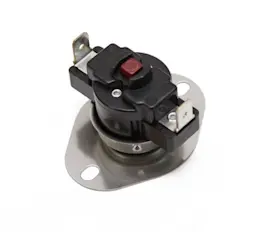
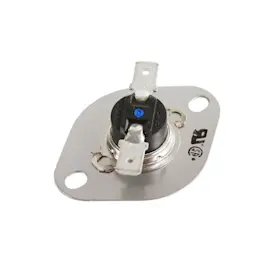
| Overheats or stops mid-cycle | Cooling airflow, high-limit protection | Cooling fan, high-limit thermostat |
Why it matters
A breaker reset clears the control’s memory and restores normal operation after a voltage dip or software hang. If a sensor or cooling issue is causing the control to detect unsafe temperatures, the oven will often re-fault quickly even after a reset.
Last updated: February 2026
Is GE profile considered high end?
Yes. GE Profile is widely considered GE’s higher-end appliance line; it typically adds more premium design, upgraded cooking features, and more advanced controls than standard GE models. For your GE PT7050SF1SS wall oven, the exact feature set is best confirmed in the PT7050SF1SS installation guide.
What “high end” usually means with GE Profile
GE Profile products are positioned above many base GE models, so you commonly see:
- More precise temperature management and cooking modes
- More premium finishes and handle/trim styling
- More advanced electronic controls and display features
- Convenience features (timers, settings, and guided functions)
- Higher typical price point than entry-level lines
Quick comparison: GE vs GE Profile (typical)
| Category | Standard GE (typical) | GE Profile (typical) |
|---|---|---|
| Controls | Basic electronic or knob controls | More advanced electronic controls |
| Features | Core bake/broil functions | More cooking modes and convenience features |
| Design | Practical finishes | More premium styling and finishes |
| Price tier | Value to mid-range | Upper mid-range to premium |
Why it matters for parts and repairs
Knowing whether you have a GE Profile style model helps set expectations for repair approach. Higher-end ovens often rely more on sensors, control boards, and door lock components, so accurate model matching is important when ordering parts.
Parts that commonly relate to “premium feature” symptoms
If you’re troubleshooting temperature accuracy, cooling behavior, or self-clean door locking, these model-matched parts are often involved:
- Wall oven temperature sensor WB21X10165 (temperature regulation issues)
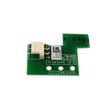
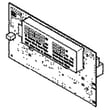
- Wall oven cooling fan sensor board WB27T11463 (cooling fan control problems)
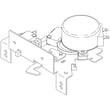
- Latch self c WB10X28391 (door lock or self-clean latch issues)
Last updated: February 2026