View engine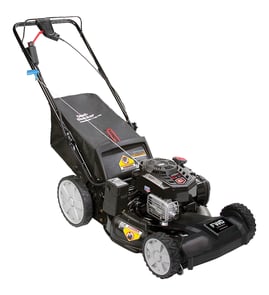



How do I know how big my mower deck is?
Your Yard Pro model 371590 deck size is the cutting width of the blade path under the mower, measured side-to-side. The quickest way is to measure the blade itself (or the deck opening) in inches; most walk-behind mowers are commonly 21 to 22 inches.
Fast ways to measure deck (cutting) size
- Measure the blade length: remove the spark plug wire, tip the mower safely, then measure the blade end-to-end.
- Measure the deck opening: measure the widest inside span where grass exits under the deck.
- Check the replacement blade listing: if your mower uses a 22-inch blade, your deck is typically 22 inches.
- Measure overall mower width only if needed: this helps for gates and storage, but it is not the deck size.
Safety steps before measuring
- Disconnect the spark plug wire and keep it away from the plug.
- Drain fuel or keep the fuel cap up (avoid tipping the carburetor side down).
- Wear gloves; mower blades are sharp even when dull.
What to measure (deck size vs. mower width)
| Measurement | What it tells you | Typical use |
|---|---|---|
| Blade length (inches) | Deck cutting size | Buying the correct blade |
| Deck opening width | Deck cutting size (approx.) | Confirming cut width |
| Overall mower width | How wide the mower is | Gates, sheds, narrow paths |
Why it matters
Deck size drives fit and performance: it determines the correct blade, affects how much grass you cut per pass, and helps you choose compatible parts like a mulching blade or rear discharge components.
Parts that relate to deck size on this model
If you are replacing cutting parts, match by model number and deck size:
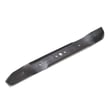
- A common deck blade option for this model is the lawn mower 22-in deck mulching blade 532406713.
Last updated: February 2026
What is the best month to buy a lawn mower?
For a walk-behind mower like the Yard Pro 371590, the best time to buy is typically the off-season: late fall through winter (September through February). That is when many sellers clear out inventory, so you often see the biggest price drops and bundle deals.
Best months (and why)
- September to November: end-of-season clearance as mowing demand drops
- December to February: deeper off-season discounts and leftover inventory
- Late May (around Memorial Day): common promo period, but selection can move fast
- Early spring (March to April): good selection, but prices are usually higher than fall and winter
Quick timing guide
| When you buy | Typical benefit | Typical tradeoff |
|---|---|---|
| Sep to Nov | Strong markdowns | Fewer “new model year” choices |
| Dec to Feb | Deepest discounts | Limited stock, weather delays pickup/shipping |
| Mar to Apr | Best selection | Higher prices |
| May (holiday promos) | Short-term deals | Popular models sell out quickly |
If you already own the Yard Pro 371590
If your goal is to keep your mower running instead of replacing it, buying common wear parts before peak season helps you avoid downtime.
Common parts people replace on this model include:
- Lawn mower 22-in deck mulching blade 532406713 (dull, bent, or nicked blade)
- Belt 532157769 (self-propel drive slipping or not pulling)
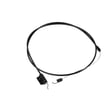
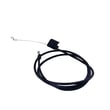
- Lawn mower drive control cable 532194653 (drive control feels loose or won’t engage)
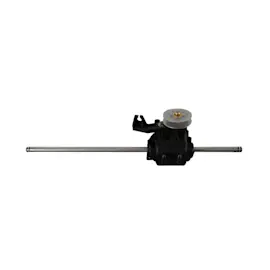
- Lawn mower transmission assembly 532415226 (drive system failure)
Why it matters
Buying in the off-season usually saves money, but buying earlier in spring gives you the widest selection. For repairs, having key parts on hand means you can mow on schedule and avoid cutting wet, overgrown grass that strains the blade, belt, and transmission.
Last updated: February 2026
What is a major disadvantage of the battery operated lawn mower?
A major disadvantage of a battery-operated lawn mower is limited runtime per charge; in thicker grass or larger yards, the battery can run down before you finish, and recharging takes time. For Yard Pro model 371590 (a gas walk-behind mower), this is one reason many owners prefer gas power for longer, uninterrupted mowing.
What you typically notice in real use
- The mower slows down or stops before the Yard is finished.
- Runtime drops faster in tall, wet, or dense grass.
- You may need a second battery to complete one mowing session.
- Recharge time creates downtime between passes.
- Battery packs add significant replacement cost over time.
Battery vs gas: quick comparison
| Feature | Battery mower | Gas mower (like model 371590) |
|---|---|---|
| Run time | Limited to charge | Runs as long as you have fuel |
| “Refuel” time | Recharge (often hours) | Minutes |
| Power in heavy grass | Can bog down sooner | Typically steadier under load |
| Long-term cost | Battery replacement | Routine fuel and maintenance |
Why it matters
Runtime and recharge time determine whether you can mow in one session. If you regularly cut a larger lawn or deal with thick spring growth, limited battery capacity can turn a simple mow into multiple sessions.
If you are troubleshooting a gas mower that “acts like it has no power”
Sometimes a gas mower that is hard to push or seems to lose drive gets mistaken for a “power” issue. On model 371590, common drive-related wear items include the drive belt, wheels, and transmission components.
- Check the condition and tension of the belt 532157769.
- Inspect the drive wheels for wear or damage (examples: lawn mower wheel 581009202, lawn mower wheel 581010309).
- If the self-propel system slips or will not pull, the lawn mower transmission assembly 532415226 is a common fix path.
Last updated: February 2026
What are the most common lawn mower repairs?
The most common repairs on the Yard Pro 371590 gas walk-behind mower involve basic tune-up and drive or cutting issues: getting the engine to start and run smoothly, restoring self-propelled drive, and fixing poor cutting or clumping. Many fixes come down to routine maintenance and a few wear parts.
Most common problems (and what usually fixes them)
- Won’t start or starts then dies: old fuel, dirty carburetor, fouled spark plug, clogged air filter
- Runs rough or surges: restricted fuel flow, dirty carburetor, air leak, stale fuel
- Loses power in grass: dull/bent blade, clogged deck, dirty air filter, throttle not opening fully
- Self-propel won’t pull: worn or stretched drive belt, worn drive pawls, damaged drive cable
- Poor cut quality or vibration: bent blade, loose blade hardware, worn blade adapter
Parts on this model that commonly solve drive and cutting complaints
If your mower is moving poorly or leaving an uneven cut, these are frequent wear items for the 371590:
| Symptom | Likely wear item | Example part for this model |
|---|---|---|
| Self-propel slips or won’t move | Drive belt | Belt 532157769 |
| Wheels don’t “grab” consistently | Drive pawl | Drive pawl 532404845 |
| Cuts uneven, tears grass, clumps | Dull/bent blade | Lawn mower 22-in deck mulching blade 532406713 |
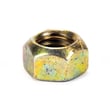
| Excess vibration or blade won’t stay tight | Blade mounting hardware | Lawn mower hex flange nut 532409149 |
Quick checks we recommend before replacing parts
- Drain and replace old fuel; use fresh fuel and the correct oil level.
- Inspect the blade for bends, cracks, and dull edges; clean packed grass from under the deck.
- Check the self-propel cable for slack and binding; confirm the control bar fully engages.
- Look for belt glazing, cracking, or looseness; replace if worn.
- Tighten visible fasteners on the handle and deck; recheck after the first mow.
Why it matters
A mower that surges, bogs down, or won’t self-propel is usually telling you airflow, fuel delivery, or a wear part (belt, pawl, blade) is no longer in spec. Fixing the root cause improves cut quality, reduces engine strain, and helps prevent bigger failures like transmission damage.
Last updated: February 2026
Is it cheaper to repair or replace a lawn mower?
For a Yard Pro model 371590 walk-behind mower, it’s cheaper to repair when the problem is a wear item (blade, belt, cable, wheel hardware) or basic maintenance. Replacement makes more sense when a major assembly (engine or transmission) fails or when the repair total reaches about half the cost of a comparable new mower.
Quick rule we use to decide
- Repair when the mower still starts reliably and the fix is a bolt-on part.
- Replace when the engine has low compression, heavy smoking, or repeated no-start issues after tune-up.
- Replace when the drive system needs multiple major parts at once (transmission plus wheels, cables, and belt).
- Repair when the deck and handle structure are solid (no severe rust-through or cracking).
- Replace when you need faster turnaround than parts and repair time allow.
Common “repair” scenarios for model 371590
These are typical fixes that usually cost far less than a new mower:
- Dull or damaged blade: replace the lawn mower 22-in deck mulching blade 532406713
- Self-propel not pulling: inspect/replace the belt 532157769
- Drive control not engaging: check the lawn mower drive control cable 532194653
- Worn drive wheel or traction issues: replace the lawn mower wheel 581009202
- Loose wheel/handle hardware: replace stripped fasteners like the lawn mower hex flange nut 532409149
When replacement is usually the better value
Major failures tend to stack costs quickly:
- Engine problems that require internal repair (compression loss, crankshaft damage)
- Transmission failure or leaking gearbox (often replaced as an assembly)
- Multiple safety or structural issues (bent handle, damaged deck, missing guards)
Cost comparison (typical)
| Repair type | What it usually involves | Typical value outcome |
|---|---|---|
| Wear-item repair | Blade, belt, cable, wheel hardware | Repair is usually cheaper |
| Drive system overhaul | Belt plus wheels/cables, possibly transmission | Depends on total cost |
| Major powertrain failure | Engine or transmission assembly | Replacement usually wins |
Why it matters
A walk-behind mower like the Yard Pro 371590 is designed around replaceable wear parts. Keeping up with blade, belt, and control-cable condition restores cut quality and self-propel performance without paying for a whole new machine.
Last updated: February 2026