



What is the life expectancy of a GE dishwasher?
A GE dishwasher like model GDT225SGL2WW typically lasts 10 to 12 years. With consistent cleaning and prompt fixes for leaks or draining issues, it commonly reaches the upper end of that range; neglected maintenance shortens life.
Most residential dishwashers fall into a predictable window based on use and water conditions:
| Usage pattern | Typical life expectancy |
|---|---|
| Light use (few loads/week) | 12 to 15 years |
| Average use (1 load/day) | 10 to 12 years |
| Heavy use (2+ loads/day) | 7 to 10 years |
We see these habits make the biggest difference:
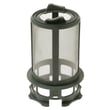
- Clean the filter area regularly; a clogged filter makes the wash pump work harder (see fine filter WD12X24656).
- Keep spray arms clear of debris so water flow stays strong.
- Fix small leaks early so water does not reach wiring or the control area.
- Use the right detergent amount; too much can cause buildup and poor rinsing.
- Run hot water at the sink before starting a cycle to improve wash performance.
These are the most common “early failure” drivers:
- Chronic draining problems (kinked hose, clogs, or slow sink drain)
- Hard water scale buildup on internal parts
- Repeated overloading that blocks spray arm rotation
- Door not latching tightly (water leaks and cycle interruptions)
- Ignoring error codes and continuing to run cycles
A dishwasher that is struggling to drain, fill, or circulate water wears out expensive components sooner (like the wash pump and electronic controls). If your unit is acting up, using a targeted troubleshooting guide helps you decide whether a simple maintenance step or a part replacement is the right next move (see GE dishwasher error codes).
Last updated: February 2026
What is the most common problem with a GE dishwasher?
The most common GE dishwasher problems (including GE model GDT225SGL2WW) are not starting, not draining, and not cleaning well. In most homes, the root cause is usually a simple issue like a door that is not fully latched, a clogged filter, or a drain restriction, before it is a failed control or pump.
- Won’t start or seems dead: door not latched, control lock or delay start selected, power issue at breaker, or a control problem
- Won’t drain: clogged filter/sump area, kinked or restricted drain hose, blocked sink/disposer connection, or a drain pump issue
- Not cleaning dishes: clogged filter, spray arm holes blocked, low water fill, or wash pump performance issue
- Leaks: door seal/gasket wear, loose hose connections, or over-sudsing from wrong detergent
- Stops mid-cycle: drain problem, water fill issue, or an electronic fault code
- Confirm the door closes firmly and the latch engages.
- Clean the filter area and remove debris from the sump.
- Check the lower spray arm for cracks and clogged jets.
- Inspect the drain path: hose routing, high loop/air gap (if used), and sink connection.
- If the dishwasher shows an error, match it using GE electronic dishwasher error codes.
| Symptom | Common fix | Example part for this model |
|---|---|---|
| Not draining | Clear restriction; replace damaged hose | Drain hose extension WD24X10062 or drain pump discharge hose WD24X24717 |
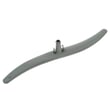
| Poor cleaning | Restore spray coverage; replace worn spray arm | Lower spray arm WD22X24672 |
| Leaking at door | Replace sealing surface | Dishwasher tub gasket WD08X24750 |
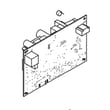
| Random no-start or odd behavior | Check power; consider control issue | Dishwasher electronic control board WD21X24676 |
Dishwasher problems often cascade: a clogged fine filter can reduce wash pressure, which leaves soil behind, which then increases drain load and can trigger drain errors. Keeping the wash system clean prevents repeat failures and protects high-cost parts like the wash pump and control.
Last updated: February 2026
How do I find the model number on my GDT225SGL2WW?
The model number for your GE dishwasher is printed on the appliance’s rating label; on most GE built-in dishwashers like the GDT225SGL2WW, that label is on the tub frame where the door closes. Open the door fully and look around the top or side edges of the opening.
Check these common label locations in order:
- Along the left or right tub frame (vertical edge) just inside the door
- Along the top tub frame (horizontal edge) under the countertop overhang
- On the inner edge of the door itself (near the latch area)
- On the side of the tub opening near the hinge area
The rating label usually includes the model and serial information together. We recommend copying it exactly.
- Model number (example: GDT225SGL2WW)
- Serial number (letters and numbers)
- Electrical ratings (volts/amps) and sometimes a manufacturing date
| What you need | Why we ask for it | Example format |
|---|---|---|
| Model number | Ensures correct diagrams and part fit | GDT225SGL2WW |
| Serial number | Helps match revisions and production runs | Varies |
GE often uses similar-looking dishwasher platforms with different controls, racks, and hoses. Using the exact model number helps us match the correct parts list and avoid ordering the wrong item.
- Wipe the area with a damp cloth and mild dish soap; dry it and re-check
- Use your phone camera with flash, then zoom in on the photo
- Write down every character; do not drop letters or add spaces
If you are confirming fit for a leak or drain issue, matching the model number first helps you choose the right hose and clamps, such as the drain pump discharge hose WD24X24717 or clamp WD01X27538.
Last updated: March 2026





