Installation guide
 Owner’s manual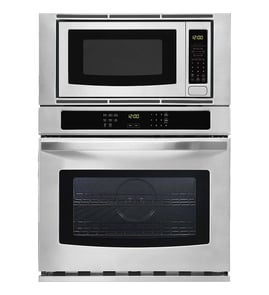



How many cubic feet is a Kenmore Model 79048803100 microwave?
The microwave capacity for Kenmore Elite model 79048803100 is 1.5 cubic feet. For the exact specification wording used for your unit, we recommend confirming the capacity in the 79048803100 installation guide or the model’s literature.
Use the model documentation and the appliance data label so you match the correct microwave cavity size for cookware and accessories.
- Check the “Specifications” or “Product dimensions” section in the 79048803100 installation guide
- Look for a line labeled “microwave capacity” or “oven capacity” (microwave)
- Verify the model and serial tag inside the microwave cavity or on the frame behind the door
- If you need a manual measurement, measure interior width, height, and depth (in inches) and divide cubic inches by 1,728
| Capacity | Typical fit | Best for |
|---|---|---|
| 1.5 cu. ft. | Standard dinner plate, medium bowl | Reheating, single meals, smaller cookware |
| 1.7 cu. ft. | Larger plates, some 9x13 dishes | Bigger containers, family portions |
Microwave capacity affects what cookware fits, whether a cover clears the ceiling, and how well common accessories (rack, turntable) work. It also helps when selecting door and latch parts that match the correct cavity size.
Last updated: January 2026
What are the most common issues with 79048803100?
On the Kenmore Elite 79048803100 wall oven/microwave combo, the most common problems are heating issues in the oven (won’t heat, uneven baking), cooling or convection fan problems, and microwave door or power issues (won’t start, blows a fuse). Use the owner's manual for model-specific troubleshooting steps and error indications.
- Oven not heating or takes too long: failed bake element, temperature sensor out of range, or a wiring connection issue.
- Uneven baking or convection not working: convection fan blade loose, fan motor failing, or airflow blocked.
- Oven shuts down or overheats: high-limit thermostat opening, cooling fan not running, or restricted ventilation.
- Microwave won’t start: door latch or interlock switch not closing properly.
- Microwave dead or intermittent: blown fuse, door switch issue, or control board problem.
If your symptoms match, these are frequently replaced parts for this model:
- Frigidaire range bake element 318254902 for no-bake or weak-bake complaints
- Range oven temperature sensor 5304504897 for temperature swings or inaccurate baking
- Range oven cooling fan assembly 318073028 for overheating or long cool-down issues
- Microwave door interlock switch 5304493153 for no-start conditions tied to the door
- Microwave fuse 5304480634 for a microwave that is completely dead
- Confirm the unit has proper power (a wall oven/microwave combo typically needs a solid 240V supply for the oven section).
- For oven heating complaints, test bake and broil separately; a failed bake element often still allows broil to work.
- For microwave no-start, check door alignment and listen for a clear “click” from the interlock area when closing.
- Look for loose or heat-damaged wiring at the terminal block area.
| Symptom | Most likely area | Common part example |
|---|---|---|
| Oven won’t bake | Heating circuit | Bake element, sensor |
| Oven overheats/shuts off | Safety cooling | Cooling fan, high-limit thermostat |
| Microwave won’t start | Door safety | Interlock switch, latch parts |
| Microwave dead | Power protection | Fuse, control board |
These issues are common because heating circuits, door safety switches, and cooling components handle high heat and frequent cycling. Matching the symptom to the correct circuit helps you avoid replacing the wrong part and restores safe operation.
Last updated: March 2026
What is a combo wall oven?
A combo wall oven is a built-in appliance that combines two cooking units in one cabinet cutout. For Kenmore Elite model 79048803100, it is a microwave and wall oven combination, with the microwave typically positioned above the oven for a stacked, space-saving design.
A combination unit is designed to give you two separate cooking methods without needing two separate installations.
- Two appliances in one opening: microwave plus traditional wall oven
- Built-in look: installs flush into cabinetry with decorative trim
- Separate controls and functions: microwave cooking and oven baking/roasting
- Common in remodels: saves space compared to a separate microwave and wall oven
- Requires proper support and clearances: cabinetry and electrical setup must match the unit
The installation guide for this type of unit calls out requirements that are specific to combination ovens.
| Requirement | What it means for your kitchen | Why it matters |
|---|---|---|
| Base support capacity | Cabinet base must support heavy weight | Prevents sagging and trim gaps |
| Front clearance | Space in front for the door when open | Avoids door interference and injury risk |
| Cutout depth accuracy | Depth must match the specified cutout | Helps the trim sit tight and reduces vibration/noise |
| Not approved for stacking | Cannot be installed stackable or side-by-side | Prevents unsafe or unsupported configurations |
Knowing you have a combo wall oven helps you choose the right parts and plan service correctly because the microwave section and oven section use different components (for example, door interlocks for the microwave versus heating and temperature sensing parts for the oven).
For model-specific installation requirements and cutout guidance, use the 79048803100 installation guide.
Last updated: January 2026