Owner’s manual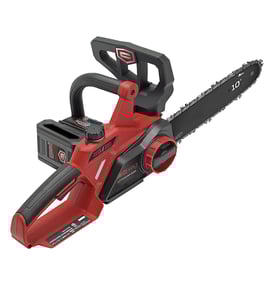


Where is the model number on a chainsaw?
On the Craftsman electric chainsaw model 172439831, the model number is located on the nameplate attached to the tool. Check the saw body near the motor housing or handle area, then confirm the exact characters against the 172439831 owner's manual.
Model number tags on chainsaws are usually a printed label or metal plate. For this Craftsman pole saw/chain saw, focus on these common nameplate spots:
- On the main saw housing near the motor cover
- Along the rear handle area
- Near the cord entry point or cord strain relief
- On the pole saw/chain saw body where the two sections join (if using the extension pole)
- On a flat surface designed for a label (often on one side of the housing)
Having the correct model number makes it much easier to match the right parts and specs for your exact tool.
- Confirms you are looking at the correct parts list for 172439831
- Helps match the correct guide bar and chain specifications
- Speeds up troubleshooting and maintenance lookups
- Prevents ordering the wrong replacement components
Use this checklist when you find the nameplate:
| Item to record | Example for this tool | Why it matters |
|---|---|---|
| Model number | 172439831 | Identifies the exact Craftsman unit |
| Tool type | Electric pole saw/chain saw | Narrows parts and procedures |
| Key specs | 10-inch bar, 9 amp | Confirms compatibility for wear items |
Craftsman chainsaws often have similar-looking housings across different versions. Using the nameplate model number ensures you are matching the correct chain pitch, gauge, and link count when maintaining or replacing cutting components.
Last updated: February 2026
What are the disadvantages of electric chainsaws?
Electric chainsaws like the Craftsman 172439831 trade convenience for a few practical limits: corded models restrict your working range, and all electric saws require extra care around power, cords, and wet conditions. For safe setup details, follow the owner's manual.
- Limited mobility (corded models): you are only as mobile as your extension cord length.
- Extension cord management: cords can snag on brush, trunks, or equipment if not routed carefully.
- Electrical safety requirements: using the right outlet protection (GFCI) and avoiding grounded contact matters.
- Not for wet conditions: electric tools should not be used in wet or damp locations.
- Power supply dependency: you need a working outlet with the correct voltage for the tool.
The manual calls out extension-cord sizing and safe cord routing, which are common pain points with corded electric chainsaws.
| Extension cord length | Recommended minimum wire gauge (AWG) | What it affects |
|---|---|---|
| Up to 25 ft | 18 AWG | Helps reduce voltage drop and overheating |
| Up to 50 ft | 16 AWG | Better performance at longer distance |
| Up to 100 ft | 14 AWG | Best choice for long runs |
Most “downsides” of an electric chainsaw come down to range and electrical safety. Using the correct extension cord gauge, keeping the cord out of the cutting path, and using GFCI protection helps prevent nuisance shutdowns, overheating, and shock hazards.
- Unplug the saw before inspecting, adjusting, or storing it.
- Keep the cord clear of the work area so it cannot be caught or cut.
- Use two hands and stable footing; do not operate from a ladder or in a tree.
- Do not use the saw in rain, wet conditions, or damp locations.
Last updated: February 2026
Do you need to oil the chain on an electric chainsaw?
Yes. Your Craftsman 172439831 electric chainsaw still needs bar and chain oil because the chain rides at high speed on the guide bar; proper lubrication reduces heat and friction and prevents rapid wear or damage. See the lubrication and oiling details in the owner's manual.
The manual specifies using bar and chain oil (Craftsman Bar & Chain Oil, SAE30).
- Use bar and chain oil (SAE30) for the correct tackiness and film strength
- Fill the oil reservoir before each cutting session
- Never run the saw with an empty oil tank
- Avoid recycled or old oil (it can damage the saw and reduce lubrication)
- Keep the oil filler area clean so debris does not enter the tank
- Unplug the saw.
- Set the saw on a stable surface with the oil filler cap facing up.
- Wipe around the oil filler cap, then remove it.
- Fill with bar and chain oil until the reservoir is full.
- Reinstall and tighten the cap.
This model oils the chain automatically during operation. A quick check is to run the saw and aim the bar tip toward cardboard or paper; you should see an increasing oil pattern.
- Fill the reservoir first
- Run the saw at operating speed
- Point the bar tip toward cardboard or paper (keep safe clearance)
- Look for a growing oil line or mist pattern
- If there is no pattern, stop using the saw until the oiling issue is corrected
The manual notes small breather channels in the cap area; store the saw horizontally with the oil filler cap uppermost to reduce leakage.
Bar and chain oil is the difference between smooth cutting and premature wear. Without lubrication, the chain and guide bar overheat, cutting performance drops, and the saw can suffer extensive damage.
| Task | When to do it | What you are looking for |
|---|---|---|
| Check oil level | Before each use | Oil visible in the reservoir window or tank filled |
| Verify oiling | After refilling or if cutting seems dry | Oil pattern on cardboard/paper |
| Refill oil | As needed during use | Reservoir not allowed to run empty |
Last updated: February 2026
What model number is a Craftsman 172439831 chainsaw?
The model number is 172.439831 (often shown without the dot as 172439831). This is the Craftsman identifier used to match the correct operator information and parts list for your electric pole saw/chain saw in the 172439831 operator’s manual.
Look for the model on the nameplate (product label). Common locations include:
- Main housing near the motor area
- Handle or pole section where the label is easy to read while holding the tool
- Near the power cord entry point
- The label area referenced in the parts list section of the manual
They are the same model number; the dot is just a formatting style used in some documentation and labels.
| You might see it written as | What it means |
|---|---|
| 172.439831 | Model number with dot formatting |
| 172439831 | Same model number without the dot (common for parts lookup) |
Using the exact model number keeps parts matching accurate, especially for items that vary by model such as the chain, guide bar, oiling components, and electrical parts.
- Confirm the nameplate shows 172439831 (or 172.439831)
- Match the product type: Craftsman electric pole saw/chain saw
- Use the parts list and diagrams in the manual to identify the correct part description
Last updated: February 2026
How thick of a tree can an electric chainsaw cut?
For the Craftsman electric chainsaw model 172439831, the thickest tree or log you can cut depends on your guide bar length and how you make the cut. For a single straight pass, we use a practical limit of about 2 inches less than the usable bar length; confirm your bar length in the 172439831 owner's manual.
- Single-pass cut: usable bar length minus about 2 inches (helps reduce pinching)
- Larger than the bar: cut from both sides and keep the kerf from closing
- Hardwood vs. softwood: hardwood cuts slower and loads the motor more, so reduce diameter expectations
- If the saw bogs down: sharpen the chain, verify chain tension, and use lighter feed pressure
- Avoid dirt contact: keep the chain out of the ground to prevent rapid dulling
The manual’s bucking guidance reduces the chance of the bar getting pinched:
| How the log is supported | Start the cut | Finish the cut |
|---|---|---|
| Supported on both ends | From the top, about 1/3 through | From the bottom |
| Supported on one end | From the bottom, about 1/3 through | From the top |
This model’s manual specifies these minimum extension cord wire gauges:
| Extension cord length | Recommended minimum wire gauge (AWG) |
|---|---|
| 25 ft or less | 18 AWG |
| 50 ft | 16 AWG |
| 100 ft | 14 AWG |
- Use a GFCI-protected supply in damp locations
- Keep the cord routed so it cannot snag on brush or the workpiece
- Maintain a firm two-handed grip and stable footing
Staying within your bar’s effective cutting capacity and using proper bucking technique reduces bar pinch, kickback risk, and motor overload. Using the correct extension cord gauge helps maintain voltage so the saw holds chain speed under load.
Last updated: February 2026