 Owner’s manual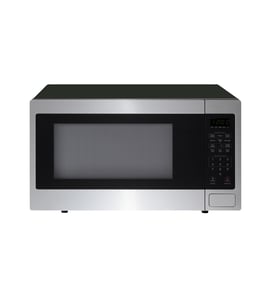


How many cubic feet is a Kenmore Model 72163252301 microwave?
The Kenmore microwave model 72163252301 has a 1.2 cu. ft. oven cavity capacity. This is the usable cooking space inside the cavity (not the outside cabinet size); we list it in the specifications in the owner's manual.
We recommend checking the specifications section so you are matching the right Kenmore series and cavity size.
- Look for “Capacity of oven cavity” in the specs table
- Confirm the model family listed (this guide covers 721.63252 series)
- Use cavity capacity when comparing countertop microwave sizes
- Use overall dimensions when checking fit on a counter or shelf
| Spec | What it tells you | Why you might care |
|---|---|---|
| 1.2 cu. ft. capacity | Interior cooking space | Fits common dinner plates and medium cookware |
| Overall dimensions | Exterior size | Ensures it fits your countertop clearance |
| Output watts | Heating performance | Helps compare cooking speed across microwaves |
Cavity capacity affects what you can cook and reheat comfortably. If you are replacing a microwave or buying accessories (like a cover or cookware), using the 1.2 cu. ft. rating helps you choose items that fit the interior space.
Last updated: February 2026
What is the standard size of a countertop microwave?
There is no single “standard” countertop microwave size, but most fall into a common range. For Kenmore model 72163252301, the overall dimensions are 21 7/8 in. wide x 12 1/2 in. high x 17 5/8 in. deep, with a 1.2 cu. ft. cavity; see the owner's manual for the full specifications.
Most countertop microwaves land in these general ranges (useful for cabinet fit and counter space planning):
- Width: about 21 to 25 inches
- Height: about 12 to 15 inches
- Depth: about 16 to 20 inches
- Capacity: about 1.0 to 2.2 cu. ft.
| Spec | Kenmore 72163252301 |
|---|---|
| Overall dimensions (W x H x D) | 21 7/8" x 12 1/2" x 17 5/8" |
| Oven cavity capacity | 1.2 cu. ft. |
| Power supply | 120V AC, 60 Hz |
| Microwave output | 1200W |
Even if the microwave’s outside dimensions fit, it still needs airflow clearance for safe operation. For this model, plan for:
- At least 4 inches of space on the left side
- At least 4 inches of space on the right side
- At least 4 inches of space on the top
- At least 4 inches of space at the rear
Microwave “size” affects more than counter footprint. The outside dimensions determine whether it physically fits, while required ventilation clearance helps prevent overheating and performance problems.
Last updated: February 2026
Can you put stuff on top of a countertop microwave?
Yes, but only if you keep the top vents and all other openings clear. For Kenmore model 72163252301, we recommend leaving at least 4 inches of open space on the left, right, top, and rear so the microwave can vent heat properly (see the 72163252301 owner's manual).
Use the top of a countertop microwave as a temporary landing spot, not as a shelf.
- OK: lightweight items you move often (paper towels, oven mitts)
- Avoid: anything that blocks airflow (cutting boards, trays, baskets)
- Avoid: heat-producing appliances (toaster, air fryer, coffee maker)
- Avoid: liquids that can spill into openings (cups, bottles, plant watering cans)
- Avoid: heavy items that can crack the cabinet or shift the microwave
The manual’s installation guidance is the best rule to follow for everyday use because it protects the magnetron and high-voltage components from overheating.
| Clearance area | Minimum space to leave | Why it matters |
|---|---|---|
| Top | 4 inches | Prevents heat buildup and poor cooking performance |
| Left side | 4 inches | Keeps intake and exhaust airflow steady |
| Right side | 4 inches | Reduces overheating risk |
| Rear | 4 inches | Prevents blocked outlet airflow |
- Confirm nothing covers any openings (the manual says not to cover or block openings)
- Make sure the microwave sits level and stable on the counter
- Keep the cord free so it cannot be pinched by items behind the unit
- If the cabinet feels unusually hot after cooking, remove items and increase clearance
When airflow is restricted, internal temperatures rise. That can shorten the life of key heating and safety components and can lead to nuisance shutdowns or weak heating.
Last updated: February 2026
Do Countertop Microwaves need venting?
Yes. Your Kenmore countertop microwave model 72163252301 does not need to vent to the outside, but it does need open airflow around the cabinet so its built-in vents can exhaust heat and cooking steam safely; follow the placement clearances in the 72163252301 owner's manual.
A countertop microwave is self-venting (it exhausts through its own inlet and outlet openings). What it needs from you is ventilation space so those openings are not restricted.
- No external duct or vent hood connection is required
- Do not cover or block any openings
- Do not place the unit in a tight, enclosed cubby unless the manual allows it
- Keep the microwave on a level, stable surface
- Keep items like paper towels, cookbooks, and plastic away from the vent areas
The Kenmore 72163252301 installation instructions call for at least 4 inches of space at the left, right, top, and rear for proper ventilation.
| Area around the microwave | Minimum clearance |
|---|---|
| Left side | 4 inches |
| Right side | 4 inches |
| Top | 4 inches |
| Rear | 4 inches |
Seeing warm air or steam leaving the vent is normal during cooking; the microwave is designed to vent steam.
- Light steam from the exhaust vent during cooking is normal
- Hot cabinet surfaces near the vent area are common
- If the unit shuts down or smells hot, recheck clearances and blocked openings
Proper ventilation prevents overheating that can shorten the life of heat-sensitive components such as the magnetron and safety thermostat, and it helps maintain consistent cooking performance.
Last updated: February 2026


