 Installation guide
 Owner’s manual
 Error Codes



What is the average life expectancy of a Bosch dishwasher?
A Bosch dishwasher typically lasts 10 to 15 years with normal household use. For your Bosch SHEM63W55N, lifespan depends most on correct installation, keeping the filter system clean, and avoiding chronic drain or fill problems (all of which reduce wear on the pump and heater). See the SHEM63W55N use and care manual.
What affects lifespan the most
These are the biggest factors we see that shorten or extend dishwasher life:
- Filter maintenance: a clogged filter makes the wash system work harder and can lead to poor cleaning and drain issues.
- Drain performance: slow draining can leave standing water and debris in the sump.
- Water quality: hard water can cause mineral buildup on spray arms and internal passages.
- Detergent and rinse aid use: correct detergent plus rinse aid helps cleaning and drying without overworking the system.
- Installation quality: proper drain hose routing and secure electrical and water connections prevent repeat problems.
Maintenance schedule we recommend
Use this as a simple baseline for Bosch dishwashers like model SHEM63W55N:
| Task | Typical frequency | Why it helps |
|---|---|---|
| Clean filter system | Every 1 to 4 months | Prevents debris buildup and protects the pump |
| Inspect/clean spray arms | Every 3 to 6 months | Keeps wash pressure strong and improves cleaning |
| Run a dishwasher cleaner cycle | Every 1 to 3 months | Reduces grease and mineral deposits |
| Check door seal for debris | Monthly | Helps prevent leaks and odor |
Why it matters
A dishwasher that is kept clean internally usually runs quieter, drains better, and maintains wash performance longer. That reduces strain on high-wear components like the circulation system and drain system.
When a part repair can extend life
If performance drops but the tub and racks are still in good shape, replacing a failed component can be a cost-effective way to get more years out of the unit. Common examples include:
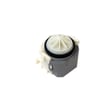
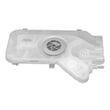
- Drain problems: inspect the dishwasher drain pump 00631200
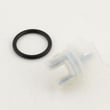
- Poor draining due to a damaged cover: check the dishwasher drain pump lid 00611322
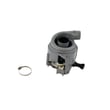
- Weak cleaning or no heat symptoms: the circulation system may be involved
Last updated: January 2026
What is the code E13 on a Bosch dishwasher?
On the Bosch SHEM63W55N dishwasher, an E13-style drain error typically points to a draining problem: water is staying in the sump too long because the drain path is restricted or the drain pump area is blocked. We focus first on cleaning the filters and checking the drain pump cover.
What to check first (fast, no parts)
Use the steps in the SHEM63W55N user manual to safely access the sump area and follow the care and maintenance guidance.
- Cancel the cycle and let the unit drain; then turn power off at the breaker before reaching into the sump
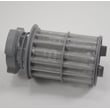
- Remove and rinse the filter system thoroughly (food soil and labels can block flow)
- Check the drain pump cover area for debris (glass, bones, toothpicks) and make sure the cover snaps fully into place
- Inspect the sink/disposer connection for a clog and confirm the disposer inlet plug was removed (new disposer installs)
- Verify the drain hose is not kinked behind the unit
When a part is likely involved
If the filters are clean and the drain hose and plumbing are clear, the drain pump or its cover can be the next suspect on this model.
- If the pump is noisy, hums, or will not move water, consider the dishwasher drain pump 00631200
- If the pump cover will not latch, is warped, or leaks air, consider the dishwasher drain pump lid 00611322
Quick symptom-to-fix guide
| What you notice | Most common cause | What we recommend |
|---|---|---|
| Standing water after cycle | Clogged filters or sump debris | Clean filters and sump; re-seat pump cover |
| Intermittent draining | Partial clog in hose or disposer port | Clear drain path; check for kinks |
| Loud grinding during drain | Debris in pump impeller area | Remove debris; inspect pump cover |
| No drain, pump hums | Failed drain pump | Replace drain pump |
Why it matters
A drain restriction can trigger error codes, leave dirty water in the tub, and cause odor. Restoring proper drain flow protects the pump system and helps the dishwasher complete cycles normally.
Last updated: January 2026
What is the most common problem with a Bosch dishwasher?
For the Bosch SHEM63W55N dishwasher, the most common day-to-day issue we see is drain performance: water left in the bottom because the filter system is dirty, the drain hose is restricted, or debris is blocking the pump cover area. Routine cleaning usually prevents repeat problems; see the SHEM63W55N use & care manual.
What “most common” usually looks like on this model
These symptoms line up with the troubleshooting and care steps Bosch outlines for this dishwasher:
- Standing water in the sump after a cycle
- Odor from food debris in the sump or door seal
- Poor cleaning from restricted water flow (filters or spray arms)
- Long cycle times when incoming water is cool or soil sensing extends the cycle
- Drain-related error codes when the drain path is clogged or kinked
Quick checks that fix many problems
Start with these basics before replacing parts:
- Clean and reinstall the filter system so it locks fully in place
- Scoop out standing water and check the pump cover area for debris (use caution around sharp objects)
- Verify the drain hose is not kinked or clogged
- Confirm the drain hose has a proper high loop; Bosch specifies the drain hose must be routed with a section at least 33 inches off the floor in the SHEM63W55N installation guide
- Make sure spray arms rotate freely and the holes are clear
When a part is the likely fix
If cleaning and hose routing do not restore normal draining, a failed drain component is a common next step.
| Problem you notice | Model-compatible part to consider | What it does |
|---|---|---|
| Won’t drain or drains slowly (after cleaning filters and checking hose) | Dishwasher drain pump 00631200 | Pumps wastewater out to the household drain |
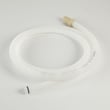
| Drain hose is cracked, kinked, or internally blocked | Dishwasher drain hose 00744881 | Carries wastewater from the dishwasher to the drain connection |
| Drain pump cover won’t latch or leaks around the cover area | Dishwasher drain pump lid 00611322 | Seals and secures the pump access cover so the pump can move water properly |
Why it matters
Drain and filtration problems reduce wash performance and can trigger drain errors because the dishwasher cannot move water correctly through the wash and drain system.
Last updated: January 2026
What series is Bosch SHEM63W55N?
Bosch model SHEM63W55N is part of the Bosch 300 Series dishwasher lineup. For your exact unit, the “/13” suffix is a version code used for production and parts compatibility, not a different series; use the model and version when ordering parts.
How to confirm the series on your exact dishwasher
We recommend verifying the rating plate (model tag) so you match the correct model/version for parts and documentation.
- Open the dishwasher door and look along the door edge for the rating plate
- Confirm the model is SHEM63W55N/13 (or the closest match shown)
- Use that exact model/version when referencing the SHEM63W55N use & care manual
- If you’re installing or reinstalling the unit, follow the SHEM63W55N installation instructions for cabinet opening, drain routing, and electrical requirements
Why the “/13” matters (even though the series stays the same)
Bosch uses the suffix (like /13) to identify a specific production version. The series (300 Series) describes the product family and feature tier, but the version code helps ensure the right replacement parts fit.
Series vs. model vs. version (quick comparison)
| What you’re looking at | Example | What it tells you |
|---|---|---|
| Series | 300 Series | Feature tier and product family |
| Model number | SHEM63W55N | Core design and configuration |
| Version (suffix) | /13 | Production variant used for parts matching |
Why it matters
Using the exact model/version helps prevent ordering the wrong dishwasher parts (like a control board, drain pump, or water inlet valve) that may look similar but connect differently.
Last updated: January 2026





