Error Codes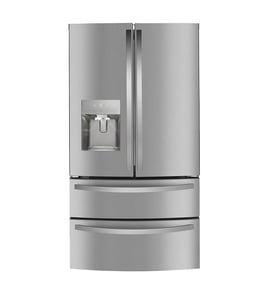




How do I tell which Whirlpool I have?
To tell which Whirlpool refrigerator you have, find the model/serial tag on the appliance and read the full model number. For this Whirlpool refrigerator, the correct model number format looks like WRS331SDHM06; matching that exact number is what ensures you get the right parts and repair info.
Where to find the model number on a Whirlpool refrigerator
On most Whirlpool refrigerators, the model/serial tag is inside the fresh food (refrigerator) compartment. Common locations include:
- On an inside side wall (often upper left or right)
- On the ceiling of the fresh food compartment
- Behind the crisper drawers (on the cabinet wall)
- On the door frame area (hinge side)
- Occasionally on the back exterior panel
If you are working on a specific repair, we recommend confirming the model number first, then using a model-matched part such as the refrigerator cartridge EDR1RXD1.
What to write down (and why)
Record both numbers exactly as shown on the tag:
- Model number (example for this unit: WRS331SDHM06)
- Serial number (helps identify production run and revisions)
- Any suffixes or extra characters (do not omit them)
Quick check: model vs. serial
| Item | What it tells us | Used for |
|---|---|---|
| Model number | Exact design and parts list | Ordering compatible parts |
| Serial number | Build date/production series | Verifying revisions when needed |
Why it matters
Whirlpool often makes small design changes within a model family. Using the exact model number (not just “WRS331SDHM”) helps prevent ordering the wrong ice maker, water filter housing, door gasket, or electronic control.
Related help for this Whirlpool model
If you are identifying your unit because of a water or ice issue, these guides are often the fastest next step:
Last updated: January 2026
What brand of refrigerator has the least problems?
For fewer problems overall, we typically see the best long-term reliability from simpler refrigerator designs with fewer dispensers and electronics. Since your model is a Whirlpool WRS331SDHM06, you are already in a brand family that’s widely considered a strong “low-trouble” choice when you prioritize basic cooling performance and straightforward features.
What usually matters more than the brand
Even within the same brand, the feature set and design have a bigger impact on service calls than the logo on the door.
- Fewer features generally means fewer failure points (especially in-door ice and water)
- Good airflow and clean condenser coils help prevent cooling complaints
- A properly sealing door gasket reduces frost, moisture, and run-time
- Consistent water quality and on-time filter changes help protect the dispenser system
- Correct temperatures (about 37°F fresh food, 0°F freezer) reduce stress on the sealed system
Brand and feature tradeoffs (quick comparison)
| What you prioritize | What to look for | What to avoid |
|---|---|---|
| Least problems | Basic top-freezer or simple side-by-side | Heavy “smart” features and complex dispenser assemblies |
| Easy DIY repairs | Common parts, simple controls | Proprietary boards and hard-to-access components |
| Best ice/water reliability | Simple ice maker design, regular filter changes | High-use in-door dispensers with lots of moving parts |
Practical tips for keeping a Whirlpool WRS331SDHM06 trouble-free
These steps reduce the most common refrigerator issues (warm temps, frost, leaks, and ice problems):
- Clean condenser coils regularly; restricted airflow makes the compressor run longer
- Replace the water filter on schedule; use the correct cartridge such as refrigerator cartridge EDR1RXD1
- If the door doesn’t close firmly, inspect the gasket for gaps or warping
- If you see error codes, use Whirlpool refrigerator error codes to narrow the system involved
- If ice production is inconsistent, check the shutoff arm position and water supply pressure
Why it matters
“Least problems” usually means fewer breakdowns, steadier temperatures for food safety, and lower operating costs. Choosing a simpler configuration and keeping up with basic maintenance often beats switching brands.
Last updated: January 2026
What's the average lifespan of a Whirlpool refrigerator?
Whirlpool refrigerators, including model WRS331SDHM06, typically last 10 to 20 years. In real-world use, many owners see about 12 to 15 years when the refrigerator is kept clean, well-ventilated, and repaired promptly when small issues show up.
What affects lifespan the most
A refrigerator’s life is usually determined by heat management, door sealing, and how hard the cooling system has to work.
- Keep condenser coils clean and airflow open around the cabinet
- Avoid overpacking; blocked vents make the compressor run longer
- Keep doors closing tightly; replace worn gaskets when needed
- Fix fan noise or warm spots early (fans protect the compressor)
- Use the ice maker and dispenser normally; clear jams instead of forcing parts
Quick maintenance schedule (simple and effective)
| Task | How often | Why it helps |
|---|---|---|
| Vacuum/brush condenser area | Every 6 to 12 months | Reduces heat load and compressor run time |
| Check door seal for gaps | Every 3 months | Prevents moisture, frost, and long run cycles |
| Replace water filter (if equipped) | About every 6 months | Protects water flow and taste |
| Listen for fan changes | Ongoing | Early warning of airflow problems |
Parts that commonly impact longevity on this model
You do not need to replace these on a schedule, but they are common “keep it running” items when symptoms appear.
- Door gasket (gray) W10136733: helps maintain temperature and reduces compressor run time
- Refrigerator evaporator fan motor WP2315549: keeps cold air moving through the compartments
- Condenser motor W11578915: helps remove heat from the sealed system
Why it matters
A refrigerator that runs hotter, leaks air, or has weak airflow can still cool, but it usually runs longer and wears out major components sooner. Basic cleaning and sealing checks are the easiest way to push a Whirlpool refrigerator toward the higher end of its expected lifespan.
Last updated: January 2026