 Owner’s manual
 Error Codes



How long is B26FT80SNS?
For the Bosch B26FT80SNS bottom-mount refrigerator, the overall “length” most people mean is the cabinet width across the front. This model’s exact appliance and installation dimensions are listed in the B26FT80SNS owner's manual under “Appliance and installation dimensions.”
Because refrigerators are installed into a cutout, “length” can refer to a few different measurements. Use the same term your installer uses:
- Width: left-to-right across the front (most common)
- Height: floor to top of cabinet (sometimes with hinge cover)
- Depth: front-to-back (may be different with doors and handles)
- Clearances: space needed around the cabinet for airflow and door swing
We recommend measuring your space first, then comparing to the manual’s dimension diagram.
- Measure the opening width at the front and back
- Measure height to the lowest overhead cabinet or trim
- Measure depth to the wall, then account for baseboards and water line
- Plan for door swing and drawer pull-out clearance
- Confirm the refrigerator can pass through doorways and hallways during delivery
Use this checklist to avoid the most common fit issues.
| Measurement | Where to measure | Why it matters |
|---|---|---|
| Width | Inside edge to inside edge of the opening | Prevents binding and vibration |
| Height | Floor to overhead cabinet/soffit | Avoids hinge and top cover interference |
| Depth | Wall to front edge of counters | Prevents sticking out too far |
| Clearance | Sides, top, and back | Supports airflow and reduces condensation |
Correct dimensions and clearances help your B26FT80SNS cool efficiently, reduce condensation between adjacent appliances, and prevent installation problems like doors that cannot open fully.
Last updated: February 2026
How to reset Bosch icemaker?
On the Bosch B26FT80SNS ice maker, we reset it by toggling the ice maker off and back on using the button behind the ice cube container: press and hold the button for 3 seconds to turn it off, then press and hold for 3 seconds again to turn it back on. See the owner's manual for the exact button location and LED behavior.
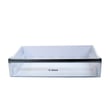
- Remove the ice cube container (ice bin).
- Press and hold the ice maker button behind the container for 3 seconds until the LED turns off (ice maker deactivated).
- Wait about 10 seconds.
- Press and hold the same button for 3 seconds until the LED turns on (ice maker activated).
- Reinstall the ice cube container fully so it locks into position.
These checks fix most “no ice” and “not enough ice” complaints after a reset:
- Give it time: after switching on, ice production can take about 24 hours to start and the bin can take about 24 hours to refill.
- Confirm the water supply is on and the water line is not kinked.
- Check household water pressure; low pressure reduces ice output and can deform cubes.
- Replace a clogged or old water filter; Bosch recommends replacing the filter at least every 6 months.
- Clear jams: remove the bin and free stuck cubes with a blunt plastic tool (no sharp objects).
| Symptom | Most common cause | What we do first |
|---|---|---|
| No ice at all | Ice maker switched off | Do the 3-second off/on reset |
| Small or deformed cubes | Low water pressure or clogged filter | Check pressure, replace filter |
| Cubes in bin but not dispensing | Jam or ice clumping | Remove bin, clear jam, clean bin |
Resetting the ice maker clears an “off” state and helps after cleaning the ice bin, a power interruption, or a jam. If water flow is restricted, a reset alone will not restore normal ice production.
Last updated: February 2026
What is the most common problem with a Bosch fridge freezer?
Cooling and temperature problems are the most common issues we see with Bosch fridge freezers like the Bosch B26FT80SNS, usually tied to restricted airflow (blocked vents), doors not sealing or closing fully, or the unit working harder because ventilation openings are blocked. Use the owner's manual troubleshooting table to match symptoms to quick checks.
- Food is too warm: vents blocked, doors opened too often, door not closing properly
- Food is too cold: temperature set too low
- Frost buildup or uneven temps: airflow restriction, door seal issues, defrost system concerns
- No cooling and no lights/display: power cord unplugged, tripped breaker, blown fuse
- Odors: interior needs cleaning, strong-odor foods, door not closing properly
- Confirm the doors close fully and nothing inside is preventing closure.
- Make sure interior air vents are not covered by food containers.
- Check the temperature settings; reset to a normal mid-range setting if needed.
- Clean dust from the condenser area (unplug the refrigerator first).
- If you have water/ice symptoms too, inspect the water supply line for kinks and verify household water pressure.
If basic checks do not fix the issue, these parts are common suspects depending on the symptom:
| Symptom | Commonly involved part | What it affects |
|---|---|---|
| Warm fridge/freezer, weak airflow | Refrigerator evaporator fan motor 00618893 | Circulates cold air through compartments |
| Frost/defrost-related temperature swings | Refrigerator defrost sensor 00618543 | Helps control defrost timing and temperature feedback |
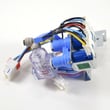
| No water to dispenser/ice maker | Bosch refrigerator water inlet valve 00649626 | Opens to let water flow into the refrigerator |
Airflow and door sealing directly control temperature stability. When vents are blocked or a door does not seal, the refrigerator runs longer, temperatures drift, and you can see warm spots, frost, or spoiled food.
For model-specific operating tips and the exact symptom chart, follow the troubleshooting section in the owner's manual.
Last updated: February 2026





