Owner’s manual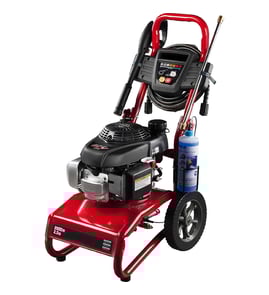



Can you put 87 gas in a pressure washer?
Yes. For the Craftsman 580752191 gas pressure washer, we use clean, fresh unleaded gasoline with a minimum rating of 87 octane (87 AKI). Fuel with up to 10% ethanol (gasohol) is acceptable; do not use E85 and do not mix oil into the gasoline (see the 580752191 owner's manual).
Use fuel that matches the engine requirements to prevent hard starting, surging, and fuel-system damage.
- Use unleaded gasoline, 87 octane/87 AKI minimum
- Use fresh fuel (old fuel can cause starting and performance problems)
- Ethanol blend is OK up to 10%
- MTBE is OK up to 15%
- Do not use E85
- Do not mix oil in the gas (this is a 4-cycle engine)
| Fuel type | OK to use? | Notes |
|---|---|---|
| Unleaded 87 octane (87 AKI) | Yes | Minimum recommended octane |
| Unleaded 88 to 93 octane | Yes | Fine if it is fresh and ethanol limits are met |
| E10 (up to 10% ethanol) | Yes | Acceptable blend |
| E15 | No | Higher ethanol than recommended |
| E85 | No | Not approved for this engine |
Using the correct gasoline helps the engine run at the right temperature and protects the carburetor and fuel system from deposits and gum formation. It also helps you avoid no-start and low-power symptoms.
If the unit starts but runs rough or loses power after fueling, follow the checks in pressure washer engine losing power to inspect fuel quality, air flow, and basic tune-up items.
Last updated: January 2026
How many gpm is a 3000 PSI pressure washer?
A “3000 PSI pressure washer” does not have one fixed GPM; flow depends on the pump and engine design. For the Craftsman pressure washer model 580752191, the rated maximum flow is 2.3 GPM (with a maximum pressure rating of 2,550 PSI) per the 580752191 operator’s manual.
Most homeowner-grade gas pressure washers advertised around 3000 PSI commonly land in the 2.3 to 2.7 GPM range, while heavier-duty units can be higher. GPM matters because it largely determines how fast you rinse and how quickly you remove loosened dirt.
- Homeowner gas units: often ~2.3 to 2.7 GPM
- Electric units: often ~1.1 to 2.3 GPM
- Commercial/industrial units: commonly 4+ GPM (and can be much higher)
PSI is “how hard” the spray hits; GPM is “how much water” you deliver. For most cleaning jobs, higher GPM speeds up cleaning more than a small PSI increase.
| What you want to improve | Spec that helps most | Example result |
|---|---|---|
| Faster rinsing and quicker cleaning | Higher GPM | Clears soap and debris faster |
| More bite on stuck-on grime | Higher PSI | Better at breaking bonds on hard surfaces |
| Better overall cleaning power | PSI and GPM together | Higher “cleaning units” (PSI × GPM) |
If you want a practical check (without special tools), we use this quick method:
- Run the washer with a consistent spray tip and steady trigger pull.
- Time how long it takes to fill a known-size bucket (for example, 5 gallons).
- Convert to GPM: GPM = gallons ÷ seconds × 60.
- Repeat twice and average the results.
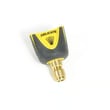
Your 580752191 manual lists 2.3 GPM max and also notes the water source should supply more than 3.3 GPM at the pressure washer end of the garden hose so the pump stays properly fed. For spray performance changes, a worn or partially clogged tip can reduce effective flow; replacing the spray tip (for example, pressure washer spray nozzle 195983XGS) can restore normal spray pattern and performance.
Choosing by PSI alone can be misleading; two “3000 PSI” washers can clean very differently. When you compare models, we recommend prioritizing GPM first, then PSI, based on the surfaces you clean most.
Last updated: January 2026
What is the average lifespan of 580752191?
A Craftsman 580752191 gas pressure washer typically lasts 8 to 12 years with normal homeowner use and routine maintenance. The engine and pump life depend most on clean water supply, correct oil service, and proper storage practices listed in the owner's manual.
The 580752191 is a 2550 PSI, 2.3 GPM gas pressure washer; the biggest lifespan drivers are the pump and the Briggs & Stratton 190-cc engine.
- Running the pump without water (even briefly) overheats seals and valves
- Dirty inlet water or missing inlet filtering accelerates pump wear
- Old fuel and a dirty air filter shorten engine life and cause hard starting
- Using the wrong spray tip or a clogged nozzle can spike pressure and stress the pump
- Freezing storage without winterizing can crack pump components
Use this as a practical baseline for the 580752191.
| Task | Typical interval | Why it matters |
|---|---|---|
| Check engine oil level | Every use | Prevents rapid engine wear |
| Change engine oil | Every 25 to 50 hours | Removes heat and contamination |
| Clean/replace air filter | Every season | Prevents power loss and rough running |
| Flush/inspect spray nozzle | As needed | Prevents pressure spikes and poor spray |
| Winterize for freezing temps | End of season | Prevents pump freeze damage |
If you are troubleshooting low pressure, surging, or poor spray pattern, these model-matched parts are often involved.
- Pressure washer spray nozzle 195983XGS (spray pattern and pressure consistency)
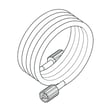
- Pressure washer hose 84006753 (leaks and pressure loss)
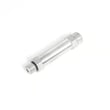
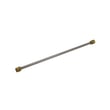
- Craftsman pressure washer outlet tube kit 201497GS (leaks at the pump outlet connection)
A pressure washer usually fails early from preventable causes: running it dry, storing it with water in the pump, or operating with restricted flow (clogged nozzle, kinked hose). Keeping flow steady and fuel fresh protects both the pump and engine.
Last updated: March 2026