Owner’s manual
 Error Codes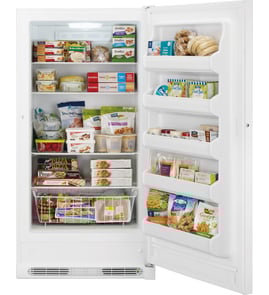

Where to find model number on Frigidaire upright freezer?
On a Frigidaire upright freezer like model FFU14F5HWJ, the model and serial number label is typically inside the cabinet where you can read it with the door open. Once you find it, record both numbers so you can match parts and follow the correct operating instructions in the FFU14F5HWJ owner's manual.
Where to look first (upright freezer)
Check these common label locations with the door open:
- Along the interior side wall or side trim near the front opening
- On the inside frame around the door opening (cabinet “face” area)
- Near the lower interior area behind the bottom basket area (if equipped)
- On the back exterior panel (less common, but worth a quick check)
What the label looks like
Most Frigidaire ID labels include:
- Model number (example: FFU14F5HWJ)
- Serial number
- Electrical ratings (volts/amps)
- Sometimes a bar code
Quick checklist
- Use a flashlight and wipe frost or dust off the label so it is readable.
- Write the model and serial number exactly as shown.
- Take a photo before the label fades or gets damaged.
Why it matters
The model number is how we match the correct Frigidaire freezer parts and procedures for your exact design. Even small model variations can change which electronic control, door gasket, or defrost components fit.
| You need this for | What to use | Example part for this model |
|---|---|---|
| Ordering replacement parts | Model number + serial number | Freezer door gasket 5304507201 |
| Following operating features | Use and care instructions | FFU14F5HWJ owner's manual |
| Troubleshooting display “E” codes (if equipped) | Error code guidance | Frigidaire deluxe electronic control module freezer error codes |
Last updated: February 2026
Is it worth repairing an upright freezer?
Yes, repairing a Frigidaire upright freezer like model FFU14F5HWJ is usually worth it when the problem is a setup issue (leveling, airflow, door sealing) or a mid-cost part; it is least cost-effective when the repair involves sealed-system work or major components like the compressor.
Quick decision checklist
- If the freezer is not level and the door does not seal, correct leveling first; poor sealing causes frost and warm temps.
- If you see heavy frost buildup (about 1/4 to 1/2 inch), defrost and clean; frost can mimic a cooling failure.
- If the unit is warm but you hear the evaporator fan running, the issue may be airflow or defrost related.
- If the freezer shows an “E” on the display, plan on a service-level repair (electronic control diagnostics).
- If the freezer is older and needs a compressor, compare repair cost to replacement.
What we fix first (low-cost, high-impact)
Start with the basics from the FFU14F5HWJ owner’s manual:
- Level the cabinet so the door closes easily when left halfway open.
- Confirm airflow clearance around the freezer, especially in warmer rooms.
- Clean the interior with mild detergent and warm water (avoid harsh cleaners).
- Defrost safely; unplug the freezer and use a plastic scraper (never metal tools).
Typical repair cost impact by repair type
| Repair type | What it affects | Usually worth it? |
|---|---|---|
| Leveling, door seal checks, cleaning | Frost, moisture, temperature stability | Yes |
| Defrost system parts (heater, thermostat) | Frost buildup, airflow blockage | Often |
| Fan and airflow parts | Even temperatures, noise, cooling performance | Often |
| Electronic control diagnosis | Error codes, temperature regulation | Depends |
| Compressor or sealed-system repair | Core cooling system | Sometimes |
Parts that commonly drive the “repair vs replace” decision
These are examples of higher-impact parts for FFU14F5HWJ:
- Upright freezer compressor 5304507765 (major cost driver)
- Electronic control 297370600 (can be worth it if the cabinet is in good shape)
- Defrost heater 5304496687 and refrigeration appliance defrost bi-metal thermostat 297216600 (often restore normal operation when frost is the root cause)
Why it matters
A freezer that is out of level or not sealing can run longer, build frost faster, and struggle to hold safe temperatures. Fixing installation and defrost issues first prevents unnecessary replacement of expensive components.
Last updated: February 2026
How to clean the coils on a Frigidaire upright freezer?
To clean the coils on your Frigidaire FFU14F5HWJ upright freezer, unplug the freezer, pull it out for access and remove dust from the condenser coil area using a coil brush and vacuum. Keeping the coil clean helps the compressor run cooler and maintain steady freezing.
Steps to clean the condenser coils
- Unplug the freezer to prevent electrical shock.
- Move the freezer away from the wall so you can reach the lower rear area.
- Remove the lower rear access cover or front toe grille (if your version has one).
- Brush the condenser coil and nearby fan area with a stiff bristle coil brush; brush along the coil fins (typically up and down).
- Vacuum loosened dust and pet hair; avoid bending coil fins.
- Reinstall the cover/grille, push the freezer back, then restore power.
What to use (and what to avoid)
| Item | Recommended? | Why |
|---|---|---|
| Coil brush (stiff bristle) | Yes | Lifts packed lint without damaging parts when used gently |
| Vacuum with crevice tool | Yes | Removes loosened debris quickly |
| Compressed air | Sometimes | Can blow dust deeper into the cabinet if used carelessly |
| Water or spray cleaners | No | Adds moisture near electrical components |
How often we recommend cleaning
- Every 6 months in most homes
- Every 3 months if you have pets, heavy dust, or the freezer sits in a utility room
- Any time you notice the cabinet feels unusually warm or run time increases
Why it matters
A dirty condenser coil traps heat, which makes the sealed system work harder. That can lead to warmer freezer temperatures, longer run times and higher energy use.
Related model resources
- Use the cleaning and safety guidance in the FFU14F5HWJ owner’s manual.
- If you are troubleshooting temperature issues after cleaning, check the freezer category landing page for common freezer repair topics.
Last updated: February 2026
What is the life expectancy of a Frigidaire upright freezer?
A Frigidaire upright freezer like model FFU14F5HWJ typically lasts 10 to 20 years, with 10 to 15 years being the most common range in normal home use. Consistent airflow, a good door seal, and correct leveling do the most to extend compressor and control life.
What affects lifespan the most
- Room temperature and ventilation: Hotter spaces need more clearance for air circulation around the cabinet.
- Leveling and door seal: If the freezer is not level, the door can misalign and not seal, which leads to frost and moisture problems.
- Defrost and frost control: Defrost and clean when frost reaches about 1/4 to 1/2 inch; use a plastic scraper, not metal tools.
- Door-open time: Frequent door openings add moisture and frost load.
- Electrical stability: Power interruptions and surges can stress the electronic control.
Maintenance checklist (high impact, low effort)
Use the FFU14F5HWJ owner's manual to match these steps to your exact control style and features.
- Keep clearance around the freezer for air circulation.
- Confirm the cabinet is level so the door closes easily and seals.
- Defrost when frost buildup reaches 1/4 to 1/2 inch.
- Keep the door closed as much as possible; address any Door Ajar alarms promptly.
- Clean interior surfaces with mild detergent and warm water; avoid harsh cleaners.
Quick guide: lifespan expectations by usage
| Usage pattern | Typical outcome | What to focus on |
|---|---|---|
| Light to average home use | 10 to 15 years | Leveling, door seal, ventilation |
| Heavy use (frequent openings, warm garage) | Closer to 10 years | Ventilation, frost control, door habits |
| Well-maintained, stable environment | 15 to 20 years | Consistent care and quick fixes |
Why it matters
Most “early failures” in upright freezers come from heat load and air leaks: poor ventilation and a door that does not seal force longer run times, which accelerates wear on the compressor, evaporator fan, and electronic control.
Last updated: February 2026