 Owner’s manual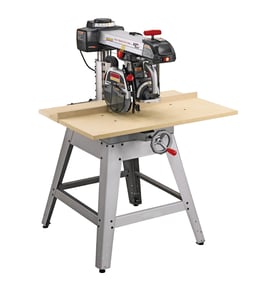

Are radial arm saws outdated?
Radial arm saws are not outdated; they are still useful for accurate crosscuts, miters, bevels, and some ripping setups when used correctly. With a Craftsman 113199250 10" radial saw, the bigger issue is safe setup and technique, not age.
When a radial arm saw still makes sense
Radial arm saws remain practical when you want repeatable cuts and flexible head positioning.
- Crosscutting and compound crosscutting (miter plus bevel)
- Cutting long stock with good fence support
- Shop setups where the saw stays aligned and dedicated to common cuts
- Users who follow the lock, index, and guard procedures every time
Safety and setup points that matter most
The Craftsman 113199250 is capable of accurate work, but it demands disciplined operation.
- Lock the carriage before ripping; keep the arm locked at 0° for ripping operations.
- Keep the workpiece firmly against the fence and table; use a higher fence when stock is thicker than the fence.
- Use the guard, spreader, and anti-kickback (AKB) assembly correctly for ripping.
- Never lower a revolving cutting tool into the table or workpiece without locking the carriage first.
- Let the blade come to a complete stop before removing boards from the table.
Quick comparison: “outdated” vs “still relevant”
| Concern | What we see in real shops | What to do |
|---|---|---|
| Newer saw types are common | Many woodworkers prefer miter saws or table saws for single-purpose tasks | Use the radial arm saw where its versatility helps most |
| Safety reputation | Most incidents come from poor ripping setup or unlocked carriage/yoke | Follow the ripping requirements and guard/AKB setup in the owner's manual |
| Accuracy over time | Alignment can drift with wear and heavy use | Clean regularly and realign as needed (more cleaning than lubrication) |
Why it matters
Calling a radial arm saw “outdated” usually confuses popularity with capability. A well-set-up Craftsman 113199250 can produce highly accurate cuts, but only when the arm, yoke, and carriage are indexed and locked correctly and the anti-kickback system is maintained.
You can look up diagrams and order replacement parts by model number through the parts list for Craftsman 113199250, or search more broadly on Sears PartsDirect.
Last updated: February 2026
Are radial arm saws worth anything?
Yes. A Craftsman 113199250 10-inch radial arm saw can be worth real money and shop space when it is complete, tuned, and used correctly; these older, heavier saws excel at accurate crosscuts, miters, bevels, and dado-style work, but value drops fast if parts are missing or safety setup is ignored.
What drives the value of a Craftsman 113199250 radial arm saw
- Completeness: Missing guards, fence/table boards, or hardware lowers value immediately.
- Condition and accuracy: Smooth carriage travel, tight locks, and repeatable indexing matter most.
- Included stand: This model includes steel legs from the factory, which helps resale and usability.
- Safety equipment present: Guard, spreader, and anti-kickback parts are important for ripping operations.
- Local demand: Radial arm saws are niche tools; value depends on whether buyers in your area want one.
Quick “worth it” checklist (practical shop test)
Use this as a fast evaluation before you price it or put time into it:
- Arm locks and indexes cleanly at 0° and 45° left/right.
- Yoke indexes positively at 90° positions and locks without slipping.
- Carriage returns fully rearward and the blade can stop before you move stock.
- Table boards and fence allow you to cut a clean kerf and support the work.
- Power cord and switch feel solid; keep it unplugged during inspection and adjustments.
Common use cases vs. a modern miter saw
| Task | Radial arm saw strength | What to watch |
|---|---|---|
| Crosscuts | Very good repeatability on long stock | Keep the work tight to fence/table |
| Miters and bevels | Flexible angle setup | Re-check locks and indexing |
| Dados/rabbets | Often a dedicated setup tool | Use correct blade and guarding |
| Ripping | Possible on many setups | Guard, spreader, and anti-kickback setup is critical |
Why it matters
A radial arm saw’s value is mostly about accuracy plus safe operation. When the arm, yoke, and carriage are indexed and locked correctly, you get consistent cuts that are hard to match on long material with smaller saws.
For model-specific setup, adjustment, and safe operating requirements (including ripping requirements and guard/anti-kickback guidance), follow the owner's manual. If you need to source replacement parts by model number, we recommend starting with the parts list for 113199250, then expanding your search on Sears PartsDirect.
Last updated: February 2026
What is the best brand of radial arm saw?
There is no single “best” brand for every shop; the best radial arm saw is the one that stays accurate, locks solidly, and fits how you cut. For a Craftsman 113199250 10-inch radial saw, overall condition, alignment, and safe guarding matter more than the name on the arm, especially when comparing used saws.
What to look for when choosing a radial arm saw
We recommend judging brands and models by these practical factors first:
- Arm and yoke lockup: the arm should index and lock firmly at common angles (0° and 45° are standard reference points).
- Repeatable accuracy: the saw should return to the same miter and bevel settings without “creeping.”
- Smooth travel: the carriage should glide without binding or slop.
- Guarding and anti-kickback setup: complete, functional guards reduce risk during crosscuts and certain rip cuts.
- Parts support: older saws can be excellent, but only if you can still maintain them.
How we evaluate “best” for most users
For most DIYers and woodworkers, “best” means the saw holds alignment and cuts square consistently.
| Priority | What it affects | What you should check |
|---|---|---|
| Accuracy | Square crosscuts, clean dados | Arm indexing, fence condition, blade squareness |
| Rigidity | Less vibration, better finish | Column tightness, arm lock, yoke lock |
| Safety | Lower injury risk | Guard condition, return spring action, switch function |
| Serviceability | Long-term ownership | Availability of wear parts, hardware, manuals |
Tips that matter on a Craftsman 113199250
Your Craftsman 113199250 includes steel legs, and the manual emphasizes keeping the saw unplugged during setup and adjustment. Use the indexing method described in the owner's manual (move slightly past an index, then return to lock) to help neutralize stresses and improve repeatability.
Quick setup checks before you buy or tune one
- Verify the arm indexes cleanly at 0° and 45° left and right.
- Confirm the elevation crank raises and lowers smoothly.
- Inspect the lower guard for free movement and no binding.
- Check the table and fence for flatness and secure mounting.
- Listen for bearing noise and feel for carriage play.
Why it matters
Radial arm saws can be extremely capable for crosscuts, dados, and repetitive shop work, but only when the arm, locks, and guarding are correct. A well-aligned, well-maintained saw from a “good” brand will outperform a poorly maintained saw from a “great” brand.
For parts and diagrams for your Craftsman 113199250, start with the model parts list, or search by model number on Sears PartsDirect.
Last updated: February 2026